
درباره سایت
آخرین مطالب
- Benefits of Using White Talc in Paint and Resin Formulations
- كيفية اختيار التلك الصناعي المناسب لصناعتك
- سیلیس چیست؟ راهنمای جامع کاربردهای این ماده معدنی در صنایع مختلف
- السيليكا أم البنتونيت؟ أي معدن مناسب لصناعتك؟
- 7 Applications of Industrial Talc in Various Industries You Should Know
- مزایای استفاده از تالک سفید در فرمولاسیون رنگها و رزینها
- التطبيق المتخصص لكربونات الكالسيوم المغلفة في صناعة أعمدة الأبواب والنوافذ
- What is White Talc? Applications and Benefits of This Mineral in Industries
- What is the Difference Between Silica and Calcium Carbonate in Manufacturing Industries? A Complete Review
- تالک صنعتی یا کربنات کلسیم؟ مقایسه کاربرد و قیمت در صنعت
امکانات وب
Introduction to the Chemical Analysis of Limonite Oxide (Yellow Ochre)
Understanding the structure of minerals and mining is not possible without a precise examination of their compositions. Among these, Limonite Oxide (Yellow Ochre) is one of the most functional pigments and mineral compounds, which has attracted the attention of various industries due to its specific characteristics. This material, rooted in natural minerals, plays a very prominent role in diverse industries, including paint production, coating, and construction products. A precise understanding of this material is achieved through laboratory examinations and chemical analyses.
To better understand the behavior of this mineral powder in industrial formulations, its physical and chemical specifications need to be accurately evaluated. The mesh range of this material varies between 450 and 1500 mesh, indicating its suitable fineness for specialized applications. To purchase and review the complete specifications of this product, you can visit the Limonite Oxide (Yellow Ochre) page.
Performing a chemical analysis helps engineers and industrial designers to measure the purity, unwanted compounds, and reactivity potential of this material. Since industrial projects require high precision, mineralogical and chemical examination of Limonite Oxide (Yellow Ochre) is recognized as a necessity to ensure the uniformity of the quality of final products.
In the continuation of this article, we will discuss and examine in detail the various dimensions of chemical analysis, mesh range, processing methods, applications in construction industries and mineral pigments, as well as the factors affecting the stability of this compound.
Mineral Nature and Physical Characteristics of Limonite Oxide (Yellow Ochre)
The mineralogy and physical structure of Limonite Oxide (Yellow Ochre) form the basis of its industrial application. Limonite is a type of ore containing iron hydroxides, which has a characteristic yellow-to-brown color. This material is known as a natural pigment, which, due to its abundance in nature and high durability, is very popular in the coating and paint-making industries.
One of the most important physical factors in the specifications of mineral powders is their crushing level and granulation. This product is produced and supplied with a mesh range of 450 to 1500 mesh. This fine particle size causes the material to have a very high contact surface and be well dispersed in various matrices. For more information about the evaluation methods of this material, reading the article Guide to Limonite Oxide (Yellow Ochre) Analysis is recommended.
The physical characteristics of this compound include bulk density, particle size distribution, and moisture content, all of which are measured in quality control laboratories. The fineness of the particles in the mentioned mesh range allows the powder to act as an efficient filler and pigment in the construction of building products and protective coatings.
As a result, a precise understanding of the physical nature of Limonite Oxide (Yellow Ochre) helps formulation engineers to optimize the mixing process and prevent particle agglomeration. These characteristics play a direct role in the final quality of products based on mineral materials.

Main Applications of Limonite Oxide (Yellow Ochre) in Chemical Industries
Chemical industries are always looking for high-quality and stable raw materials for the production of various products. Limonite Oxide (Yellow Ochre) holds a special place in this field due to its unique chemical structure. Using this material as a base in many chemical processes improves the appearance and functional properties of the final product.
The industrial applications of this material go beyond a simple pigment and it plays a role in the synthesis of many compounds. For a more precise examination of these applications, you can read the specialized article The Role of Limonite Oxide (Yellow Ochre) in Chemical Industries, which covers this subject comprehensively.
This material acts as a coloring agent and also a resistance enhancer against atmospheric factors in chemical formulations. Its structural stability in various chemical environments has led to its extensive use in the resin, adhesive, and industrial coating production industries.
Given the importance of matching raw materials with chemical standards, checking the purity of this mineral powder through precise analyses becomes important. The appropriate presence of iron compounds in this material significantly helps improve the quality of chemical products.
Examination of the Stability and Durability of Limonite Oxide (Yellow Ochre)
Chemical and physical stability is one of the most important parameters in selecting mineral materials for heavy and construction industries. Limonite Oxide (Yellow Ochre), due to its stable mineral nature, shows high resistance to various environmental conditions. This stability includes resistance to sunlight, temperature changes, and environmental chemical reactions.
To better understand the reasons for the high resistance of this material to environmental destructive factors, reading the article Why Does Limonite Oxide (Yellow Ochre) Have High Stability? provides you with valuable information that anatomizes this feature professionally.
The use of this compound in outdoor environments and construction structures requires maintaining color and structure over time. Laboratory test results show that pigments obtained from this material do not change color against ultraviolet radiation and atmospheric factors and maintain their overall structure.
This long-term stability leads to lower maintenance costs and increases the lifespan of final products. For this reason, construction industries and manufacturers of protective coatings always place Limonite Oxide (Yellow Ochre) at the top of their choices.
The Role of Limonite Oxide (Yellow Ochre) in the Mineral Pigment Industry
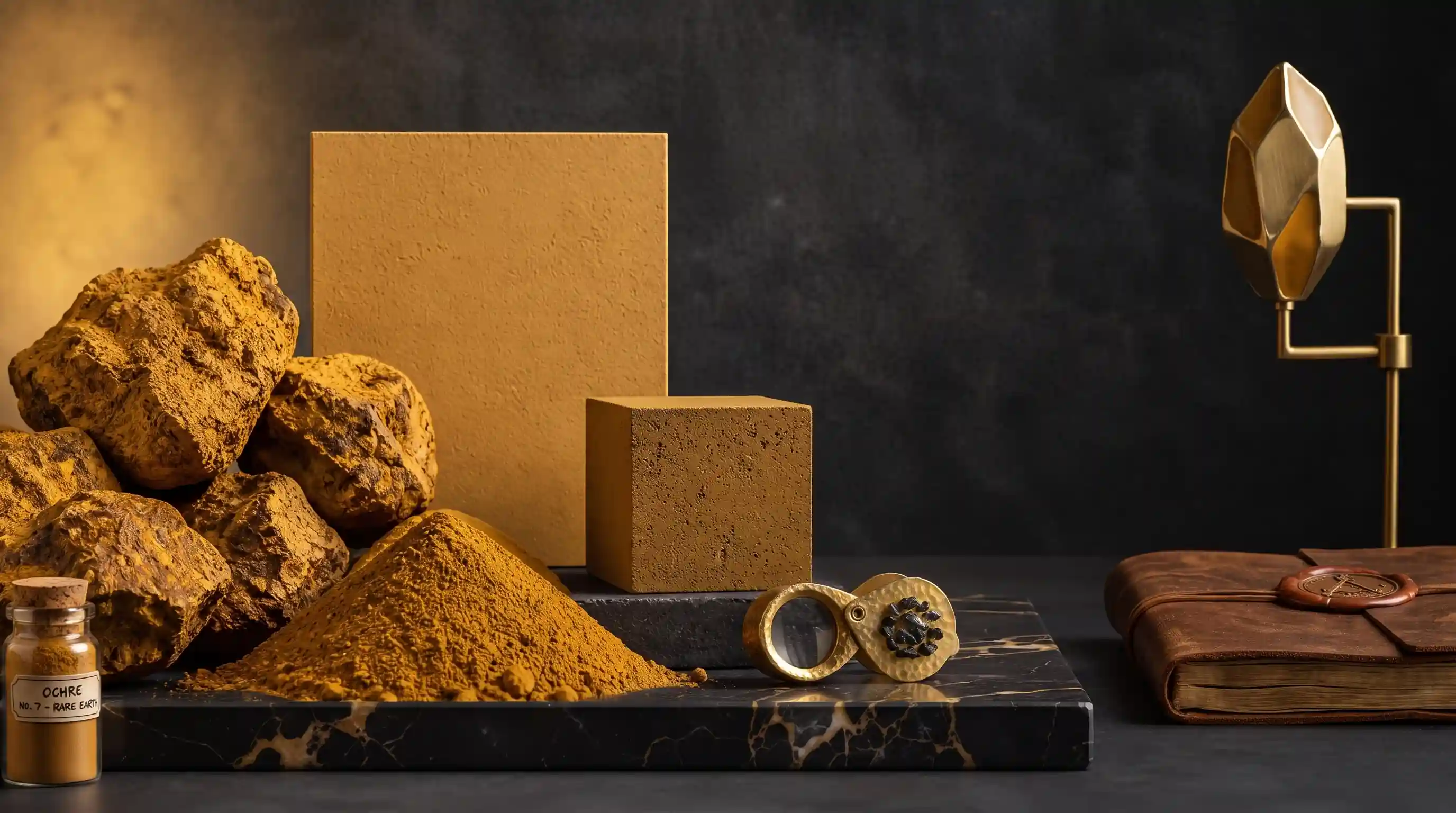
The mineral pigment industry is always looking for natural resources with warm, attractive, and stable color spectrums. Limonite Oxide (Yellow Ochre) is one of the most well-known mineral pigments, which has a special place due to the variety of yellow and brown spectrums. These pigments are prepared as micronized powders with a mesh range of 450 to 1500.
Using these pigments in paint-making, printing ink, and dye industries requires uniform particle size distribution. The chemical analysis of these materials ensures that the particles are free of harmful impurities that can negatively affect transparency and color quality. The precise granulation obtained in the production process guarantees color stability in various matrices.
Mineral pigments produced from this material have very high compatibility with various water-based and solvent-based coating systems due to the lack of reaction with different resins and solvents. This feature causes the resulting pigments to have excellent resistance to peeling and fading.
The Kani Sang Amiran project, focusing on the production of high-quality mineral materials, provides this product with desirable standards for the pigment-making industry. Precise processing of this material has preserved its originality and efficiency as a standard mineral pigment.
Application of Limonite Oxide (Yellow Ochre) in Construction Products
The construction industry, as one of the largest consumers of mineral materials and pigments, requires materials with high durability and aesthetics. Limonite Oxide (Yellow Ochre) is widely used in the production of various mode and traditional construction materials due to its special characteristics. This material is used as a pigment and filler in colored concrete, facade bricks, mosaics, and flooring.
The 450 to 1500 mesh range of this mineral powder allows it to penetrate well into cement and concrete mixtures and create a uniform and durable color. Unlike organic dyes that may degrade against cement alkali, Limonite Oxide (Yellow Ochre) shows excellent chemical stability in alkaline environments.
Using this material in construction products not only gives an aesthetic look to structures but also helps improve the density and relative strength of the cement matrix due to its mineral properties. These pigments are resistant to various atmospheric conditions, including acid rain and frost.
Therefore, the presence of this material in the formulation of construction products is considered an intelligent economic and technical choice that ensures the quality and longevity of the project.
The Importance of the 450 to 1500 Mesh Range in Final Powder Quality
Mesh and particle size of mineral powders play a decisive role in their behavior during processing and consumption. Limonite Oxide (Yellow Ochre) is produced with a mesh range of 450 to 1500, which provides a wide range of fineness and micronization for various industrial uses. Particles in this range have a high specific surface area that helps improve coverage and tinting strength.
In the production process, precise grinding and granulation of this material require advanced equipment. Lower meshes (such as 450) are usually used in applications that require general filling, while higher meshes (up to 1500) are used for very delicate coatings and specialized paints that require a perfectly smooth and uniform surface.
Precise control of particle size is performed through laser analysis devices to ensure that the particle distribution is in the standard range. This quality control prevents lumpiness and particle agglomeration during storage or mixing.
As a result, the diverse mesh range of this mineral powder enables product customization based on the precise needs of customers in the coating, pigment, and construction industries.
Conclusion and Buying Guide for Limonite Oxide (Yellow Ochre)
In this article, we comprehensively examined Limonite Oxide (Yellow Ochre), its physical and chemical properties, the 450 to 1500 mesh range, and its key applications in the pigment, coating, and construction product industries. It was determined that this mineral material is one of the best options for various industries due to its high stability, resistance to environmental conditions, and compatibility with various formulations.
Performing precise chemical analyses and continuous quality control guarantees the purity and efficiency of this mineral powder. The Kani Sang Amiran project, by utilizing high-quality natural resources and mode processing equipment, supplies and offers this product with the highest industrial standards.
To receive additional information, place an order, and review precise technical specifications, it is recommended to visit the main product page, namely Limonite Oxide (Yellow Ochre), and be in contact with sales experts to make the best choice for your project.
| Question | Answer |
|---|---|
| What is Limonite Oxide (Yellow Ochre)? | It is a natural pigment and mineral containing iron hydroxides used in the paint, coating, and construction industries. |
| What is the mesh range of this product? | This mineral powder is produced and supplied in the 450 to 1500 mesh range. |
| What are the main applications of this material? | Main applications include mineral pigments, various coatings, and construction products. |
| Is this material resistant to sunlight? | Yes, Limonite Oxide has very high stability against ultraviolet radiation and atmospheric changes. |
| What is the appearance color of Limonite Oxide? | This material has a natural color spectrum from yellow to light brown (Yellow Ochre). |
| Which group is the manufacturer of this product? | The Kani Sang Amiran project is the producer of these mineral materials. |
| How can the technical specifications of this product be reviewed? | By visiting the dedicated product page on the Kani Sang Amiran website, you can view complete information. |
| Why is mesh sizing effective in the quality of this material? | Fineness and suitable mesh range cause increased coverage power and better distribution in the matrix. |
| Is this material stable in the alkaline environment of cement? | Yes, excellent chemical stability against alkalis is a prominent feature of this material. |
| How can this product be purchased? | It is possible by visiting the Kani Sang Amiran website and communicating with the sales unit. |
Laboratory sources and technical data of the Kani Sang Amiran project.
برچسب: Limonite Oxide (Yellow Ochre),What is the Chemical Analysis of Limonite Oxide (Yellow Ochre)?,
نویسنده: رساوب آفرین