
درباره سایت
آخرین مطالب
- Benefits of Using White Talc in Paint and Resin Formulations
- كيفية اختيار التلك الصناعي المناسب لصناعتك
- سیلیس چیست؟ راهنمای جامع کاربردهای این ماده معدنی در صنایع مختلف
- السيليكا أم البنتونيت؟ أي معدن مناسب لصناعتك؟
- 7 Applications of Industrial Talc in Various Industries You Should Know
- مزایای استفاده از تالک سفید در فرمولاسیون رنگها و رزینها
- التطبيق المتخصص لكربونات الكالسيوم المغلفة في صناعة أعمدة الأبواب والنوافذ
- What is White Talc? Applications and Benefits of This Mineral in Industries
- What is the Difference Between Silica and Calcium Carbonate in Manufacturing Industries? A Complete Review
- تالک صنعتی یا کربنات کلسیم؟ مقایسه کاربرد و قیمت در صنعت
امکانات وب
Introduction to the Importance of White Talc in Mode Industries
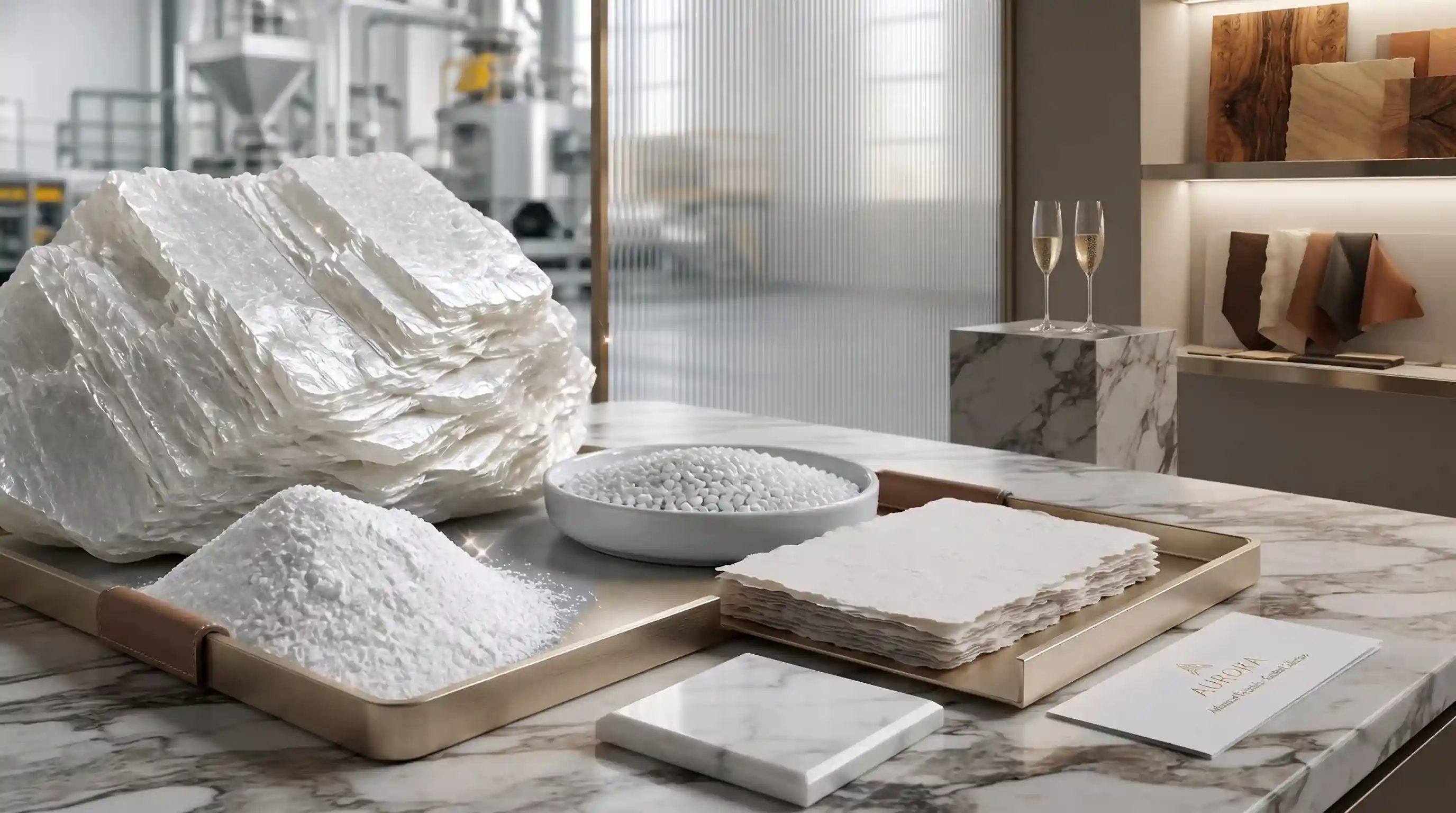
Today, manufacturing and materials engineering industries are constantly looking for high-quality mineral additives to enhance the quality of their products. In this regard, white talc, due to its lamellar structure and unique physical and chemical properties, has gained a special position in various industries. The Kani Sang Amiran project, focusing on supplying premium mineral materials, offers this product to the market with the highest quality standards.
Engineering studies show that using micronized mineral materials can significantly improve the inteal structure of composite materials. To better understand this subject, reading the study on the physical and mechanical properties of industrial talc powder can provide a comprehensive perspective on the behavior of this material in industrial formulations. This material not only acts as an economical filler but also plays a key role in improving the dimensional stability and thermal resistance of composites.
Careful selection of raw materials in industries such as polymers, paint manufacturing, and paper production has a direct impact on the final product. Given the wide mesh range of this product, industrial designers can choose the best option tailored to their process needs. In the following sections of this article, we will examine in detail the various dimensions of the impact of this mineral material on improving the mechanical and aesthetic properties of products.
The Role of White Talc in the Masterbatch and Compounding Industry
The polymer and masterbatch industry is considered one of the largest consumers of micronized mineral materials. The use of white talc in the formulation of masterbatches and polymer compounds, due to its suitable compatibility with polymer matrices, leads to an increase in the flexural modulus and tensile strength of the products. Kani Sang Amiran provides this powder with a mesh range of 450 to 2500, which provides suitable dimensional distribution for extruders.
When this mineral material is added to the polymer, its layered structure helps to distribute stress evenly throughout the part and prevents deformation under mechanical loads. For more information regarding the specialized applications of this material, you can visit the dedicated white talc page, which provides you with its complete specifications.
In addition to improving mechanical properties, the presence of this material in polymer compounds reduces the shrinkage of injection-molded parts and improves their surface quality. This is especially important in automotive parts and household appliances that require high dimensional accuracy and a flawless appearance.
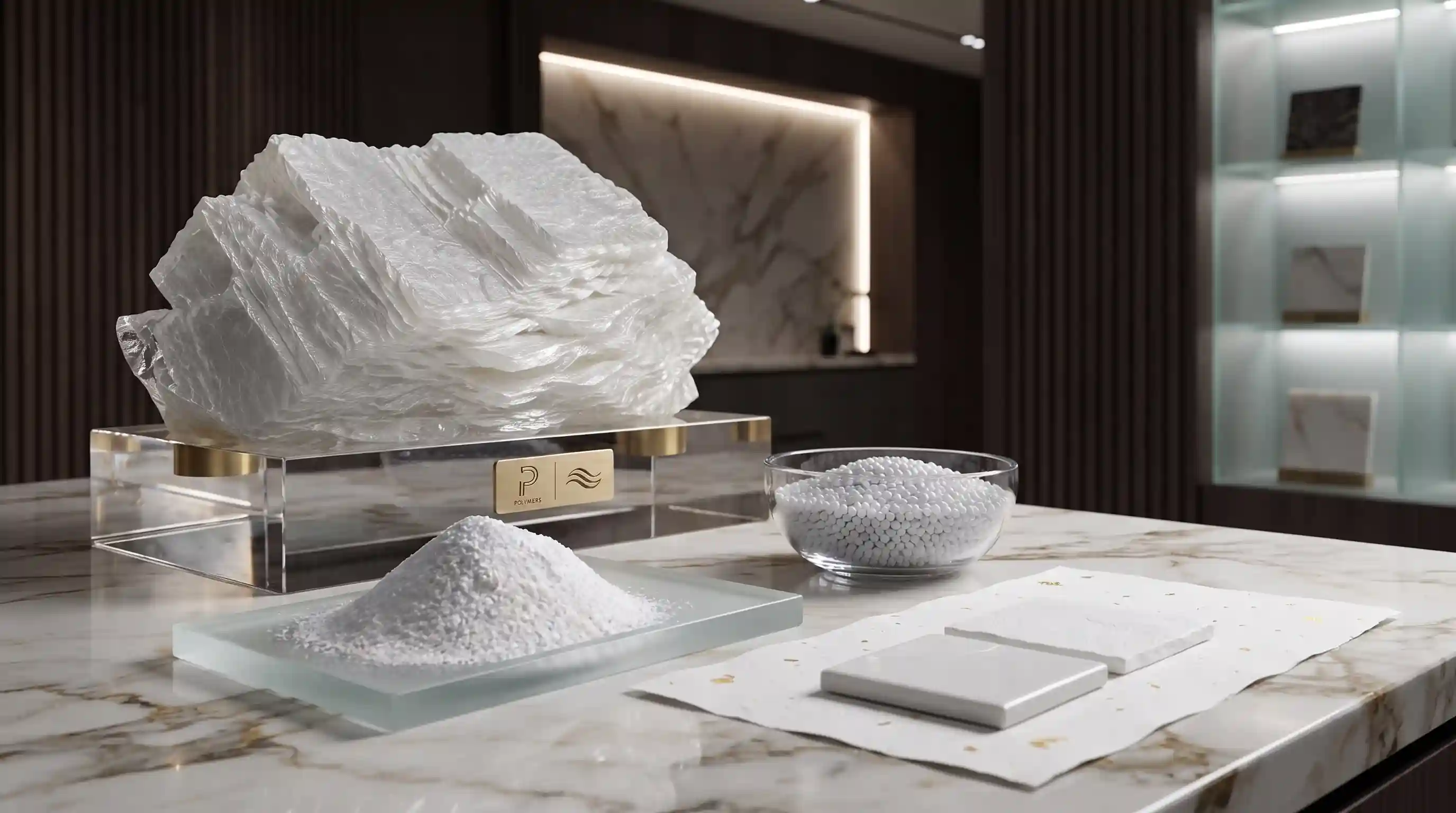
The Effect of White Talc on Improving the Mechanical Properties of Composites
Engineered polymer composites require compounds that simultaneously increase stiffness and toughness. Adding white talc to these systems leads to a significant improvement in the modulus of elasticity and creep resistance of parts under continuous loading. The lamellar particles of this material are well-deposited in the matrix and lengthen the path of potential cracks.
Compared to other mineral fillers, this material performs very well in transferring stress from the continuous phase to the discontinuous phase. Also, reading the specialized article on the role of white barite in improving the mechanical properties of composites shows how the combined and targeted use of mineral fillers can maximize the overall efficiency of composite materials in harsh industrial conditions.
Optimizing the mechanical properties of composites using high-quality micronized powders reduces production costs while significantly increasing the service life of industrial parts. These features have led materials engineers to always prioritize this material in their designs.
Application of White Talc in the Paint and Industrial Coatings Industry
In the paint and resin industry, achieving desirable coating properties, weather resistance, and excellent adhesion are the primary goals of formulation. The use of white talc as a filler and auxiliary pigment is widespread in various construction and industrial paints. Due to its high purity and natural white color, this material does not negatively affect the color shade and helps improve coverage.
The layered structure of this product's particles creates a physical barrier against the penetration of moisture and corrosive agents to the substrate surface. This mechanism directly increases the corrosion resistance of metal coatings and improves paint durability in outdoor environments. The micronized powder supplied by the Kani Sang Amiran project guarantees the chemical stability of the paint due to the absence of active impurities.
Furthermore, this material helps control paint viscosity during storage and application, preventing the phenomenon of paint sagging on vertical surfaces. These technical advantages lead to improved performance quality in industrial and architectural paints.

The Role of White Talc in the Paper and Cellulose Industry
The paper industry requires additives that simultaneously improve whiteness, surface smoothness, ink absorption rate, and opacity of the paper. White talc is used as a premium filler in the production of various printing and writing papers. The particle size of this material, which is in the range of 450 to 2500 mesh, allows for proper filling of the empty space between cellulose fibers.
This uniform filling of pores makes the paper surface smoother and increases printability quality, especially in high-quality printing. Additionally, using this mineral material reduces the consumption of virgin cellulose pulp, which is of great importance from economic and environmental protection perspectives.
By continuously supplying standard micronized powders, the Kani Sang Amiran project has met the needs of the country's cellulose industry factories for this vital material. Precise control of particle size ensures that the produced paper has appropriate transparency and tear resistance.
Application of White Talc in the Ceramics and Tile Industry
In the ceramics and tile production industries, controlling firing shrinkage, increasing the mechanical strength of the body, and improving the glaze are of high importance. White talc acts as a fluxing and reinforcing agent in ceramic bodies and adjusts the melting and firing point. The presence of this material in the ceramic body composition helps reduce firing temperature, thereby saving energy in kilns.
The micronized particles of this product help form uniform glassy phases in the ceramic structure and significantly increase the thermal shock resistance of the products. This feature is very vital, especially in wall and floor tiles exposed to temperature changes.
The use of high-quality processed mineral materials prevents the occurrence of hairline cracks and warping of products during the firing stages. For this reason, leading tile and ceramic factories always apply strict standards in selecting their micronized powders.
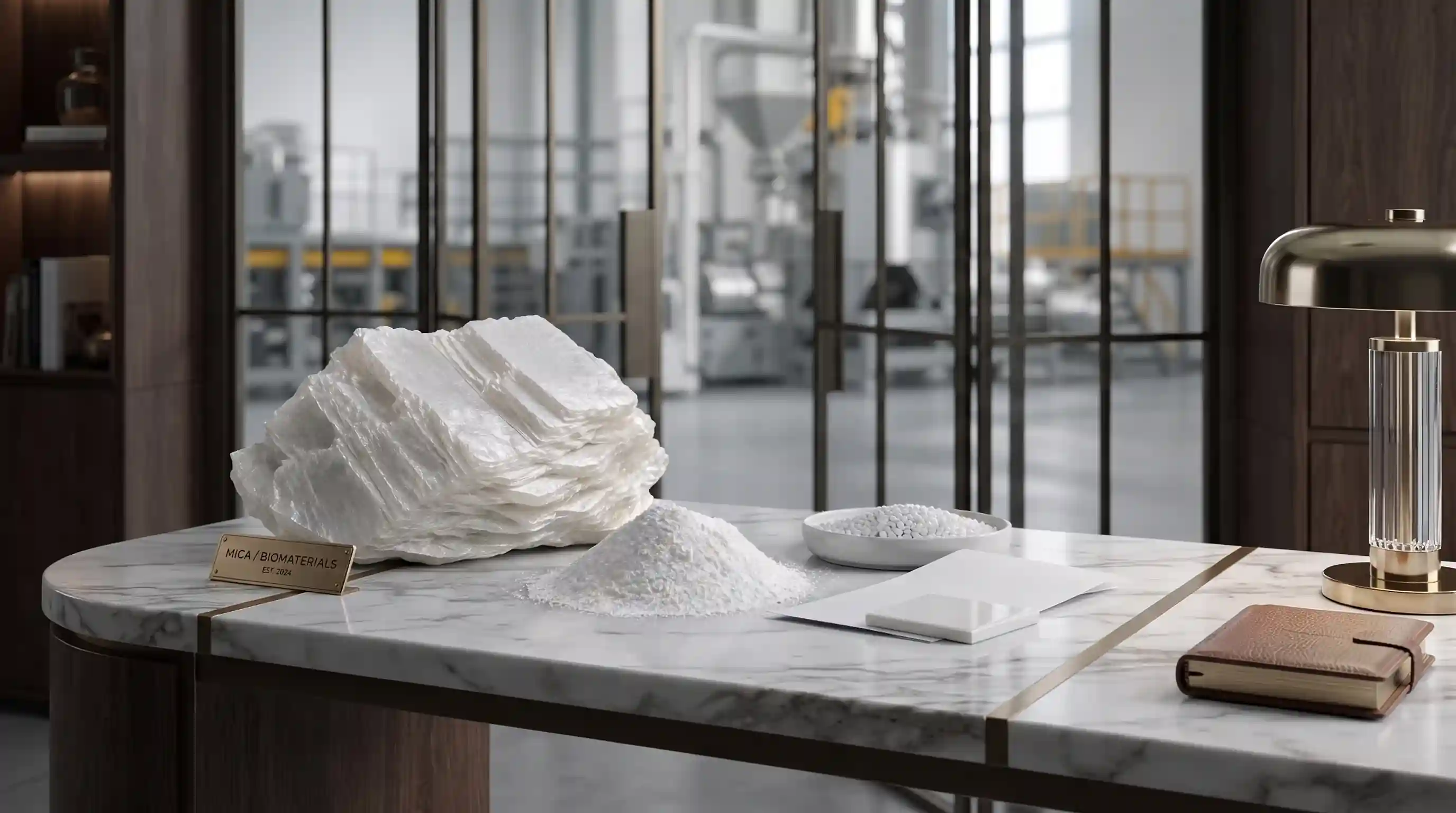
Improving the Aesthetic and Surface Quality of Products with White Talc
In addition to mechanical properties, the appearance of the final product plays a decisive role in its marketability. The presence of white talc in various formulations leads to the enhancement of whiteness index, gloss, and the quality of surface texture of products. For further study in this field, the specialized article on the role of white talc in improving the appearance quality of polymeric products has examined various dimensions of this phenomenon.
The natural smoothness of talc particles causes a reduction in surface roughness in polymer parts and paints, transferring a pleasant tactile sensation to the consumer. This feature is highly valuable for automotive interior parts and luxury consumer goods.
Utilizing advanced micronization technologies, the Kani Sang Amiran project produces a homogeneous powder without aoying clumps, which does not create any visual irregularities on the final surface.
Conclusion and Guide to Buying White Talc from Kani Sang Amiran
In this article, we conducted a comprehensive review of the applications and benefits of white talc in the strategic industries of masterbatch, compounding, paint, paper, and ceramics. It became clear that this mineral material, with a mesh range of 450 to 2500, plays an unparalleled role in improving mechanical properties, thermal stability, and the aesthetic quality of products.
The correct choice of mesh and purity of mineral materials can create a significant transformation in industrial production lines. As a reputable producer of mineral materials, the Kani Sang Amiran project is ready to supply the needs of various industries with the best quality and competitive prices.
Industry owners and quality control managers can contact our sales experts through the collection's website to receive specialized consultations, price inquiries, and order registration, and benefit from a reliable purchase.
| Question | Answer |
|---|---|
| What is white talc and what are its applications? | It is a natural and lamellar mineral material used in masterbatch, compounding, paint, paper, and ceramic industries. |
| What is the mesh range of white talc from Kani Sang Amiran? | This product is produced and supplied in the range of 450 to 2500 mesh. |
| How does this material improve the mechanical properties of composites? | By uniform stress distribution, increasing flexural and tensile modulus, and inhibiting the growth of inteal cracks. |
| Is this product also used in the paint industry? | Yes, it is used as a white filler, coverage improver, and corrosion resistance enhancer. |
| What is the role of white talc in the paper industry? | It increases whiteness, surface smoothness, opacity, and improves the printability quality of paper. |
| What is the effect of this material in the ceramics industry? | It acts as a flux, lowers the firing temperature, and increases thermal shock resistance. |
| Why is the use of white talc in masterbatch important? | It leads to improved dimensional stability, reduced shrinkage, and increased hardness of polymer parts. |
| How can this product be purchased? | It can be ordered and inquired through the Kani Sang Amiran project's product page. |
| Does talc powder have a positive effect on the appearance of polymer parts? | Yes, it improves surface quality and creates controlled gloss or matte finishes. |
| What is the competitive advantage of Kani Sang Amiran's white talc? | High purity, precise micronized granulation, and uniform quality in high toages. |
Kani Sang Amiran Project — Specialized reference for the production and processing of mineral materials and industrial micronized powders.
برچسب: White Talc,The Role of White Talc in Improving the Mechanical Properties of Composites,
نویسنده: رساوب آفرین