
درباره سایت
آخرین مطالب
- دور أكسيد الليمونيت (گل ماش) في صناعة السيراميك والبلاط
- The Role of Limonite Oxide (Gole Mash) in the Ceramic and Tile Industry
- Online Order and Price Inquiry Guide for Kaolin
- راهنمای ثبت سفارش آنلاین و استعلام قیمت کائولن
- How to choose the best red iron oxide (ochre) for the project?
- دور أكسيد الليمونيت (گل ماش) في إنتاج الطلاءات الواقية
- كيف تشترين أفضل ماركة أكسيد الليمونيت (جول ماش)؟
- Examining the Environmental Impacts of Limonite Oxide (Gole Mash)
- دراسة التأثيرات البيئية لأكسيد الليمونيت (گل ماش)
- How to buy the best Limonite Oxide (Gol Mash)?
امکانات وب
Introduction to the Importance of Minerals in Industrial Sustainability
Today's mode industries face serious environmental challenges and strive to reduce their carbon footprint by optimizing production processes. Meanwhile, the use of natural minerals as a sustainable solution has gained a special position. The right choice of raw materials not only improves the quality of the final product, but also significantly helps reduce pollutant emissions and optimize energy management. In this context, functional minerals play a key role, allowing industrialists to comply with stricter environmental standards.
Focusing on the supply and processing of high-quality minerals, the Kani Sang Amiran project provides suitable solutions for various industries. Accurate understanding of the physical and chemical characteristics of raw materials is a primary prerequisite for achieving clean production. When industrialists know how to utilize natural potentials, waste is reduced and the efficiency of production lines is dramatically improved.
One prominent example of these minerals is dolomite, which is recognized as a valuable compound in various industries. A detailed examination of this material's role in reducing the environmental impacts of industries reveals new dimensions of the importance of the intelligent use of geological resources and contributes to sustainable development.
Furthermore, examining the links between mineral processes and the macroeconomics of production demonstrates the achievements of optimal choices. For further reading on this subject, it is suggested to read the article The Impact of Dolomite on Reducing Production Costs in Mineral Industries to become more familiar with the economic dimensions of these minerals.
Understanding the Structure and Characteristics of Dolomite in Industrial Applications
Dolomite is a double carbonate mineral of calcium and magnesium that holds a special place in industrial processes due to its stable chemical properties and natural abundance. With a distinct crystalline structure, this mineral exhibits stable thermal behavior, making it an ideal choice for applications requiring high-temperature resistance.
In the Kani Sang Amiran project, this material is precisely processed and supplied in a mesh range of 10 to 40 mesh. This specific sizing allows for the optimal use of the material in various industries without the need for complex additional crushing processes at the consumption site. The physical characteristics of this material are such that it easily mixes with other raw materials.
Using this mineral compared to some pure limestones brings significant technical advantages. The presence of magnesium in its structure improves the mechanical and chemical properties of final products and increases thermal stability. This technical advantage indirectly helps reduce energy consumption and consequently lowers greenhouse gas emissions.
Accurate knowledge of these characteristics helps engineers and industrial designers develop more optimal formulations. The principled application of this mineral, while maintaining quality, creates greater compliance with environmental requirements and enhances the efficiency of thermal processes.
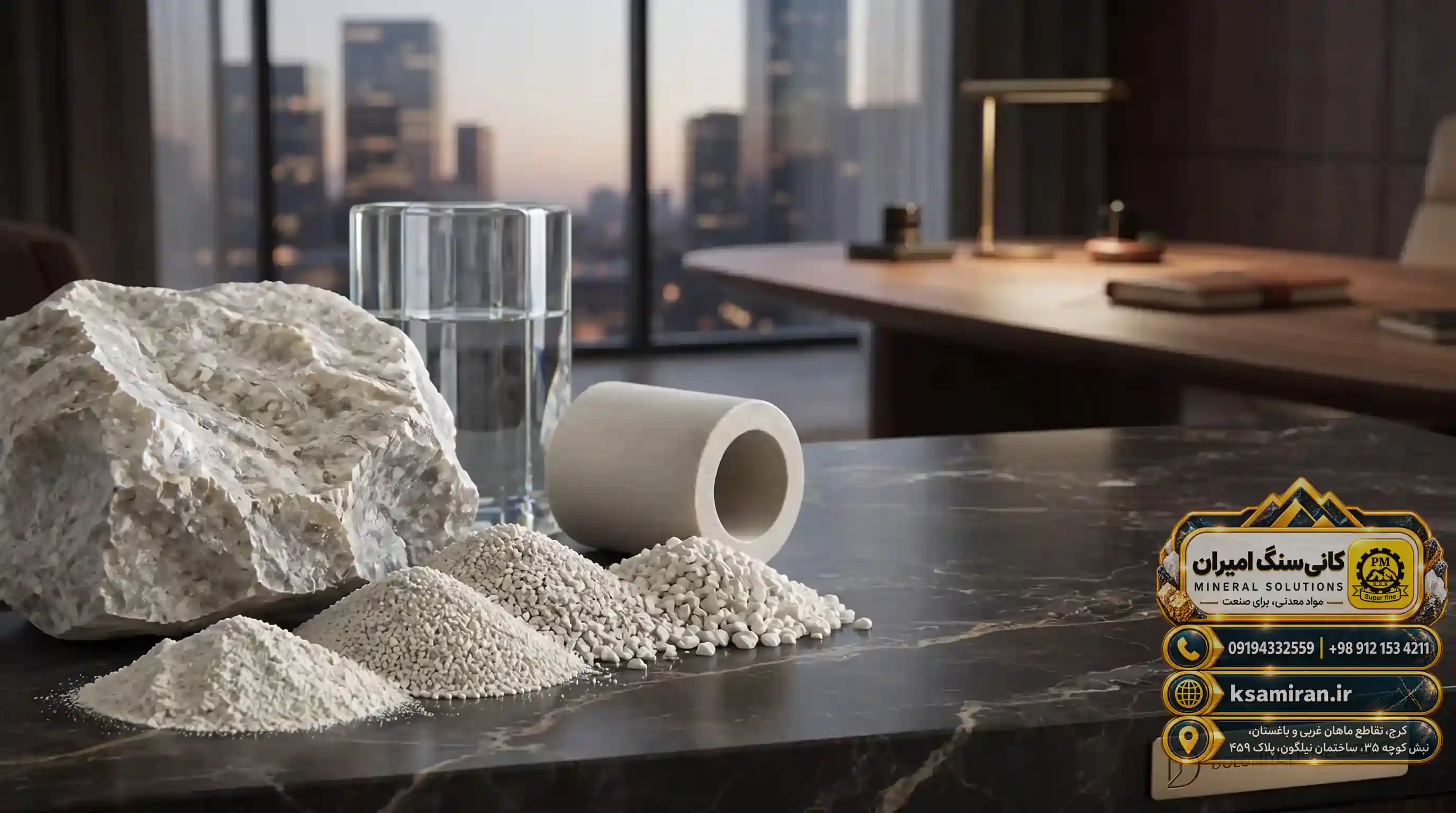
The Role of Dolomite in the Glass Industry and Energy Consumption Reduction
The glass-making industry is one of the energy-intensive sectors where melting raw materials requires extremely high-temperature fuaces. Meanwhile, using dolomite as a source of calcium and magnesium in the glass batch creates significant thermodynamic advantages that directly impact the optimization of energy consumption.
The presence of this mineral in the composition of glass raw materials reduces the melting point of the mixture. When the temperature required for melting decreases, the amount of fuel consumed in the fuaces is reduced, and consequently, the emissions of combustion gases and carbon dioxide into the atmosphere are noticeably decreased, which is an effective step toward environmental protection.
Specialized studies show that the performance of this material in glass-making processes has interesting similarities with other mineral additives. For example, studying the article The Role of Red Iron Oxide (Ochre) in Glass Manufacturing Industries greatly helps in better understanding interdisciplinary interactions in glass formulation.
The 10 to 40 mesh range of this material allows for uniform melting without generating gaseous impurities. This enhances the optical quality of the glass and minimizes production waste, which in tu is an important achievement toward sustainable industrial production.
Application in Ceramic Products and Enhancement of Sustainable Quality
The ceramic and tile-making industry is always looking for raw materials that, while improving the appearance and mechanical properties of products, also ensure their thermal stability. Due to its active oxides, this mineral acts as an effective flux in the ceramic body and glaze, facilitating the firing process.
Using this mineral in the production of ceramic products leads to a reduction in the firing temperature and an improvement in the mechanical strength of the final product. Lowering the fuace firing temperature means lower energy consumption and reduced air pollutant emissions, which has a direct impact on improving the environmental indicators of ceramic factories.
Alongside this material, other minerals also play complementary and important roles in paint and coating industries related to ceramics. For instance, a detailed examination of The Environmental Impacts of Using Red Iron Oxide (Ochre) gives industrialists a more comprehensive perspective on choosing environmentally friendly raw materials.
By supplying this product in standard granulation, the Kani Sang Amiran project helps ceramic manufacturers maintain a uniform and fluctuation-free composition. This quality stability prevents the production of defective products and ceramic waste, ultimately helping to preserve natural resources and reduce the volume of industrial waste.

Optimizing Construction Materials Using Dolomite
The construction and building materials sector is one of the largest consumers of mineral resources in the world. The use of dolomite in this field as a filler, strengthening agent, and additive in concrete and dry mortars has created a positive transformation toward sustainable construction.
Due to its dense structure and high chemical stability, this mineral increases the durability of construction materials against atmospheric and mechanical factors. Increasing the lifespan of structures means reducing the need for early reconstruction, lowering energy consumption for the remanufacturing of materials, and consequently reducing negative environmental impacts.
The supply of this material in a 10 to 40 mesh granulation by the Kani Sang Amiran project allows for its uniform distribution within the concrete and mortar matrix. This prevents structural cracks and improves the rheological properties of materials, ultimately leading to a reduction of material waste at construction sites.
Using domestic and processed mineral resources with high standards reduces reliance on costly imported materials and minimizes the carbon footprint caused by the transportation of raw materials. This approach aligns with the principles of the circular economy and sustainable development in the construction industry.
Waste Reduction and Optimization of Industrial Waste Management
One of the main challenges for manufacturing industries is the management and reduction of solid and gaseous waste. Careful selection of raw materials can play a preventive role in waste generation. Due to its high purity and controlled reactivity, this mineral reduces the amount of discarded material in industrial processes.
When materials with standard granulation are used in the glass, ceramics, and construction materials industries, the efficiency of chemical reactions increases, and no toxic byproducts or wastes are produced. This dramatically reduces the costs of treating and disposing of effluents and waste.
By adhering to quality standards in processing this product, the Kani Sang Amiran project ensures that no harmful impurities enter the customers' production cycle. This approach not only increases production line efficiency but also prevents soil and water pollution in the areas surrounding industrial units.
Therefore, using this mineral is recognized as a preventive strategy in waste management that allows industrialists to pursue their sustainable development goals with greater confidence and successfully pass environmental standards.
Social Responsibility and the Future Outlook of Green Mineral Industries
Today, Corporate Social Responsibility (CSR) goes beyond charitable activities and includes a serious commitment to preserving the environment, reducing greenhouse gas emissions, and optimally using the earth's non-renewable resources. As the starting point of the value chain, mineral industries play a fundamental role in this transformation.
Moving toward "green mining" and using standard processed products like this mineral demonstrates the commitment of industrial actors to future generations. By optimizing thermal and mechanical processes in the glass, ceramics, and construction industries, great strides are being made toward reducing negative impacts on ecosystems.
By continuously and sustainably supplying these products, the Kani Sang Amiran project strives to strengthen the executive arms of industrialists on the path to sustainability. Raising awareness about the environmental benefits of domestic minerals is part of this organization's professional mission toward elevating the country's industry.
The future outlook indicates that industrial units reliant on clean technologies and quality raw materials will capture a larger share of domestic and inteational markets. The intelligent use of mineral resources is the key to survival and success in tomorrow's competitive market.
Conclusion and Summary on the Role of Dolomite in Sustainability
In this comprehensive article, various aspects of the application of this mineral and its positive impacts on reducing the environmental impacts of industries were examined. It was established that by improving fuace efficiency, lowering melting points, and increasing product durability, this mineral plays a key role in reducing energy consumption and pollutant emissions.
The use of this product in the 10 to 40 mesh range for diverse applications such as glass, ceramic products, and construction materials demonstrates the high flexibility and efficiency of this material. By offering high-quality products, the Kani Sang Amiran project has provided a suitable foundation for industries to move toward clean production.
Compliance with environmental standards is no longer an optional choice, but a business and moral necessity. By making the right choice of raw materials and relying on domestic mineral capacities, one can significantly help preserve the environment and natural resources while simultaneously enhancing production quality.
It is hoped that this review will guide esteemed industrialists, engineers, and researchers on the path to optimizing processes and achieving sustainable development goals, creating novel approaches in green industrial management.
| Question | Answer |
|---|---|
| What is this mineral and what is its composition? | It is a double carbonate mineral of calcium and magnesium used in various industries. |
| What is the mesh range of this product? | This product is supplied in a mesh range of 10 to 40 mesh. |
| What are the main applications of this mineral? | Glass, ceramic products, and construction materials are its main applications. |
| How does it help reduce energy consumption? | It reduces fuel consumption by lowering the melting point in glass-making and ceramics fuaces. |
| What role does it play in the glass industry? | It acts as a supplier of calcium and magnesium and a melting process enhancer. |
| Is it also used in the ceramic industry? | Yes, it is used as an effective flux in ceramic bodies and glazes. |
| How does it affect construction materials? | It increases durability, stability, and improves the rheological properties of concrete and mortar. |
| Does using this material help the environment? | Yes, it is environmentally friendly by reducing waste, lowering firing temperatures, and reducing greenhouse gas emissions. |
| Which group supplies this product? | It is produced and supplied by the Kani Sang Amiran project. |
| How can one obtain more information? | By visiting the dedicated product page on the Kani Sang Amiran website, you can receive complete information. |
Kani Sang Amiran Project, specialized reference for the supply and processing of industrial minerals.
برچسب: Dolomite,The Role of Dolomite in Reducing the Environmental Impacts of Industries,
نویسنده: رساوب آفرین