
درباره سایت
آخرین مطالب
- تأثیر کیفیت سیلیس بر دوام و استحکام بتن صنعتی
- انتخاب بهترین دولومیت مش 10 تا 40 کاربردی در تولید شیشه
- انتخاب بهترین دولومیت مش 10 تا 40 کاربردی در تولید شیشه
- بهترین دولومیت صنعتی برای مصارف شیشه و مصالح ساختمانی
- دليل تقديم طلب شراء أكسيد الليمونيت (جول ماش)
- مزایای استفاده از اکسید لیمونیت (گل ماش)
- نقش تالک صنعتی در صنایع گچ و مصالح ساختمانی
- Benefits of Using Limonite Oxide (Gol Mash)
- دور التلك الصناعي في صناعات الجبس ومواد البناء
- The Impact of Silica Quality on the Durability and Strength of Industrial Concrete
امکانات وب
Introduction to the Importance of White Talc in Mode Industries
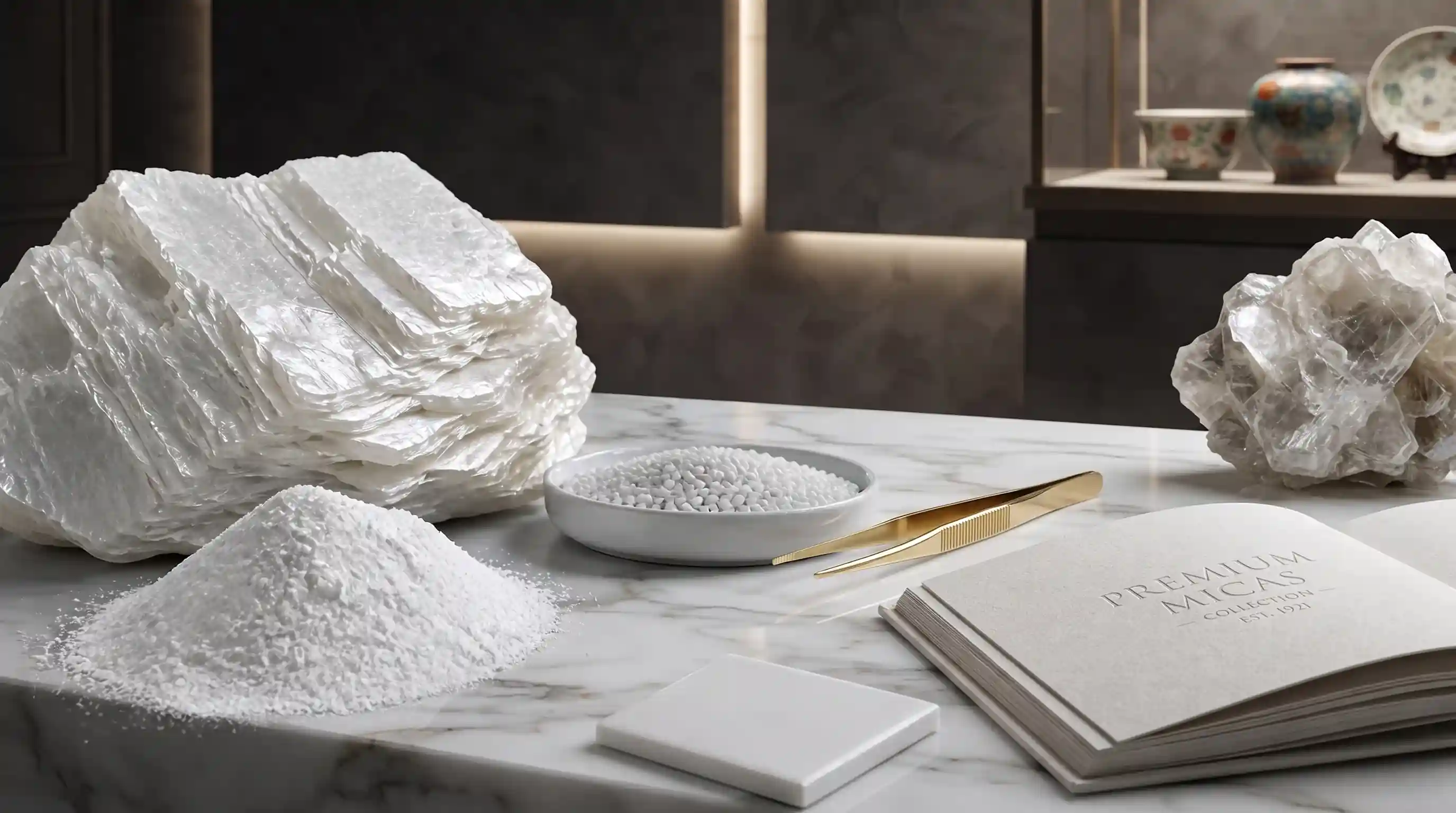
Mineral materials are known as the backbone of manufacturing industries, and among them, white talc holds a special and irreplaceable position. The Kani Sang Amiran project, focusing on the principled extraction and processing of this valuable material, plays a key role in meeting the needs of various industries. Due to its unique layered structure, extraordinary softness, and high purity, this mineral acts as more than just a simple filler and serves as a powerful improver in industrial formulations.
A precise understanding of the structural and physical characteristics of this material is an important step towards optimizing production processes. For a deeper understanding of these features, reading the article Review of Physical and Mechanical Properties of Industrial Talc Powder is recommended to engineers and professionals. With minimal impurities, this material imparts remarkable brightness and whiteness to final products, which is of high importance for sensitive applications.
The variety in grinding levels and access to a range of 450 to 2500 mesh has provided unparalleled flexibility for various industries. Manufacturing industries can achieve the highest level of efficiency by choosing the granulation tailored to their needs. In the rest of this article, we will examine the various dimensions of the application of this strategic material in various specialized fields.
The Vital Role of White Talc in the Masterbatch Industry
The masterbatch industry is one of the main consumers of micronized mineral powders. The use of white talc in the production of various polymer masterbatches brings significant technical and economic advantages. This material acts as a nucleating agent and improves the crystallization speed of polymers, which directly affects the improvement of the mechanical properties of plastic parts.
Compared to other fillers, this material, due to the flaky nature of its crystal structure, increases the dimensional stability of injection-molded parts and prevents them from warping. For a more detailed comparison with other additives, you can read the article Examining the Structural Differences Between White Talc and Calcium Carbonate to better understand their functional differences in masterbatch formulations.
The Kani Sang Amiran project, by precisely processing this mineral material into various meshes, provides stable quality and homogeneity to masterbatch manufacturers. The uniform distribution of particles in the polymer matrix improves melt flowability and increases the productivity of production lines.

Improving the Quality of Polymer Compounds with White Talc
Polymer compounds today make up a large portion of automotive parts, home appliances, and industrial equipment. The presence of white talc in compound formulations leads to an increase in flexural modulus, hardness, and thermal resistance of the final parts. These features are vital for parts that are subjected to continuous mechanical and thermal stresses.
The use of high meshes, such as 1500 to 2500, of this product in compounding results in excellent dispersion of particles in the polymer bed and prevents particle agglomeration. This, in tu, prevents a drop in impact resistance and creates an optimal balance between strength and flexibility. Manufacturers of plastic automotive parts can reduce the weight of parts while improving quality standards by utilizing this material.
Observing the principles of warehousing and storage of mineral raw materials is also very important for maintaining the quality of compounds; although the storage conditions for similar materials like barite powder are explained in the article Comprehensive Guide to Warehousing and Storage of Industrial White Barite Powder, the general principles of humidity control and packaging protection apply fully to this product as well.
Application of White Talc in the Paint and Industrial Coatings Industry
The paint and resin industry is always looking for fillers that, in addition to reducing the final price, enhance the optical and mechanical properties of the paint film. White talc, with its desirable refractive index and appropriate whiteness, contributes significantly to improving the coverage and matting of construction and industrial paints.
The flaky structure of this material in paint helps create a barrier against moisture penetration and corrosive agents, thereby significantly increasing the corrosion resistance of metal coatings. Additionally, this material acts as an anti-settling agent and improves the shelf life of paint.
Selecting the appropriate mesh range (between 450 and 2500) allows the formulator to precisely control the gloss and viscosity of the paint. Finer meshes show unparalleled efficiency for glossy paints, and coarser meshes for putties and primers.
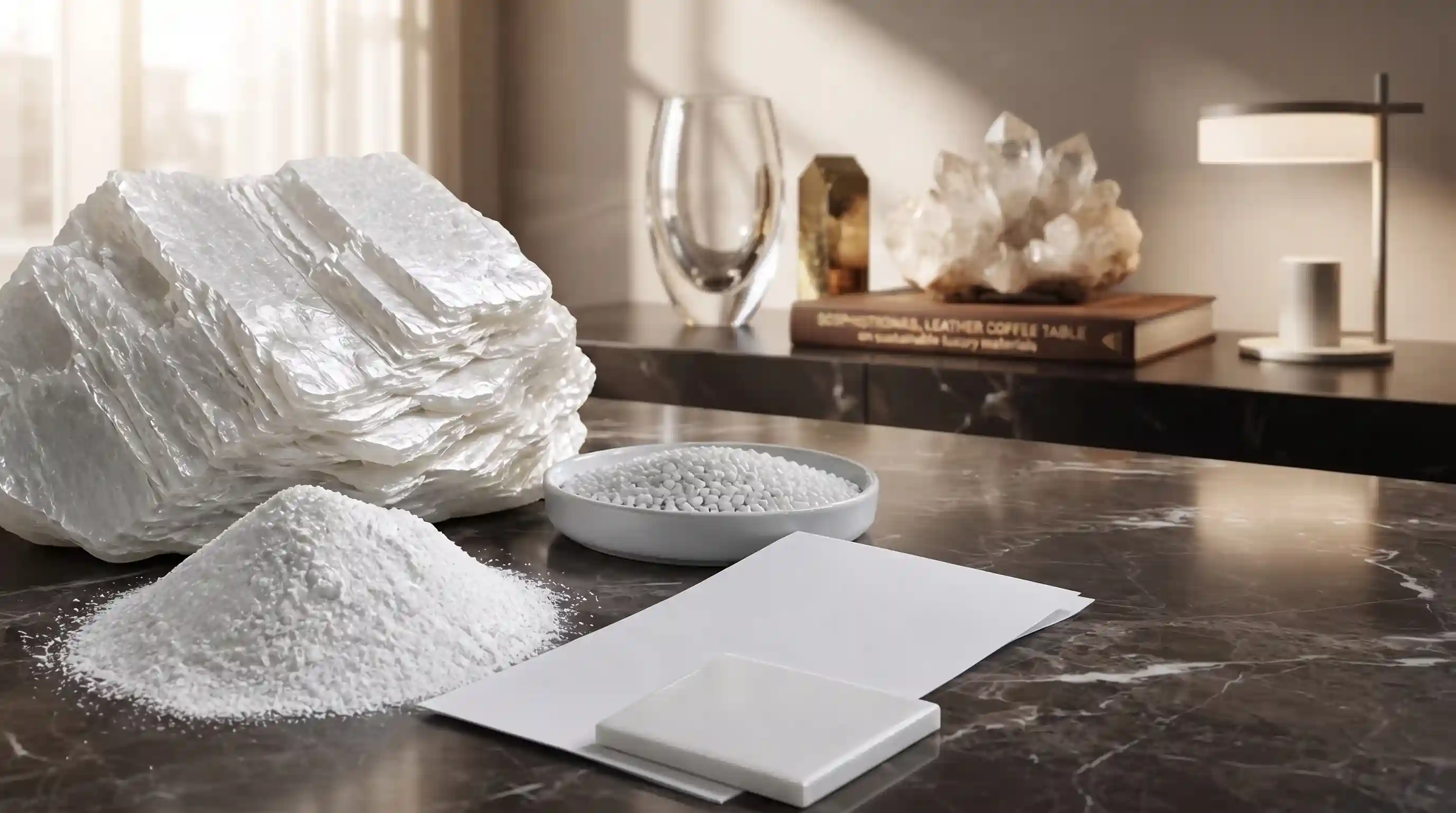
The Role of White Talc in the Papermaking Industry and Improving Printability
In the papermaking industry, achieving a smooth, uniform surface with excellent printability is one of the main goals of manufacturers. White talc acts as an excellent filler and coating agent in paper pulp and reduces the porosity of the paper surface.
The use of this mineral material leads to an improvement in whiteness, opacity, and ink absorbency in paper. Due to the natural softness of this material, the wear on equipment and blades of papermaking machines is minimized, which increases production line efficiency.
The Kani Sang Amiran project, through precise processing of raw materials, provides a product free of abrasive impurities for the papermaking industries, which is fully compatible with the quality standards of this industry.
Enhancing the Quality of Ceramic Products with White Talc
Mode ceramics and tiles require raw materials that maintain their stability against high temperatures and prevent deformation of the body. This mineral material, with its stable chemical composition, plays an important role in reducing firing temperature and improving the mechanical properties of the ceramic body.
In glazes and ceramic bodies, this material acts as a source of magnesium and helps form desirable mineral phases during firing. This process leads to reduced firing shrinkage, increased resistance to thermal shock, and improved final whiteness of the ceramic piece.
Precision in selecting granulation based on the specified mesh range allows ceramic engineers to precisely control slurry behavior and viscosity to produce a flawless product.

Technical Review of the 450 to 2500 Mesh Range in Industrial Processes
The variety in particle size is one of the most important parameters in selecting processed mineral materials. The 450 to 2500 mesh range covers a wide spectrum of applications; from lower meshes used for bulk fillers to very fine (micronized) meshes used in advanced industries.
Particles with higher meshes (such as 2500 mesh) have a very high specific surface area, which maximizes their interaction with polymers, resins, and other matrices. This level of grinding requires advanced processing equipment, which the Kani Sang Amiran project provides by relying on mode technical knowledge.
Strict control of Particle Size Distribution (PSD) ensures that there are no agglomerated or unwanted particles in the final product and that industrial efficiency reaches its highest level.
Conclusion and Future Outlook of White Mineral Talc Application
White talc, as a strategic mineral material, plays an undeniable role in improving the quality, durability, and efficiency of products in the masterbatch, compound, paint, paper, and ceramic industries. The unique physical and chemical properties of this material make it an unrivaled option in materials engineering.
The Kani Sang Amiran project, by standard extraction and processing of this product with a mesh range of 450 to 2500, has provided a suitable foundation for the development of domestic industries. Investing in processing quality and the sustainable supply of this mineral material will ensure the growth and competitiveness of manufacturers in domestic and foreign markets.
The smart selection of mineral raw materials is the key to success in mode manufacturing industries, and the use of high-quality talc is a firm step in this path.
| Question | Answer |
|---|---|
| What is white talc? | It is a natural, layered mineral with high purity that is used in various industries. |
| What are the main applications of this product? | Masterbatch, compound, paint, paper, and ceramic products. |
| What is the production mesh range of this product? | This product is processed and supplied in the range of 450 to 2500 mesh. |
| What is the role of talc in the masterbatch industry? | Improving mechanical properties, increasing dimensional stability, and acting as a nucleating agent. |
| Why is this material used in paint manufacturing? | To improve coverage, increase corrosion resistance, and control gloss. |
| What is the advantage of using talc in compounding? | Increasing flexural modulus, hardness, and thermal resistance of plastic parts. |
| What is the role of this material in papermaking? | Reducing porosity, improving whiteness, and increasing the printability of paper. |
| What is the effect of talc on ceramics? | Reducing firing temperature, reducing shrinkage, and improving resistance to thermal shock. |
| Which company is the manufacturer of this product? | Kani Sang Amiran project. |
| How can this product be purchased? | Through the dedicated product page on the Kani Sang Amiran website. |
Kani Sang Amiran Project - Specialized Reference for Production and Processing of Mineral Materials

برچسب: White Talc,A Comprehensive Review of Industrial Applications of White Talc,
نویسنده: رساوب آفرین