
درباره سایت
آخرین مطالب
- تأثیر کیفیت سیلیس بر دوام و استحکام بتن صنعتی
- انتخاب بهترین دولومیت مش 10 تا 40 کاربردی در تولید شیشه
- انتخاب بهترین دولومیت مش 10 تا 40 کاربردی در تولید شیشه
- بهترین دولومیت صنعتی برای مصارف شیشه و مصالح ساختمانی
- دليل تقديم طلب شراء أكسيد الليمونيت (جول ماش)
- مزایای استفاده از اکسید لیمونیت (گل ماش)
- نقش تالک صنعتی در صنایع گچ و مصالح ساختمانی
- Benefits of Using Limonite Oxide (Gol Mash)
- دور التلك الصناعي في صناعات الجبس ومواد البناء
- The Impact of Silica Quality on the Durability and Strength of Industrial Concrete
امکانات وب
Introduction to the Importance of Minerals in the Ceramic and Tile Industry
The ceramic and tile industries have always been advanced industrial sectors that require the use of raw mineral materials with specific purity, physical, and chemical properties to produce high-quality and durable products. In this regard, the correct selection of mineral fillers and flakes plays a decisive role in improving thermal stability, lowering the melting point, and enhancing the mechanical strength of the ceramic body and glaze. Minerals are known as the backbone of industrial formulations, and a precise understanding of their characteristics can bring about a dramatic transformation in production lines.
Alongside traditional materials, various mineral compounds are utilized in the manufacturing process, each performing a specific task. For example, examining the technical benefits of using kaolin in ceramics shows how the integration of this material with other mineral elements can significantly help improve the plasticity and whiteness properties of the final product. However, achieving flawless properties also requires the use of other complementary materials that work synergistically together.
One of these key materials widely used as a multifunctional mineral additive is the valuable white talc. Due to its flaky (layered) structure and unique properties, this material has found a special place in mode formulations. In the continuation of this article, we will examine in detail the various dimensions of using this material in different industries, especially ceramic and tile manufacturing.
Meaning and Nature of White Talc and Its Structural Characteristics
White talc is a natural hydrated magnesium silicate that enjoys high popularity in various industries due to its inherent softness, flaky structure, and high affinity with other materials. This material has a specific crystal structure that allows it to easily flex against mechanical and thermal stresses. Color purity, gloss level, and chemical inertness are among the most prominent features of this mineral, distinguishing it from other mineral fillers.
The processing of this mineral is carried out in various particle size ranges, such that a mesh range of 450 2500 mesh enables its use in a wide spectrum of specialized applications. Very fine particles in this mesh range help create a uniform dispersion within the material matrix, significantly increasing the final product quality. This feature gains twofold importance in industries that require a smooth, polished, and flawless surface.
The manufacturer of this product, Kani Sang Amiran Project — producer of mineral materials utilizing state-of-the-art global technologies, supplies and offers this material with the highest quality standards. A precise understanding of the structure of white talc helps engineers and industrial designers develop more optimized formulations for their products and maximize production line efficiency.
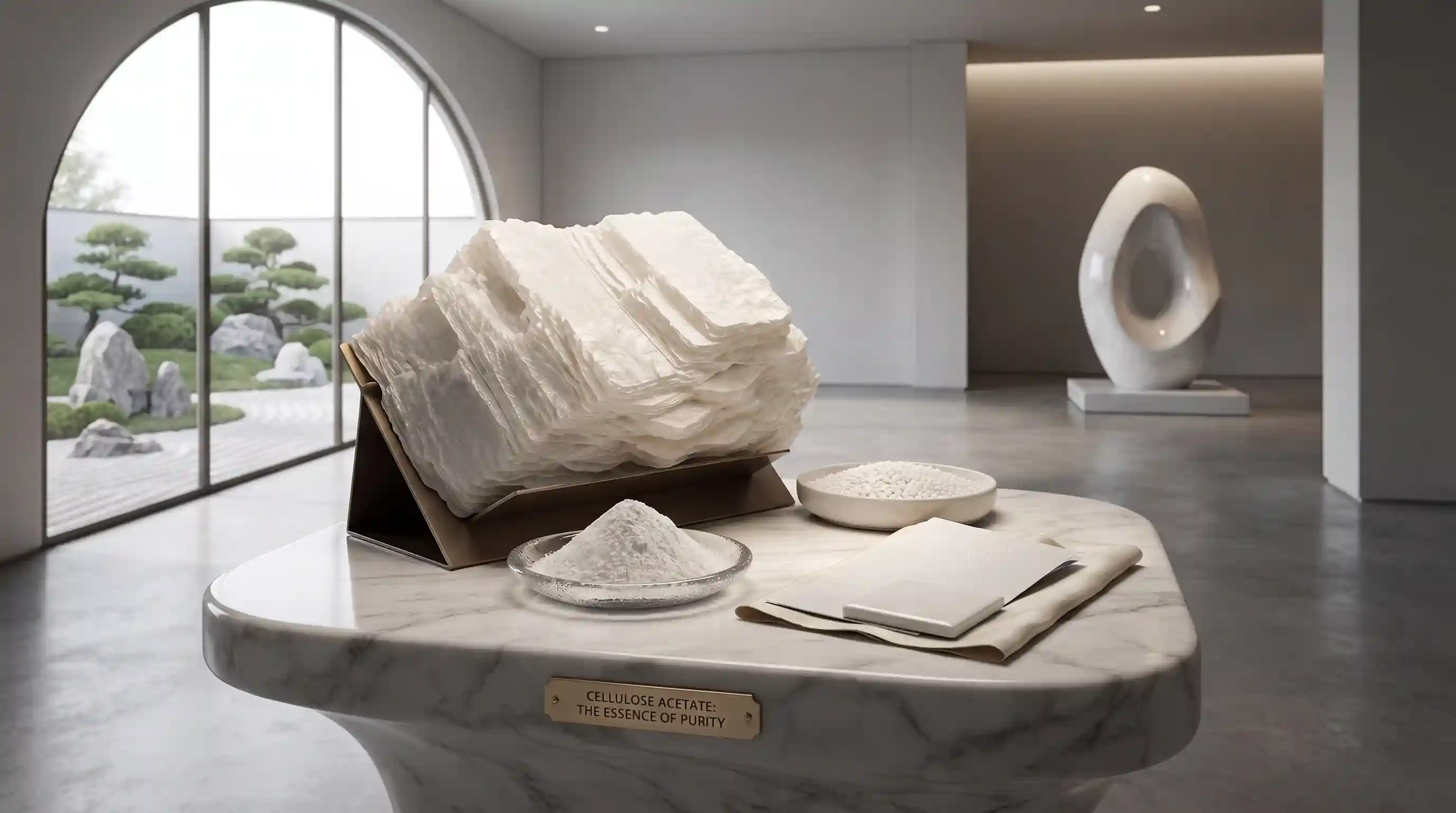
The Role of White Talc in Ceramic Industries and Ceramic Products
In the ceramic and tile industry, precise control of thermal shrinkage, increasing thermal shock resistance, and improving body whiteness are major conces for materials engineers. The main applications of this product include use in masterbatches, compounds, paints, paper, and ceramic products, among which the ceramic sector benefits the most from the physical properties of talc. The presence of magnesium oxide in the structure of this material lowers the firing temperature of the ceramic body, thereby creating significant energy savings.
Furthermore, the presence of this mineral in the tile and ceramic body helps improve dimensional stability and prevents products from warping in the kiln. Since various minerals are used in this industry, studying the application of dolomite in the paint and resin industries and comparing its effects with talc can provide a more comprehensive view for ceramic and construction industry specialists to choose the best combination of raw materials.
Using appropriate talc particle sizes in ceramic industries leads to filling microscopic voids and creating a dense and homogeneous structure. This structural compaction not only increases the mechanical resistance of tiles and ceramics but also minimizes body water absorption and guarantees product durability in harsh environmental conditions.
Application of White Talc in Masterbatch and Compound Production
The polymer industry and the production of masterbatches and compounds are always looking for fillers that, in addition to reducing the final product cost, improve the mechanical and appearance properties of plastics. Due to its flaky structure, white talc acts as an excellent reinforcing agent in polymer matrices. This material drastically increases the stiffness, elastic modulus, and heat resistance of plastic parts and prevents them from deforming at high temperatures.
In the masterbatch production process, the excellent dispersibility of talc particles is of utmost importance. The mesh range of 450 to 2500 mesh makes it possible for the particles to be distributed completely homogeneously within the base polymer without any agglomeration or clotting. This greatly helps improve gloss, surface quality, and the processing characteristics of compounds, delivering a high-standard product to the consumer.
By supplying this high-quality material, the Kani Sang Amiran Project has addressed the need of masterbatch and compound manufacturers for a standard and reliable mineral filler. The use of talc in engineering compounds ensures that plastic parts produced in the automotive, home appliance, and packaging industries have optimized performance and a longer lifespan.

Application of White Talc in the Paint and Industrial Coatings Industry
To achieve coatings with favorable coverage, high durability, and resistance to weather factors, the paint and resin industry is heavily reliant on mineral pigments and fillers. White talc is considered one of the best choices as a matting agent, viscosity improver, and corrosion resistance enhancer in paint formulations. The flaky structure of talc particles creates a physical barrier against moisture and oxygen penetration in the paint layer, which dramatically prevents the rusting of metal surfaces.
Along these lines, a detailed examination of the application of kaolin in the paint manufacturing and industrial coatings industries shows how the clever combination of kaolin and talc can improve the rheological properties, storage stability, and sandability of architectural and industrial paints. This synergy between various minerals elevates the final quality of the coating to a higher level.
Choosing the appropriate mesh from the 450 to 2500 mesh range in paint manufacturing depends on the type of application; finer meshes are used for glossy paints, while medium meshes are utilized for matte paints or primers. This high flexibility has made white talc a core pillar of advanced formulations in the paint industry.
The Role of White Talc in the Paper Industry
The paper industry requires raw materials that can improve the whiteness, brightness, surface smoothness, and printability of paper. White talc is used as an excellent filler and coating agent in the production of various types of paper and cardboard. Due to its natural softness, this material prevents the wear of blades and equipment in paper manufacturing machinery, maintaining production line efficiency.
When talc is added to paper pulp, it fills the empty spaces between cellulose fibers, creating a smooth and uniform surface that is ideal for high-quality printing and inkjet applications. Additionally, this material helps ink absorb better and prevents it from spreading. The natural whiteness of talc also reduces the need to use excessive chemical bleaching agents, making the production process more environmentally friendly.
Given the diversity in the mesh range of this product, paper manufacturers can choose the desired particle size according to the type of final product (ranging from newsprint to luxury packaging cardboard). This flexibility has tued white talc into a strategic consumable material in paper mills.
The Importance of Particle Size and the 450 to 2500 Mesh Range in Product Quality
Mineral particle sizing is one of the vital parameters that directly affects the final properties of the product. Mesh range: 450 2500 mesh covers a wide spectrum of particle sizes, each optimized for specific uses. Lower meshes (such as 450 mesh) have coarser particles suitable for applications requiring high flowability and volume filling, while higher meshes (such as 2500 mesh) feature micronized and very fine particles used in paints, thin masterbatches, and advanced ceramics.
Precise micronization of this material requires advanced grinding and classification equipment to ensure the particle size distribution remains completely uniform. The presence of unwanted coarse particles can create defects on the surface of final products; therefore, particle size quality control is carried out with extreme precision in the production lines of the Kani Sang Amiran Project to deliver a standard product without tolerance to industrialists.
A precise understanding of formulation requirements and selecting the right mesh of white talc allows manufacturers to achieve the highest economic and qualitative efficiency. This precision in particle size selection is the key to success in today's competitive markets.
Conclusion and Outlook for the Use of White Talc in Industry
In conclusion, it can be said that white talc, as a multifunctional mineral with exceptional features such as a flaky structure, high purity, and a diverse mesh range from 450 to 2500 mesh, holds an undeniable position in key industries such as ceramic and tile manufacturing, masterbatch, compound, paint, and paper. The correct use of this material not only helps improve the technical and appearance quality of final products but also brings about the optimization of production processes and reduction of energy costs.
Relying on the high-quality products offered by the Kani Sang Amiran Project — Mineral Materials Production, industrialists and materials engineers can procure their standard raw materials with peace of mind. Continuous research and development, alongside the use of mode processing technologies, outline a bright outlook for further utilizing the hidden potentials of this valuable mineral in the future.
| Question | Answer |
|---|---|
| What is white talc? | It is a natural hydrated magnesium silicate with a flaky structure and high purity. |
| What is the mesh range of the produced white talc? | This product is processed and supplied in the 450 to 2500 mesh range. |
| What are the main applications of white talc? | Masterbatch, compound, paint, paper, and ceramic products are its main applications. |
| What is the role of talc in the ceramic industry? | Lowering the body melting point, increasing thermal shock resistance, and improving dimensional stability. |
| Why is talc used in masterbatches and compounds? | To increase the hardness, elastic modulus, and heat resistance of plastic parts. |
| What is the advantage of talc in the paint industry? | Improving corrosion resistance, increasing opacity, and controlling viscosity. |
| What is the role of talc in paper manufacturing? | Increasing whiteness, surface smoothness, and improving paper printability. |
| Which company manufactures this product? | Kani Sang Amiran Project — Mineral Materials Production. |
| How can this product be procured? | Through the dedicated product page on the Kani Sang Amiran website. |
| Does talc particle size affect the final quality? | Yes, selecting the appropriate mesh plays a direct role in uniform distribution and the quality of the final product. |
Specialized Reference for Supply and Processing of Minerals Kani Sang Amiran

برچسب: White Talc,Review of the Application of White Talc in Ceramic and Tile Manufacturing Industries,
نویسنده: رساوب آفرین