
درباره سایت
آخرین مطالب
- Benefits of Using White Talc in Paint and Resin Formulations
- كيفية اختيار التلك الصناعي المناسب لصناعتك
- سیلیس چیست؟ راهنمای جامع کاربردهای این ماده معدنی در صنایع مختلف
- السيليكا أم البنتونيت؟ أي معدن مناسب لصناعتك؟
- 7 Applications of Industrial Talc in Various Industries You Should Know
- مزایای استفاده از تالک سفید در فرمولاسیون رنگها و رزینها
- التطبيق المتخصص لكربونات الكالسيوم المغلفة في صناعة أعمدة الأبواب والنوافذ
- What is White Talc? Applications and Benefits of This Mineral in Industries
- What is the Difference Between Silica and Calcium Carbonate in Manufacturing Industries? A Complete Review
- تالک صنعتی یا کربنات کلسیم؟ مقایسه کاربرد و قیمت در صنعت
امکانات وب
Introduction to the Application of Industrial Talc in the Wire and Cable Industry
The manufacturing industry of power and telecommunication cables constantly requires raw materials that can significantly enhance the durability and safety of the final product while maintaining flexibility. Among these, the use of mineral fillers and additives holds a special place. The mineral industrial talc, due to its flaky structure and unique physical and chemical properties, is considered one of the most widely used compounds in the formulation of cable insulation and sheaths. To lea more about the benefits of this valuable material, you can read the article The Key Role of Industrial Talc in Improving the Quality of Manufactured Products.
Kani Sang Amiran project, focusing on the supply and processing of high-quality mineral materials, produces and supplies this mineral powder in a standard mesh range of 450 to 1000. Precise understanding of the characteristics of this material helps engineers and industrial designers select the best composition to upgrade the quality standards of power and telecommunication cables. The layered structure of talc causes the particles to align parallel to each other during the extrusion process, creating optimal mechanical and thermal properties.
In recent years, significant developments have taken place in the wire and cable industry, which have doubled the need for specialized fillers. Industrial talc, as a performance-enhancing agent, not only helps reduce production costs but also improves the final performance of the product under various environmental conditions. The proper use of this mineral powder in advanced production lines paves the way for overcoming many technical challenges in the field of insulation.
Furthermore, a detailed examination of the structural characteristics of talc shows that due to its chemical inertness, this material does not exhibit adverse reactions with other polymeric or rubber components. This exact factor guarantees the long-term stability of cables and prevents premature degradation of coatings due to atmospheric factors or mechanical stresses.
The Role of Industrial Talc in Improving Physical and Mechanical Properties of Cable Insulation
One of the primary reasons for utilizing industrial talc in the structure of power and telecommunication cables is its ability to improve the mechanical and dimensional properties of the polymers and elastomers used. When this mineral powder with a mesh range of 450 to 1000 is added to the polymer matrix, it acts as a structural reinforcer, increasing the elastic modulus and tensile strength of the insulation.
The flaky structure of talc particles ensures that after the curing or shaping process, the dimensional stability of the cable is significantly improved. This feature is of high importance especially when pulling cables through underground or overhead ducts, as it prevents unwanted deformation and narrowing of the cable cross-section. View more details regarding this product on the dedicated page industrial talc.
In addition to tensile strength, the use of industrial talc increases the surface hardness of the cable insulation and sheath without completely destroying the flexibility of industrial talc. Achieving a balance between hardness and flexibility is the key to having cables with a long lifespan and easy installation capability in civil and telecommunication projects.
The proper dispersibility of talc particles in polymer compounds also plays an important role in the uniformity of mechanical properties along the entire length of the cable. The absence of particle agglomeration or clustering reduces production errors and guarantees the final product quality, which is considered an important achievement for large production units.

Improving Thermal and Electrical Characteristics Using Industrial Talc
In the design and production of power transmission and telecommunication cables, thermal stability and electrical non-conductivity are of vital importance. Industrial talc, due to its specific mineral structure, imparts favorable thermal resistance to polymer and rubber compounds. This feature prevents premature softening or melting of the cable sheath resulting from temperature increases caused by high electrical current flow.
On the other hand, the electrical insulation of cables must be at the highest standard level. Industrial talc, as an insulating mineral material, does not release any ions that could facilitate the conduction of electric current, thereby guaranteeing the safety of power transmission systems. In similar industries such as the production of acoustic insulation, other mineral materials like Application of Industrial Barite in the Production of Sound and Thermal Insulation are also investigated alongside talc to optimize protective properties.
Increasing thermal stability also ensures that cables do not experience cracking or brittleness under extreme temperature fluctuations in open or industrial environments. This stability significantly increases the useful lifespan of network equipment and power distribution infrastructure.
Alongside the above, the linear thermal expansion coefficient of polymers is reduced by adding talc, which prevents the creation of inteal stresses caused by diual temperature variations and maintains the structural stability of the cable in the long term.
Application of Industrial Talc in Polymeric and Rubber Cable Products
A major portion of insulation and sheaths in power and telecommunication cables consists of polymers (such as PVC, PE, and XLPE) and rubber compounds. Industrial talc, due to its high compatibility with these materials, is used as an efficient filler in rubber and polymer formulations. The 450 1000 mesh range of this powder enables uniform distribution throughout the compound volume.
In rubber cable products, talc prevents layer adhesion during storage and the manufacturing process, acting as an excellent anti-blocking agent. Also, in polymeric products, the presence of industrial talc helps reduce the mold shrinkage rate, bringing the dimensional accuracy of the cable cross-section to the desired level. In the field of coloring and cable marking, the use of complementary minerals such as Application of Kaolin in Paint and Industrial Coatings Industries is also common.
Adding talc to the polymer matrix also improves melt flowability in extruder machines, which increases production speed and optimizes energy consumption. Wire and cable manufacturers are always looking for solutions to increase the efficiency of extrusion lines, and using talc with standard granulation meets this need.
In addition to improved processability, reducing the final production cost without sacrificing quality is another competitive advantage of using industrial talc in polymeric and rubber cable-making industries, making production economics more justifiable.
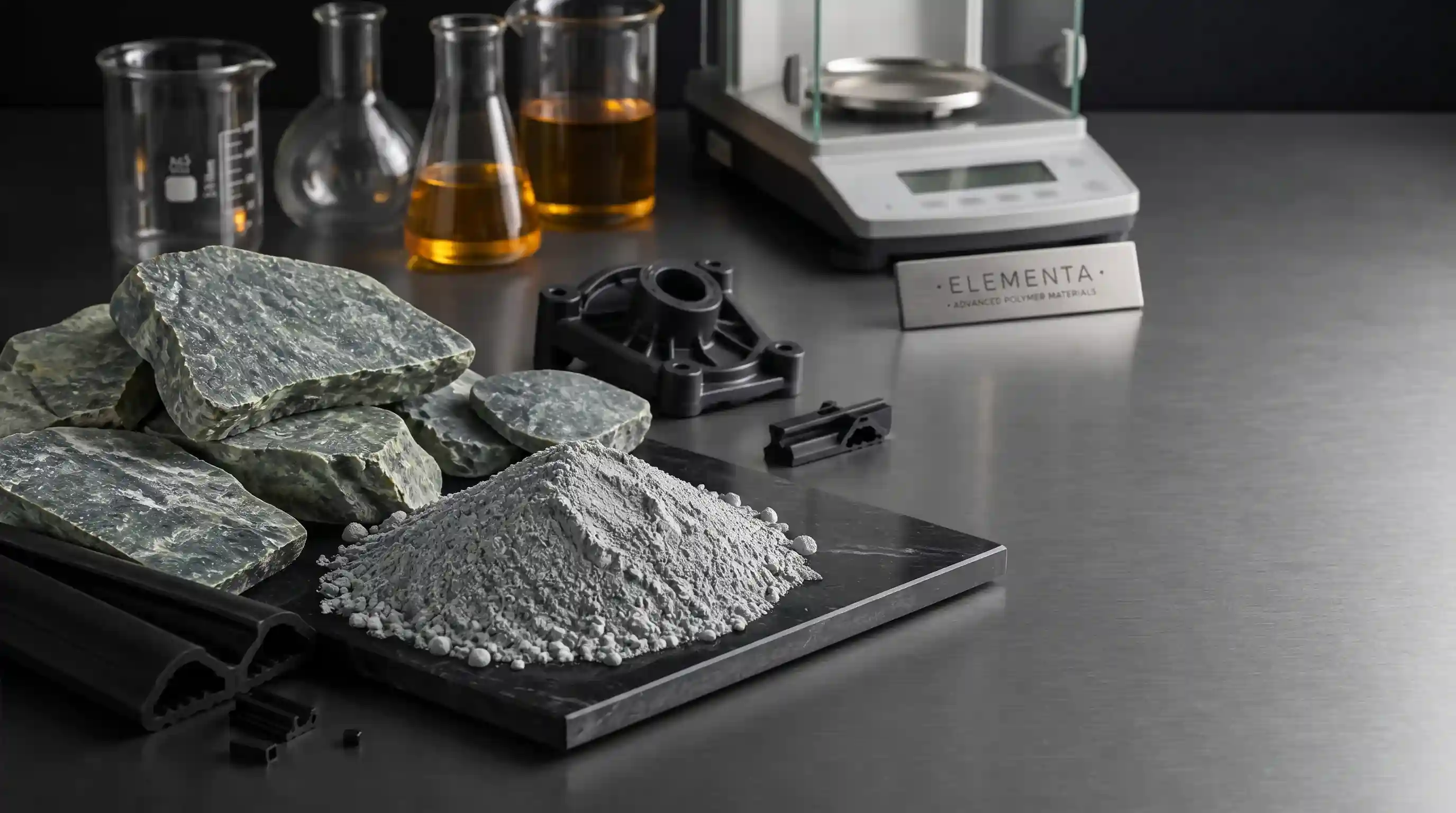
The Role of Industrial Talc in Optical Properties, Color, and Surface Coatings of Cables
Power and telecommunication cables often require specific colored coatings to identify voltage, phase, or application type. Industrial talc, due to its desirable whiteness and appropriate reflection coefficient, acts as a color and surface coating quality-improving agent in the outer layer of cables. This material helps distribute pigments uniformly and prevents color fading of the cable sheath against sunlight radiation.
In paint and industrial coating industries, talc powder assumes the role of gloss control and matting agent. In cable sheath production, this feature is also very important for creating a matte, uniform surface free of visual defects. The 450 1000 mesh range helps ensure that no coarse particles are formed on the outer surface of the cable, preserving the appearance quality of the final product.
Resistance against weathering and ultraviolet (UV) radiation is another advantage of having talc in the outer protective layer of cables. By creating a protective shield against environmental stresses, this mineral powder prevents the photochemical degradation of the polymer.
Therefore, industrial talc is not merely a simple filler, but a multi-purpose agent that simultaneously makes a significant contribution to improving the structural, visual, and protective properties of cable sheaths.
Optimizing the Extrusion Process and Industrial Production with Industrial Talc
The extrusion process is the beating heart of power and telecommunication cable production. At this stage, the polymer or rubber compound passes through a die to shape the final sheath or insulation. Using industrial talc with a mesh of 450 to 1000 has a direct impact on improving the rheological behavior of molten materials during this process.
The flaky particles of talc, by sliding over one another inside the extruder barrel, reduce inteal friction and make the movement of materials smoother. This significantly helps reduce extruder pressure, decreases equipment wear and tear, and ensures the uniformity of cable insulation thickness. The use of industrial talc in the Kani Sang Amiran project is controlled with high precision to meet the exact requirements of industrial production lines.
Furthermore, the cooling and solidification speed of the cable sheath after exiting the die is improved by the presence of talc, because the relative thermal conductivity of the mineral particles helps transfer heat more quickly. This feature shortens the production cycle and increases the overall productivity of cable manufacturing plants.
Precise adjustment of the weight percentage of talc in industrial formulations enables engineers to release a high-quality and standard product into the consumer market without worrying about a drop in production line speed.
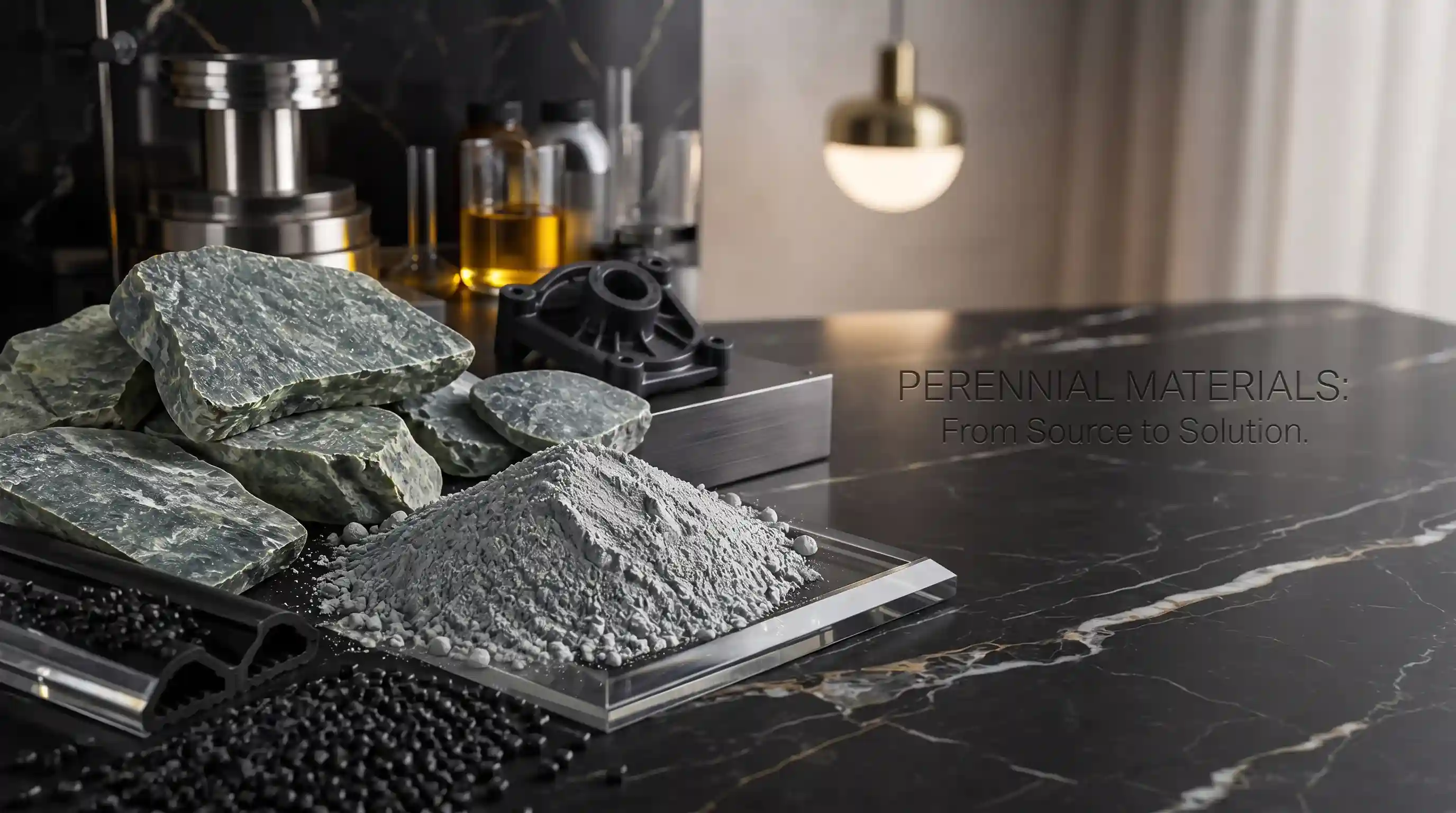
Economic and Environmental Benefits of Using Industrial Talc in Cable Manufacturing
In today's competitive world, optimizing production costs alongside maintaining environmental standards is a primary conce for industrialists. Industrial talc, as an abundant and cost-effective mineral material, provides the possibility of reducing the consumption of expensive polymers without sacrificing the technical quality of cables, thereby increasing the profitability of production units.
From an environmental perspective, talc is a completely natural mineral whose processing causes minimal damage to nature. Using this natural filler in polymeric and rubber products reduces the carbon footprint of final products and creates greater compliance with industrial green standards.
The Kani Sang Amiran project, by extracting and standard-granulating industrial talc in the 450 to 1000 mesh range, provides a homogeneous and high-quality product to various industries, including cable manufacturing, leading to reduced production waste and increased efficiency of consumed resources.
The long-term durability of cables containing talc in tu prevents premature replacement and frequent discarding of cables, contributing significantly at a macro level to the conservation of national resources and the reduction of industrial waste.
Standards and Quality Control in Selecting Industrial Talc for Telecommunication Industries
Telecommunication cables, due to transmitting sensitive data and requiring high precision, have stricter standards compared to some general cables. Chemical purity, absence of metallic or basic impurities, and particle size distribution are key factors in selecting industrial talc for this sector.
The presence of coarse particles or mineral impurities in talc can create weak points in the thin insulation of telecommunication cables, causing signal loss or short circuits. For this reason, using processed talc in the 450 to 1000 mesh range, produced with strict quality control, guarantees flawless cable performance in communication networks.
Quality control tests, including the examination of moisture percentage, whiteness level, granulation, and thermal loss, are performed on industrial talc to ensure that the raw material completely matches the standard requirements of telecommunication insulation formulations.
Observing these strict principles in supplying and consuming industrial talc has cemented the position of this mineral material as a reliable and standard solution in the advanced power and telecommunication cable manufacturing industry.
| Question | Answer |
|---|---|
| What is industrial talc and what is its application in cable manufacturing? | Industrial talc is a flaky mineral powder used to improve the mechanical, thermal, and electrical properties of insulation and sheaths in power and telecommunication cables. |
| What is the mesh range of the industrial talc supplied by Kani Sang Amiran? | This product is produced and supplied in the standard mesh range of 450 to 1000. |
| Why does industrial talc improve the mechanical strength of the cable? | Due to the flaky structure of the particles which align parallel to each other and increase the elastic modulus and tensile strength of the insulation. |
| Does industrial talc have a negative effect on the electrical insulation of the cable? | No, talc is an insulating mineral material and does not release any ions that conduct electric current. |
| What is the role of talc in the cable extrusion process? | It reduces inteal friction, improves melt flowability, and makes the insulation thickness uniform. |
| Is industrial talc also used in rubber products? | Yes, it is used as a filler and anti-blocking agent in rubber and polymeric cable products. |
| How does talc affect the appearance and color of the cable? | By having appropriate whiteness and reflection coefficient, it helps distribute color uniformly and create a matte and uniform surface. |
| What are the economic benefits of using industrial talc? | It brings reduced consumption of expensive polymers, lower production costs, and optimized extrusion line efficiency. |
| Is industrial talc also used in sensitive telecommunication cables? | Yes, provided it has high purity and standard mesh, it is very suitable for preventing signal loss and insulation defects. |
| How can high-quality industrial talc be procured? | You can take action by visiting the official product page on the Kani Sang Amiran website. |
Specialized reference for mineral and industrial materials Kani Sang Amiran (ksamiran.ir)
برچسب: Industrial Talc,Application of Industrial Talc in the Production of Power and Telecommunication Cables,
نویسنده: رساوب آفرین