
درباره سایت
آخرین مطالب
- Benefits of Using White Talc in Paint and Resin Formulations
- كيفية اختيار التلك الصناعي المناسب لصناعتك
- سیلیس چیست؟ راهنمای جامع کاربردهای این ماده معدنی در صنایع مختلف
- السيليكا أم البنتونيت؟ أي معدن مناسب لصناعتك؟
- 7 Applications of Industrial Talc in Various Industries You Should Know
- مزایای استفاده از تالک سفید در فرمولاسیون رنگها و رزینها
- التطبيق المتخصص لكربونات الكالسيوم المغلفة في صناعة أعمدة الأبواب والنوافذ
- What is White Talc? Applications and Benefits of This Mineral in Industries
- What is the Difference Between Silica and Calcium Carbonate in Manufacturing Industries? A Complete Review
- تالک صنعتی یا کربنات کلسیم؟ مقایسه کاربرد و قیمت در صنعت
امکانات وب
Introduction to Red Iron Oxide (Ochre) and the Importance of the Difference Between Its Natural and Synthetic Types
Red iron oxide (ochre) with the chemical formula Fe2O3 is one of the oldest known pigments in human history. This mineral, found naturally in the earth's strata, has been used for centuries as a rich and stable color in cave paintings, ancient artifacts, and traditional architecture. Today, however, this mineral pigment plays a much broader role in mode industries, and a precise understanding of it is essential for buyers and producers.
In today's industrial applications, red iron oxide (ochre) is primarily introduced for pigments, coatings, cement, and ceramic products. In all these applications, the final quality of the product depends heavily on the inherent characteristics of the iron oxide powder; characteristics such as purity percentage, mesh range (usually 450 to 1500 mesh), particle size distribution, color, and tinting strength. That is why knowing the difference between the natural and synthetic types of this material can have a direct impact on the final product's quality and even production costs.
The red iron oxide market is supplied through two main chaels: first, the extraction and processing of natural ores such as hematite and earthly ochres, which after crushing and classification are converted into pigment powder; second, the chemical production of this material in industrial plants through controlled chemical processes. Both routes produce a product named "red iron oxide," but their behavior in formulations is not exactly the same.
These differences matter greatly to the end consumer. For instance, a paint manufacturer may need a bright, uniform red color in every batch, while a producer of colored cement blocks may prefer the warm, earthy natural color and simultaneously pay less. Without knowing the differences, choosing incorrectly not only lowers the product's quality but can also lead to production line stoppage or formulation change.
In this article from the Kani Sang Amiran Project, a producer of mineral materials, we want to examine these two types from various angles: production origin, chemical composition, color and tinting strength, applications, advantages and disadvantages, and finally, selection criteria. If you are looking for a stable supply of this product, you can view more information about red iron oxide (ochre) on the product page.
By the end of this guide, you should be able to answer the question: for your specific application, which type—natural or synthetic—is more suitable and why. Before getting into technical details, it is helpful to become familiar with the overall market structure and how each is produced, which we will cover in detail in the following chapters.
Natural Red Iron Oxide: Formation Origin, Extraction, and Processing
The natural type of red iron oxide (ochre) is the result of millions of years of geological processes. Hematite ore (Fe2O3) forms in various environments: from marine and lacustrine sediments where iron precipitates from solution, to metamorphic regions and the weathering of iron-bearing rocks. In many mines, red iron oxide appears along with layers of ochre and limonite, and its color varies from brick red to reddish-brown.
Extraction of this material is usually done via open-pit mining. In the first step, extracted rocks are separated manually or with optical sorting systems based on color, hardness, and purity; because in natural pigments, the color of the rock itself determines the final color of the powder. Then the ore undergoes several stages of crushing and milling to become very fine particles.
After primary crushing, the powder enters classification stages. At this stage, particles are separated by size to achieve the desired mesh range (e.g., 450 to 1500 mesh). Coarser particles are more suitable for applications like cement coloring, and very fine particles are better for finer applications like ceramic glazes or high-quality paints. In many processing plants, dry or wet washing is used to reduce suspended particles and soluble salts.
One of the key features of the natural type is the presence of accompanying impurities. Silica, alumina, calcium, magnesium, clay compounds, and even organic materials always form part of the final composition, and the Fe2O3 percentage can vary significantly from one mine to another. This very diversity is the main cause of the warm, earthy color, as well as the difference in tinting strength between various batches.
In some cases, the natural powder undergoes a thermal process (calcination) at high temperatures so that its color becomes darker, more stable, and redder. This process can greatly improve the pigment properties, but the "natural" nature of the product—i.e., the diversity in composition—is preserved. That is why many professional buyers test a sample from each batch before bulk supply.
An important advantage of natural iron oxide is its short production path and lower cost; because unlike the synthetic type, it does not require extensive energy and chemical consumption in the production line. This both lowers the final cost and, from an environmental perspective, creates a lower carbon footprint.

Synthetic Red Iron Oxide: Production Methods and Characteristics
Synthetic red iron oxide (ochre) is the result of controlled chemical processes in industrial plants. In these methods, iron salts (such as iron sulfate or iron chloride) or scrap iron metal are used as raw materials, and through chemical reactions, high-purity red iron oxide is produced. The most important production methods include the precipitation process, calcination of iron salts (known as the copperas process), and thermal decomposition of iron compounds.
In the precipitation method, the iron salt solution is oxidized under precise control of pH, temperature, and mixing speed, and hematite crystals with a specific size and shape are formed. This control is the biggest advantage of the synthetic type: the producer can adjust the particle size distribution, particle shape (spherical, acicular, or lamellar), and consequently the final color within a narrow range.
Quality control in synthetic production is very precise. Parameters such as the Fe2O3 percentage, the amount of water-soluble salts, moisture, sieve residue, and tinting strength are measured in each batch, and a certificate of analysis is provided with the product. For this reason, the buyer can rely on a fixed formulation and not worry about batch-to-batch color changes.
In terms of visual characteristics, the synthetic type usually has a bright, clean red color with higher saturation, and exhibits higher tinting strength compared to the natural type. This means that to achieve a specific color, a smaller amount of pigment is needed, which can compensate for part of the price difference.
However, synthetic production has a higher cost: energy consumption for calcination, raw chemicals, control of gaseous pollutants, and industrial water. Also, in some processes, acidic gases are produced that require purification systems. These factors must be considered in evaluating the total cost.
Another point is the uniformity of particles, which is both an advantage and a challenge. Uniform particles give a uniform color, but in mixtures with particles of other sizes, they tend to agglomerate more and require care during storage.
For this reason, paint manufacturers, industrial coatings, plastics, and fine ceramics—where any color change means a defective product—usually choose the synthetic type. In the following chapters, we will examine what advantages this choice brings to each application.
Differences in Chemical Composition, Purity, and Mineralogical Structure
Both natural and synthetic types are mineralogically hematite (α-Fe2O3), meaning they have a similar crystal structure. But the difference is that the natural sample is rarely pure; it is usually found accompanied by other minerals such as goethite, limonite, quartz, clay, and other metal oxides. In contrast, the synthetic sample grows under controlled conditions and has far fewer impurity phases.
Chemical composition is the first comparison criterion. In the natural type, the Fe2O3 percentage varies depending on the mine and processing, and the buyer usually faces a range. In the synthetic type, this percentage is usually higher and constant across different batches. This is a decisive factor for applications where color and chemical reactivity are important.
Impurities and water-soluble salts are other key differences. In natural powder, the presence of calcium, magnesium, and sulfate salts is common and can cause efflorescence on the cement or glaze surface, and even corrosion in water-based paint systems. The synthetic type usually has a very low amount of these salts after thorough washing.
Other physical properties include density (specific gravity), oil absorption, moisture, and hardness. Natural powder, due to its irregular particle shape and porosity, has varying oil absorption, which becomes important in paint and plastic formulations. In the synthetic type, this number is predictable, making formulation optimization easier.
What do these differences mean in practice? In cement, calcium impurities can affect setting time and increase surface efflorescence. In ceramics, metallic impurities cause the glaze color to change after firing. In paint making, soluble salts can reduce suspension stability. That is why precise analysis of each batch before purchase is the most professional approach.
The standard approach is this: reputable plants provide a complete analysis (XRF or titration) to the customer and declare whether the product is natural or synthetic. Professional buyers know that this label is not just a marketing specification; it is information that helps them predict the product's behavior.
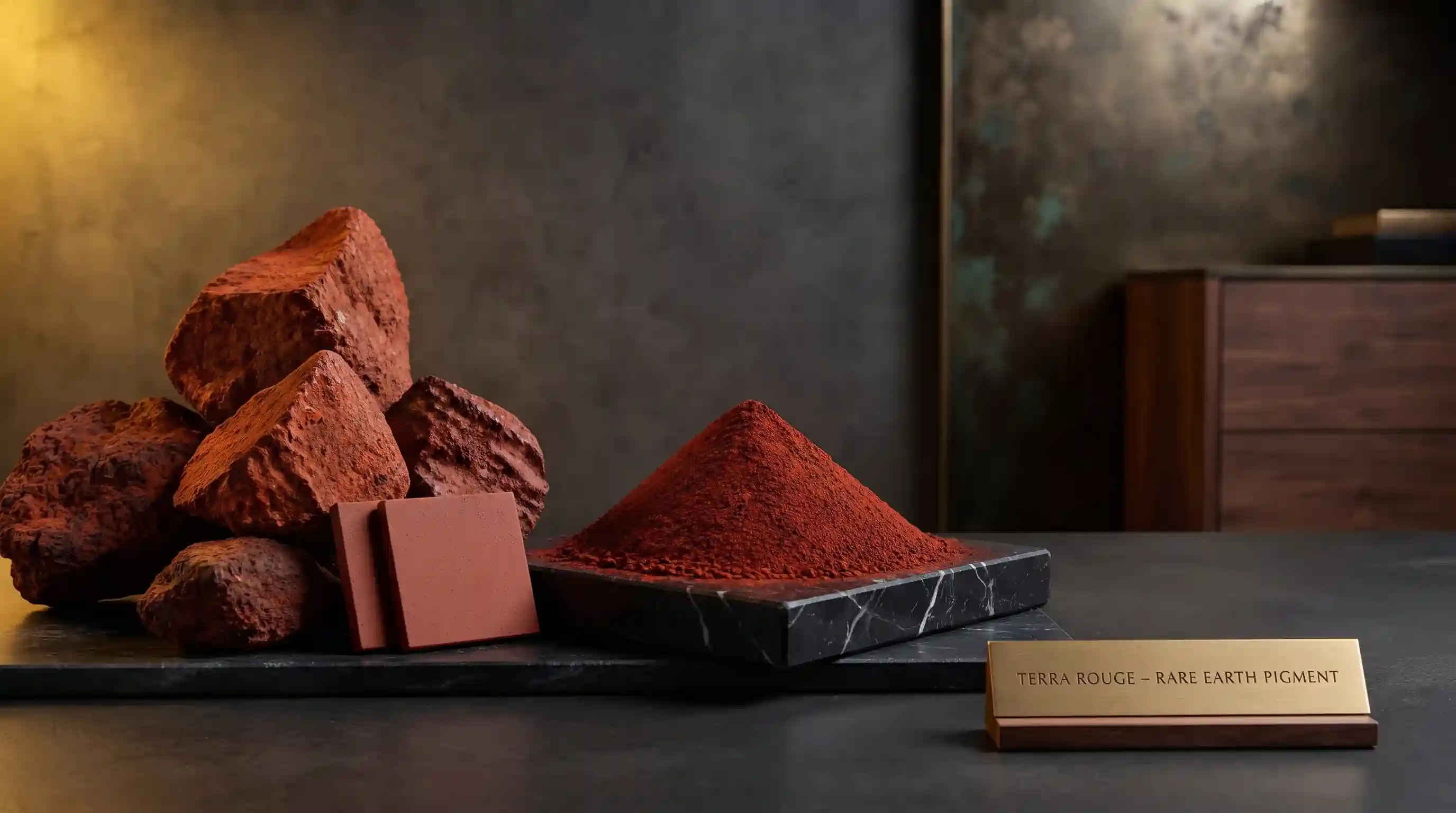
Differences in Color, Tinting Strength, and Particle Behavior
The most obvious difference between natural and synthetic red iron oxide (ochre) can be seen in their color. The natural type usually has an earthy, warm red color, slightly leaning towards brown or yellow, which is also called "Red Ochre". This special color is the result of the simultaneous presence of hematite, goethite, and clay impurities. In contrast, the synthetic type has a bright, clean red color with high saturation, and is produced in a wide range from dark red to apple red.
Tinting strength is one of the important economic criteria. The synthetic type, due to its higher purity and homogeneous particles, usually has higher tinting strength, meaning less pigment is needed to reach the target color. This can compensate for the higher initial price difference. In the natural type, due to the presence of colorless or lightly colored impurities, part of the powder's mass does not contribute to coloring.
The mesh range of 450 to 1500 indicates the degree of crushing, and both types can be produced in this range. But the difference is in the "particle size distribution": in the synthetic type, this distribution is narrow and controlled, while in the natural type it is wider. Finer particles provide better dispersion in paint, and coarser particles may show themselves in the paint film or on the glaze surface.
Particle behavior in the mixture is also different. Synthetic particles, with their uniform specific surface area and shape, perform better in dispersion, but due to higher surface energy, they have a greater tendency to agglomerate during storage. This becomes especially important in humid environments.
In terms of light stability and resistance to UV rays and atmospheric conditions, red iron oxide in general is one of the most stable mineral pigments. The natural type, due to its stable crystal structure and thousands of years of usage history, has extraordinary resistance to color fading. The synthetic type also has high stability, but some synthetic grades that are colored under severe acidic or alkaline stress might be challenging in specific industrial coatings.
Conclusion of this section: although both are produced in the same mesh range, their color, tinting strength, and particle behavior are different. For this reason, an application test with a real sample is the best way to confirm compatibility with your final product.
Applications of Red Iron Oxide: Which Type is Better in Each Industry?
The main applications of red iron oxide (ochre) include pigments, coatings, cement, and ceramic products. But in each of these areas, the choice between natural and synthetic types has its own logic. In this section, we examine this logic in detail.
Pigment and paint industries: In building and industrial paint making, the need for color uniformity across different batches speaks first. Therefore, paint plants usually use the synthetic type to guarantee color matching with the standard. In decorative paints where an "earthy" and warm beauty is desired, the natural type is an attractive and economical option. In plastics and paper, too, dispersion control and tinting strength are highly important, and the synthetic type is dominant.
Protective and industrial coatings: In coatings where corrosion resistance and long-term durability are important, the chemical stability of the pigment is decisive. Here, the synthetic type with high purity and low soluble salts is a safer option; because soluble salts can act as a corrosion catalyst. The natural type might be used in lower-quality coatings or primers.
Cement and colored concrete: This application is one of the largest markets for red iron oxide. In exposed concrete facades, colored cement blocks, colored mortars, and pavers, usually the natural type with a lower price and warm color is used. Impurities present in the natural type typically do not cause problematic reactions in the alkaline environment of cement. But in projects where the color must exactly match the sample (such as architectural prefabricates), the synthetic type is preferred.
Ceramic products: In glazes, engobes, and ceramic colors, the product is fired at high temperatures. Under these conditions, the thermal behavior of the pigment is vital. The synthetic type, with its controlled composition, has predictable thermal behavior, and the color remains constant after firing. The natural type, due to metallic impurities (such as manganese, titanium, or calcium), can show a different color after firing, which is an aesthetic advantage in rustic and artistic ceramics but is considered a risk in industrial production.
Also, attention must be paid to the particle dispersion process in these applications. In glaze, uniform particle distribution prevents turbidity and color spots. In cement, mixing with water and sand better disperses finer particles in the mixture and gives a more uniform color.
Ultimately, choosing the right type is not just a matter of quality, but of production economics. In high volumes, the price difference between the two types can equal a significant portion of the finished product's cost, without the end customer noticing the difference. Therefore, evaluating application needs must be accompanied by practical testing.
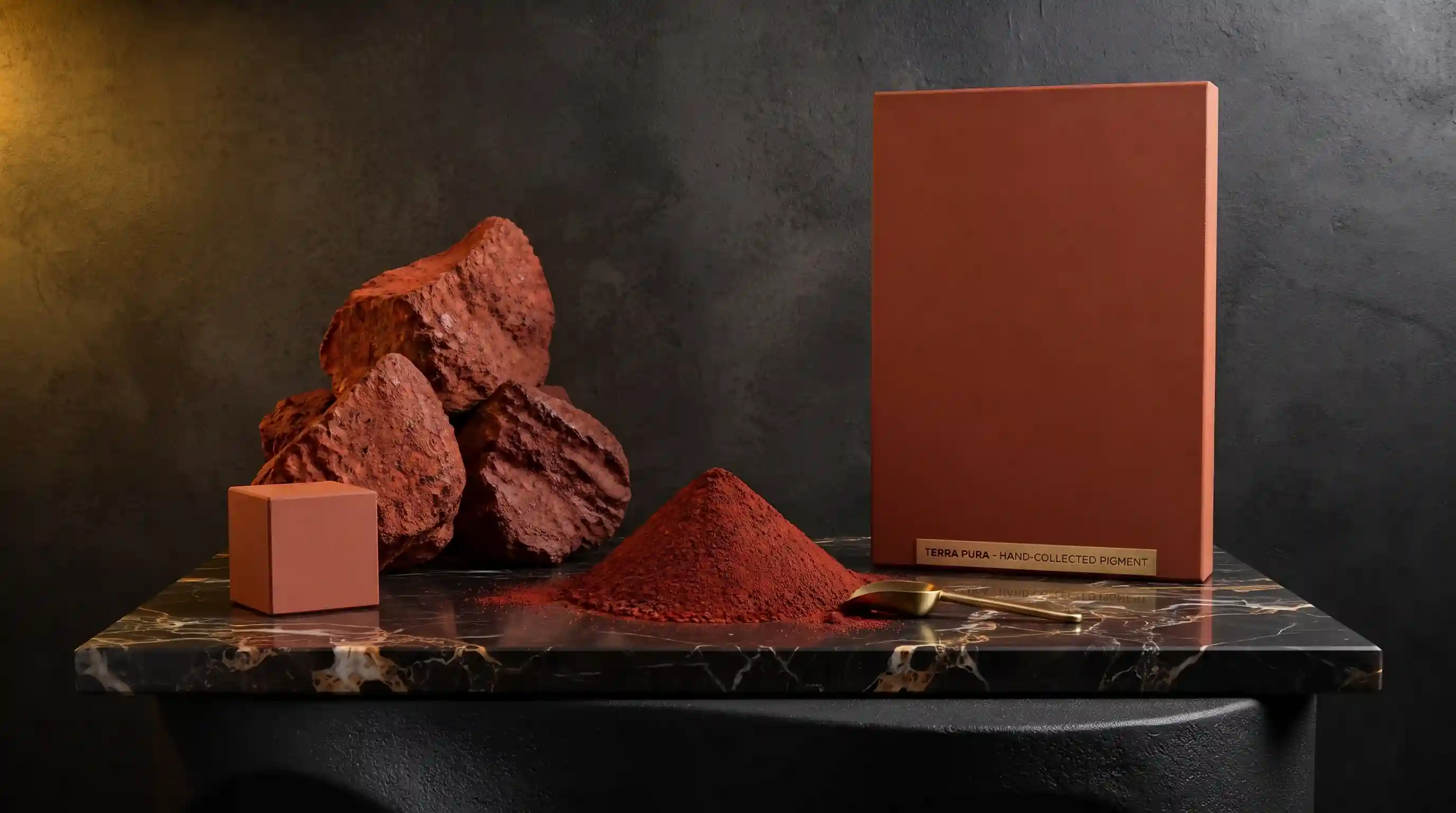
Advantages and Disadvantages of Each Type: Cost, Stability, and Environment
Each of the natural and synthetic types has a set of advantages and disadvantages, knowing which helps in making an informed choice. In this section, we examine these items in a balanced comparison.
Advantages of natural iron oxide: First, lower production cost; because extracting and processing rock does not incur heavy energy and chemical costs. Second, its warm and earthy color is very attractive for traditional decoration, building painting, and artistic projects. Third, excellent stability against UV and atmospheric conditions makes it suitable for exterior applications. Fourth, its production has a lower carbon footprint.
Disadvantages of natural iron oxide: The most important challenge is the variation in quality between batches and even within a single mine. Changes in chemical composition can alter the final product's color. Impurities such as silica and calcium can be problematic in specific applications (like ceramics and anti-corrosion coatings). Also, in some mines, heavy metals like lead or arsenic are present, requiring precise testing for sensitive applications.
Advantages of synthetic iron oxide: Complete uniformity of color and composition is the number one advantage. High purity, a wider range of red colors, higher tinting strength, and predictable thermal behavior are other advantages. Also, precise analysis of each batch makes quality control possible for the buyer.
Disadvantages of synthetic iron oxide: The higher finished price compared to the natural type is the first weak point. Also, the production process consumes a lot of energy and chemicals, and has a higher carbon footprint. Limitation in producing "earthy" and warm colors is also seen in some design projects.
Shared challenge: caking: Both types of powder tend to cake under improper storage conditions. Moisture, stacking pressure, and temperature fluctuations are the main causes of this phenomenon. To prevent this problem, there are practical solutions such as controlling storage humidity, proper packaging, and choosing the right mesh range; if this issue is important to you, read the article How to Prevent Red Iron Oxide (Ochre) from Caking?.
From a financial perspective, the decision must be made based on "total cost", not just the price per kilogram. The synthetic type, with higher tinting strength, might result in the same final cost with a lower usage amount. Meanwhile, in applications like cement where a large amount of powder is consumed, the natural type with a lower price is a more economical choice.
Selection and Purchasing Guide + Final Conclusion
Choosing correctly between the natural and synthetic types requires attention to several key criteria. In this section, we review these criteria practically so the buyer can decide.
- Determining the final application: If your product is an industrial coating, precision ceramic, or paint with stringent standards, consider the synthetic type. If colored concrete, cement blocks, or building painting with a warm color is in mind, the natural type is more economical.
- Determining the required mesh: Finer particles (e.g., 1000 to 1500 mesh) for glaze and fine paints; medium particles (450 to 800 mesh) for cement and building paint.
- Requesting complete analysis: Ask the supplier for the Fe2O3 percentage, moisture, sieve residue, soluble salts, and heavy metal levels.
- Sample testing: Before bulk purchase, test the sample in your production line. Testing the color, tinting strength, and behavior in your formulation is the only real guarantee.
- Paying attention to supply uniformity: If your project lasts several months, make sure the supplier can maintain color uniformity across all batches.
For a more specialized selection, guides in this field can help you. If you want to become more familiar with the quality and purity criteria of this product, read the Buying Guide for High-Quality and High-Purity Red Iron Oxide (Ochre) and the Guide to Choosing the Best Type of Red Iron Oxide (Ochre).
The important point is that there is no absolute answer to the question "Which is better?". The answer is always "it depends on your application". A quality natural product can be the best choice for building painting and cement, while the same product might appear unsuitable in a ceramic factory. Therefore, knowing your needs and practical testing are the two main pillars of decision-making.
Also, ensuring a stable supply is important. A supplier who supplies directly from the mine or production line can offer both competitive pricing and product uniformity. The Kani Sang Amiran Project, as a producer of mineral materials, provides this capability for industrial consumers.
In summary, the difference between natural and synthetic red iron oxide (ochre) can be summed up in a few phrases: natural, economical, and warm, but variable; synthetic, uniform, and pure, but more expensive. By precisely knowing these differences and testing samples, you can make the best choice for your business.
Finally, do not forget that documenting your experience also matters. Record test results, reference colors, and successful formulations so that in subsequent purchases, you have a faster and more accurate comparison and decision. This professional approach minimizes the risk of formulation error and financial loss.
| Question | Answer |
|---|---|
| What is the main difference between natural and synthetic red iron oxide (ochre)? | The natural type is extracted and processed from mines and has accompanying impurities, while the synthetic type is produced through controlled chemical processes and has higher purity, color uniformity, and tinting strength. |
| Which type is more suitable for cement and colored concrete? | Usually, the natural type is a more economical choice for cement due to its lower price and warm color; unless the project requires exact color matching with a sample, in which case the synthetic type is preferred. |
| Which type is better for ceramics and glaze? | In glaze and ceramic products where thermal behavior and color stability after firing are important, the synthetic type is a more reliable option due to its controlled composition. |
| Does the color of natural red iron oxide fade in the sun? | Red iron oxide in general is one of the most stable pigments against UV, and the natural type also has very high resistance to color fading under atmospheric conditions. |
| Why is the synthetic type more expensive? | Because its production requires raw chemicals, energy for calcination, pollution control, and advanced quality control systems; although its higher tinting strength can compensate for this difference. |
| How important is the Fe2O3 percentage? | The Fe2O3 percentage is an indicator of purity and tinting strength; the higher it is, the stronger the color and the more predictable the chemical behavior, especially in coatings and ceramics. |
| In what mesh range is red iron oxide (ochre) offered? | This product is offered in the 450 to 1500 mesh range; finer particles are more suitable for glaze and fine paints, and medium particles for cement and building paint. |
| How can powder caking be prevented? | Controlling storage humidity, proper packaging, preventing stacking pressure, and choosing a mesh range appropriate to the application are the main preventive solutions against caking. |
| Is the natural type safe for all applications? | Not necessarily; the presence of impurities and, in some mines, heavy metals can be problematic for sensitive applications, so analysis and sample testing before bulk purchase are essential. |
| What is the most important criterion for choosing a supplier? | Color uniformity across different batches, providing precise analysis, stable supply capability, and competitive direct pricing from the mine or production line are the most important criteria. |
This article is compiled relying on the technical data of the Kani Sang Amiran Project, a producer of mineral materials, and general industry sources on iron oxide pigments.
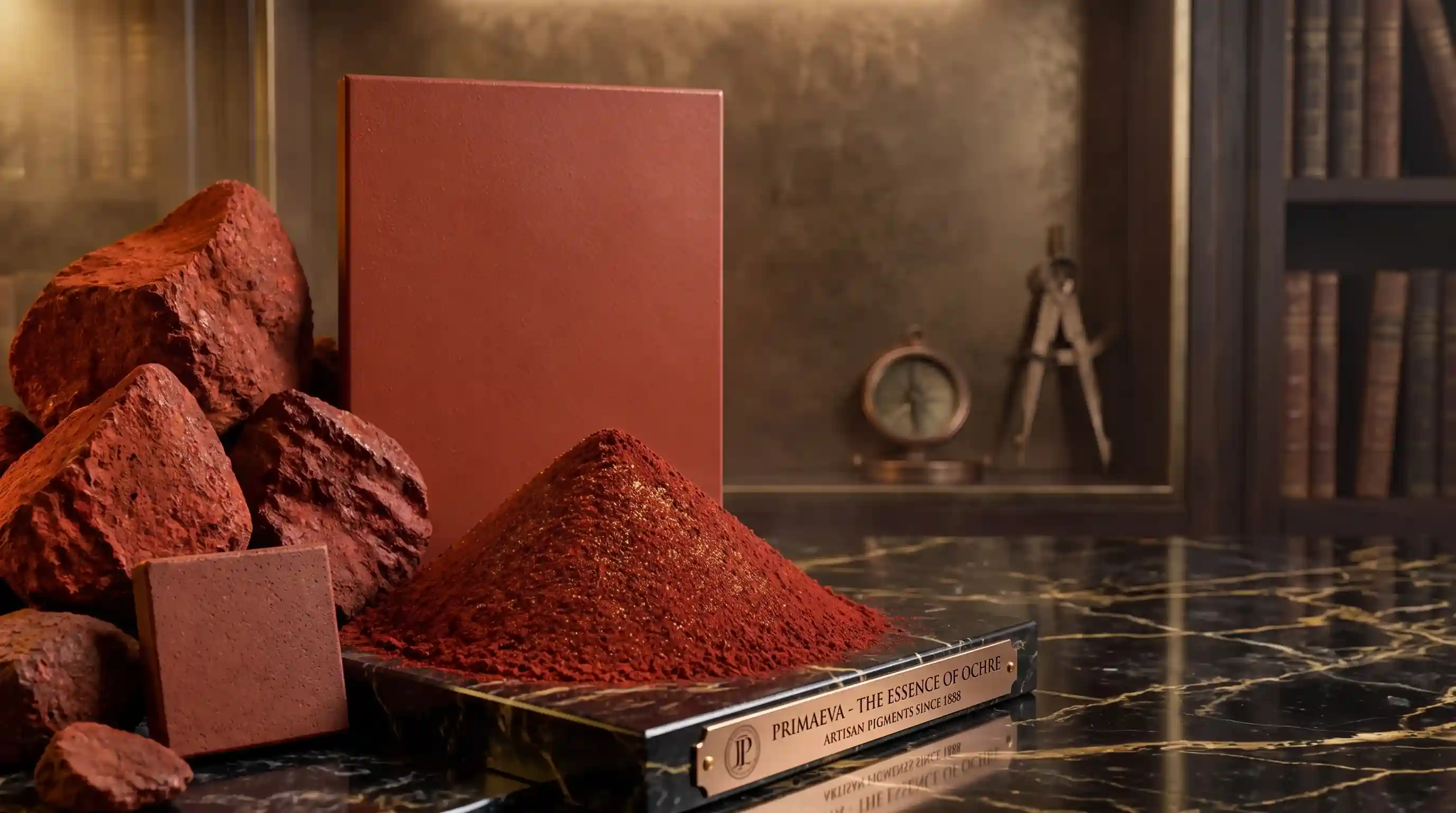
برچسب: Red Iron Oxide (Ochre),The Difference Between Natural Red Iron Oxide (Ochre) and Its Synthetic Type,
نویسنده: رساوب آفرین