
درباره سایت
آخرین مطالب
- دور أكسيد الليمونيت (گل ماش) في صناعة السيراميك والبلاط
- The Role of Limonite Oxide (Gole Mash) in the Ceramic and Tile Industry
- Online Order and Price Inquiry Guide for Kaolin
- راهنمای ثبت سفارش آنلاین و استعلام قیمت کائولن
- How to choose the best red iron oxide (ochre) for the project?
- دور أكسيد الليمونيت (گل ماش) في إنتاج الطلاءات الواقية
- كيف تشترين أفضل ماركة أكسيد الليمونيت (جول ماش)؟
- Examining the Environmental Impacts of Limonite Oxide (Gole Mash)
- دراسة التأثيرات البيئية لأكسيد الليمونيت (گل ماش)
- How to buy the best Limonite Oxide (Gol Mash)?
امکانات وب
Introduction and Understanding the Nature of Limonite Oxide (Gol Mash)
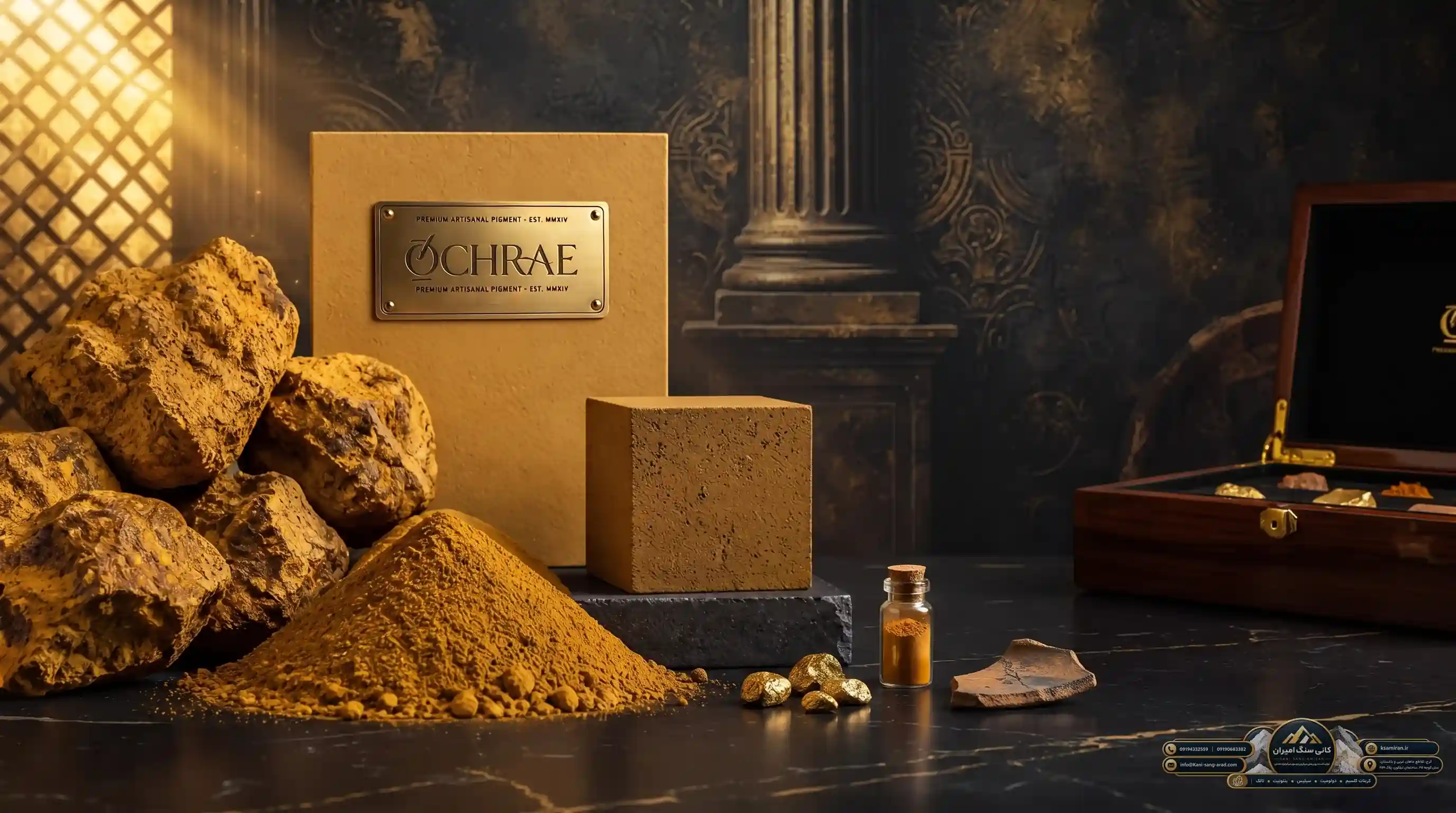
Limonite oxide (Gol Mash) is one of the most widely used mineral pigments, holding a special place in the construction industry due to its high color stability and compatibility with alkaline environments. This mineral, which belongs to the iron hydroxide family, covers a color spectrum from yellow to brown and is recognized as one of the most stable additives. At Kani Sang Amiran, relying on principled extraction, we strive to provide the best quality of this product in standard meshes of 450 to 1500.
In this article, we take a detailed look at the role of this mineral in brick and pottery production. The importance of using limonite oxide (Gol Mash) in construction projects is not limited to aesthetic aspects alone; due to its mineral nature, this material also increases the thermal resistance and chemical durability of structures against atmospheric factors. Join us as we explore the technical and economic dimensions of this material.
Production Process and Technical Specifications of Limonite Oxide (Gol Mash)
The quality and performance of limonite oxide (Gol Mash) directly depend on its degree of purity and granulation (mesh) size. Products manufactured in our collection, featuring precise meshing from 450 to 1500, allow for homogeneous mixing in various textures, including pottery clay and brick paste. This precise granulation ensures that pigment particles are uniformly distributed throughout the entire structure, preventing the formation of color spots.
To prepare and review more details about this product, you can visit the page Purchase and Inquiry of Limonite Oxide (Gol Mash). Quality control during the processing stage of this mineral pigment is of high importance, as impurities present in the raw materials can affect the compressive strength or water absorption coefficient of the final brick and pottery.
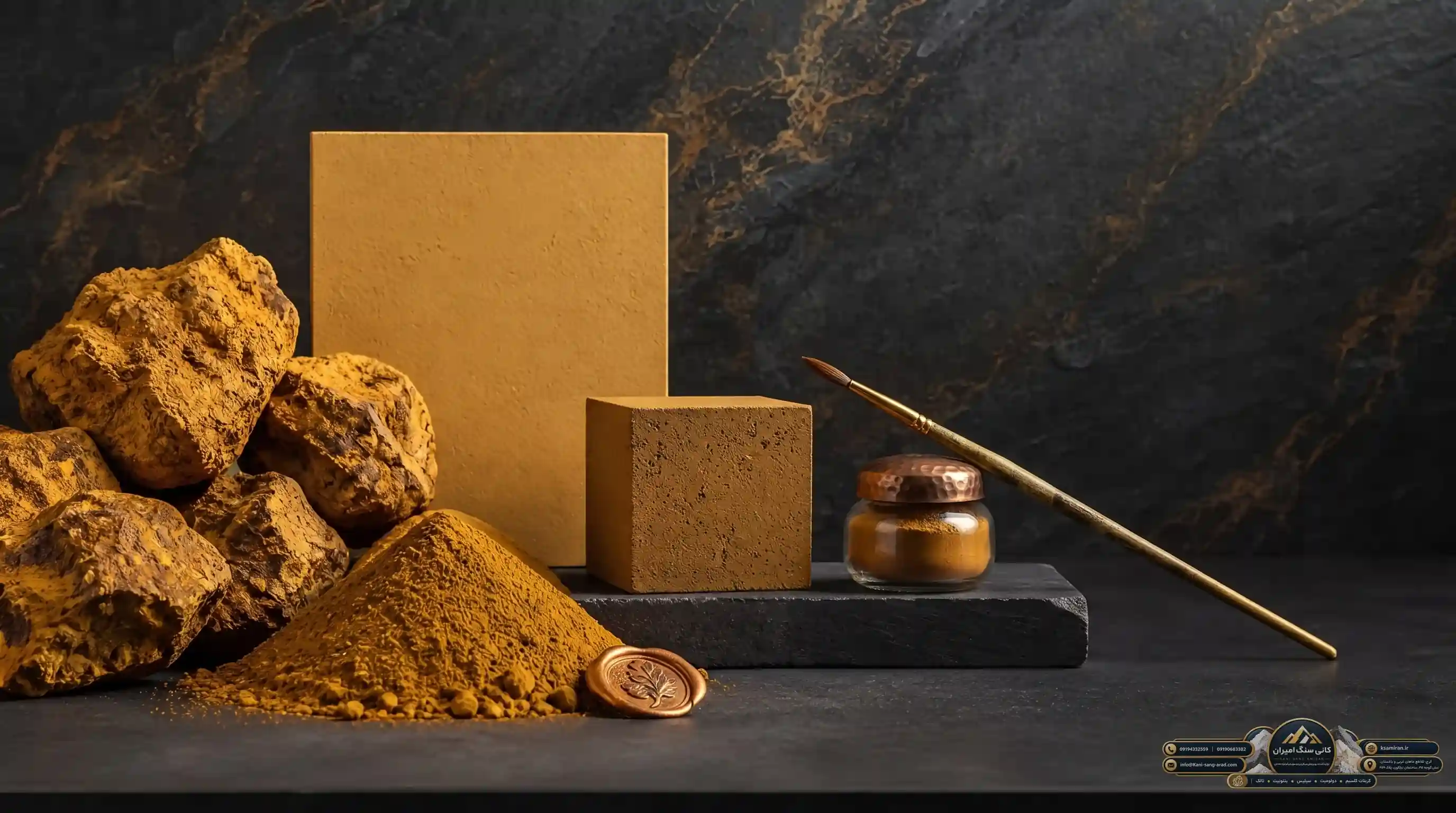
The Role of Limonite Oxide in the Brick and Pottery Industry
In the brick and pottery manufacturing industry, limonite oxide (Gol Mash) acts as a natural coloring agent that does not undergo destructive structural changes during the firing process. Unlike synthetic colors that may experience discoloration or buing at high temperatures, this mineral pigment exhibits impressive thermal stability in the kiln.
In addition to color, this material acts as a mild flux in certain pottery formulations, making the final product's texture denser and more durable. Using this material ensures that the manufactured bricks and pottery retain their color against the sun's ultraviolet rays and do not fade, which significantly increases the useful life of building facades.
Synergy of Limonite Oxide with Other Construction Materials
Limonite oxide (Gol Mash) has widespread applications not only in bricks and pottery but also in other sectors of construction. For example, the role of limonite oxide (Gol Mash) in the production of construction paints is vital, as it acts as an anti-corrosion pigment in cement-based coatings.
Additionally, the role of limonite oxide (Gol Mash) in the mosaic manufacturing industries is recognized as a factor for creating warm and natural spectrums. Due to their reasonable final price and very high performance compared to expensive chemical pigments, these pigments have become the first choice for manufacturers of concrete-based products.
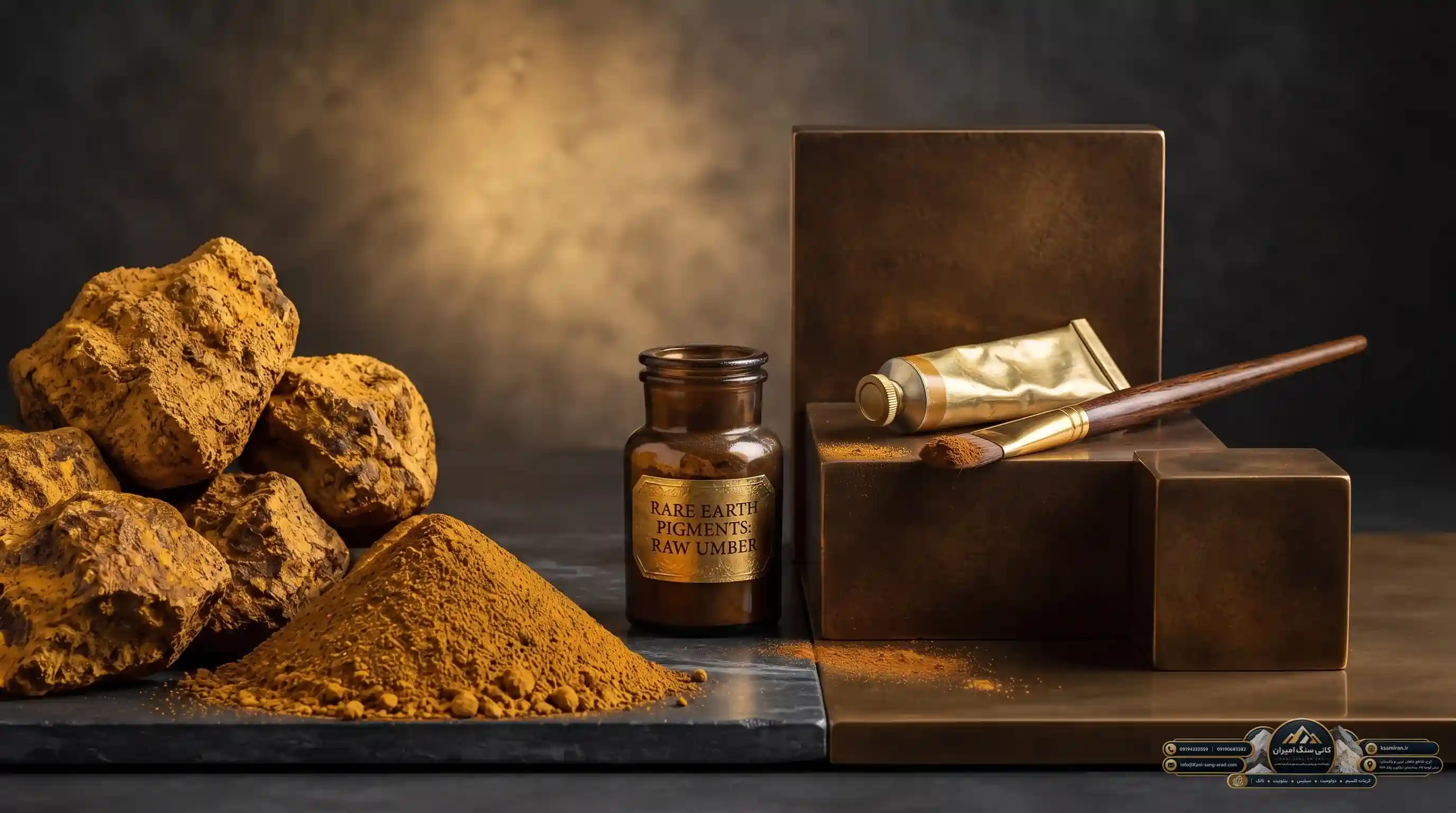
The Impact of Limonite Oxide in Concrete Production and Resistant Structures
One of the specialized applications that has received less attention is the specialized application of limonite oxide (Gol Mash) in concrete production. Adding this mineral powder to the concrete mixture, besides shifting the color tint towards earthy and natural colors, can help improve certain physical properties in the surface layers of the concrete.
Very fine particles with a high mesh of 500 to 1500 settle among the tiny pores of the concrete and help reduce porosity. This causes the permeability of concrete structures against moisture to decrease, and consequently, the corrosion of inteal rebars is also delayed. Optimal use of limonite oxide (Gol Mash) in large projects can reduce long-term maintenance costs.
Economic and Environmental Benefits of Limonite Oxide (Gol Mash)
Using limonite oxide (Gol Mash) as a completely mineral and natural material aligns with green building standards. This product is free of heavy and toxic metals and does not produce any toxic gases or hazardous waste during the brick and pottery production process. This feature is considered a huge advantage for factories seeking to obtain environmental certifications.
From an economic perspective, access to quality production sources like Kani Sang Amiran allows manufacturers to increase the added value of their final product at the lowest cost. Price stability and reliability in raw material supply ensure that the brick and pottery production line does not suffer from fluctuations caused by raw material quality.
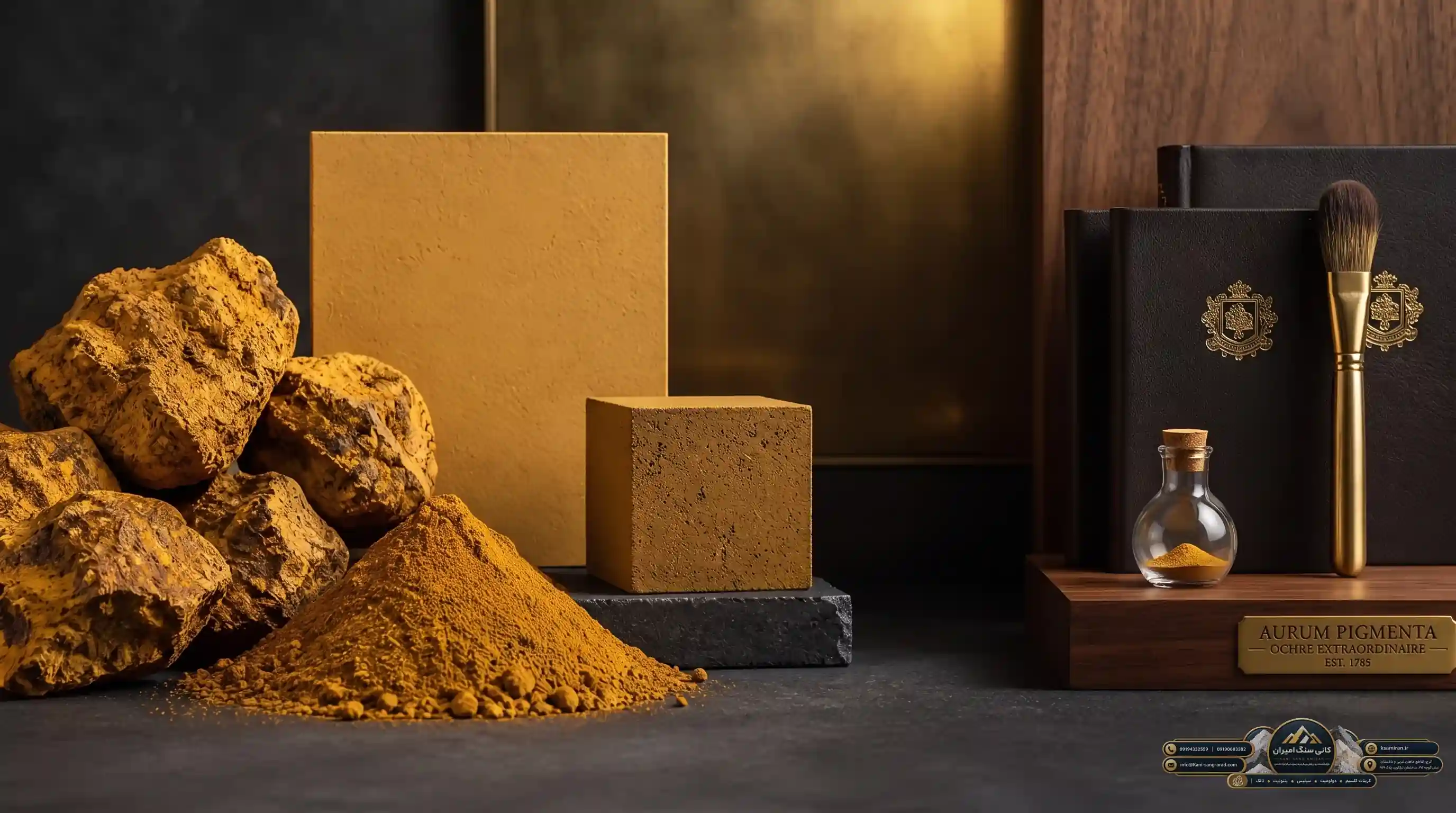
Practical Tips on Industrial Mixing and Application
To achieve the best result in pottery production, it is recommended to mix limonite oxide (Gol Mash) with a little water or special resins before adding it to the clay to create a slurry-like consistency. This maximizes the distribution of the pigment in the pottery paste and prevents the formation of color lumps in the final product.
The amount of this material used usually varies between 2 to 10 percent of the dry materials' weight, depending on the desired color intensity. Considering the meshing between 450 and 1500, you can use finer meshes for surface coloring and coarser meshes to create decorative textures in facing bricks. Always perform small-scale laboratory tests before mass production.
Conclusion: The Future of Mineral Pigments in the Construction Industry
Given its unique technical and economic characteristics, limonite oxide (Gol Mash) will remain one of the main pillars of the paint and building materials industry. Focusing on the optimal extraction and processing of this product, Kani Sang Amiran tries to facilitate industrialists' access to the best mineral raw materials. Bricks and pottery produced with this pigment are not only more beautiful but also more resistant to environmental changes.
Due to the growing trend of using natural materials in mode and classical designs, it is predicted that the demand for this mineral will continue to increase. Investing in the knowledge of using these pigments is the key to success in producing the new generation of construction products.
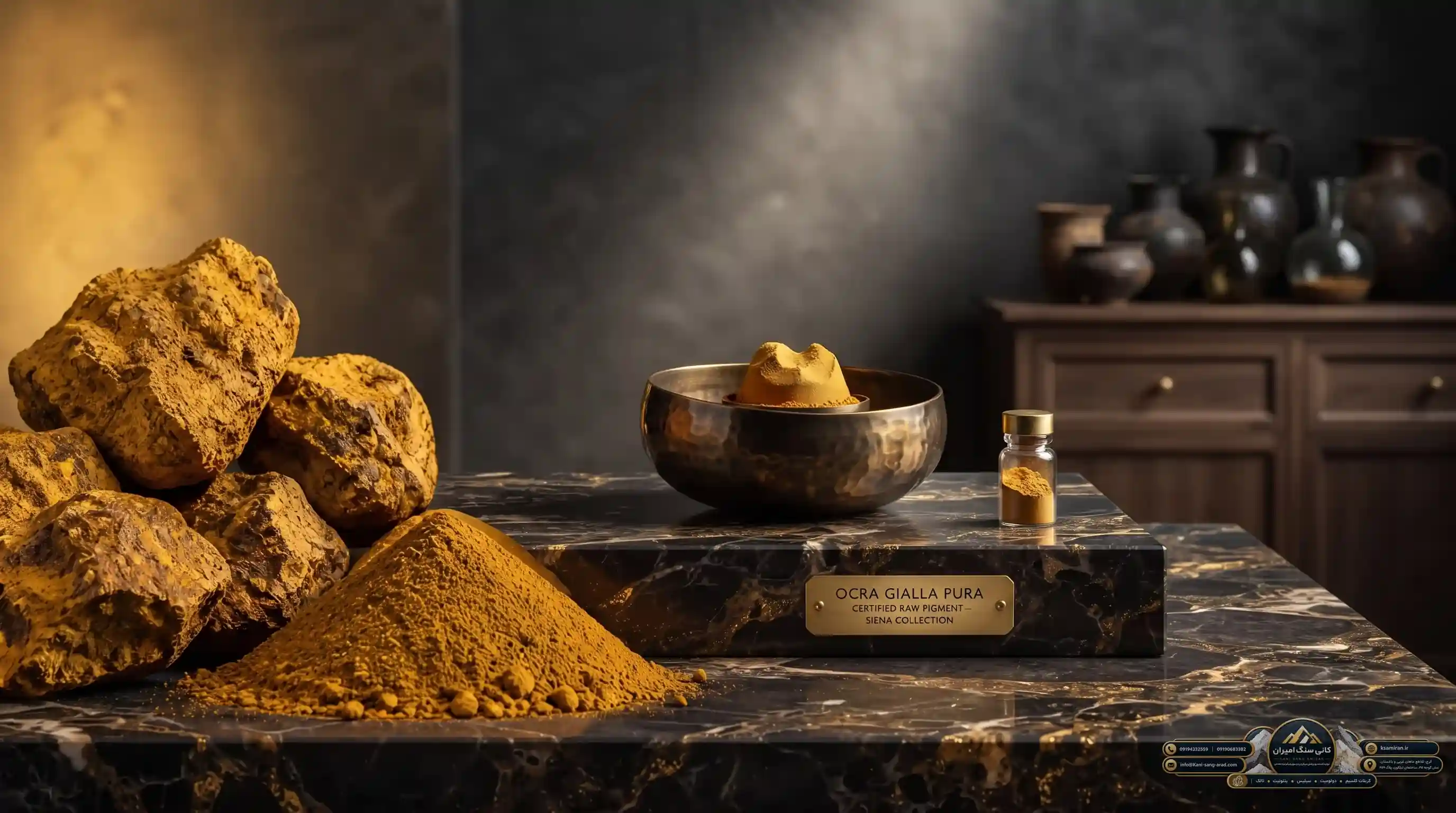
| Question | Answer |
|---|---|
| Does the color of limonite oxide change over time? | No, due to being mineral, it is completely stable against light and atmospheric conditions. |
| What is the suitable mesh for facing bricks? | Usually, meshes of 450 to 800 are suitable for creating a uniform color. |
| Is this material toxic? | No, limonite oxide is a safe and eco-friendly mineral material. |
| What is the firing temperature range? | This material is completely stable at typical brick kiln temperatures (up to 1000 degrees). |
| What is the effect of this material on pottery strength? | It improves the texture and increases the compressive strength of the final product. |
| How can Amiran limonite oxide be obtained? | Through the products page on the Kani Sang Amiran website. |
| Can it be mixed with concrete? | Yes, it acts as a color pigment and porosity improver. |
| Is it also used in construction paints? | Yes, it is used as a yellow or brown pigment in architectural coatings. |
| What is the storage method? | It should be stored in a dry environment away from direct moisture. |
| Is it suitable for export? | The purity quality of Kani Sang Amiran is suitable for target export markets. |
Kani Sang Amiran Mineral and Affiliated Industries Research Center.
برچسب: Limonite Oxide (Gol Mash),The Role of Limonite Oxide (Gol Mash) in Brick and Pottery Production,
نویسنده: رساوب آفرین