
درباره سایت
آخرین مطالب
- The role of industrial barite in the papermaking and specialty coatings industries
- How to find the best kaolin supplier in the country?
- How to properly examine feldspar analysis?
- ما هي استخدامات التالك الصناعي في صناعة البلاستيك والمطاط؟
- بررسی مزایای خرید عمده اکسید لیمونیت (گل ماش)
- Calcium Carbonate vs. Silica: Which mineral is more suitable?
- The effect of limonite oxide (yellow ochre) on the quality of construction materials
- ما هي أنواع السيليكا المعدنية وما الفرق بينها؟ دراسة شاملة
- كيف نفحص تحليل الفلسبار بشكل صحيح؟
- كيف تختار أفضل أكسيد حديد أحمر (مغرة) لمشروعك؟
امکانات وب
What is kaolin? Introduction to the white mine of mode industries
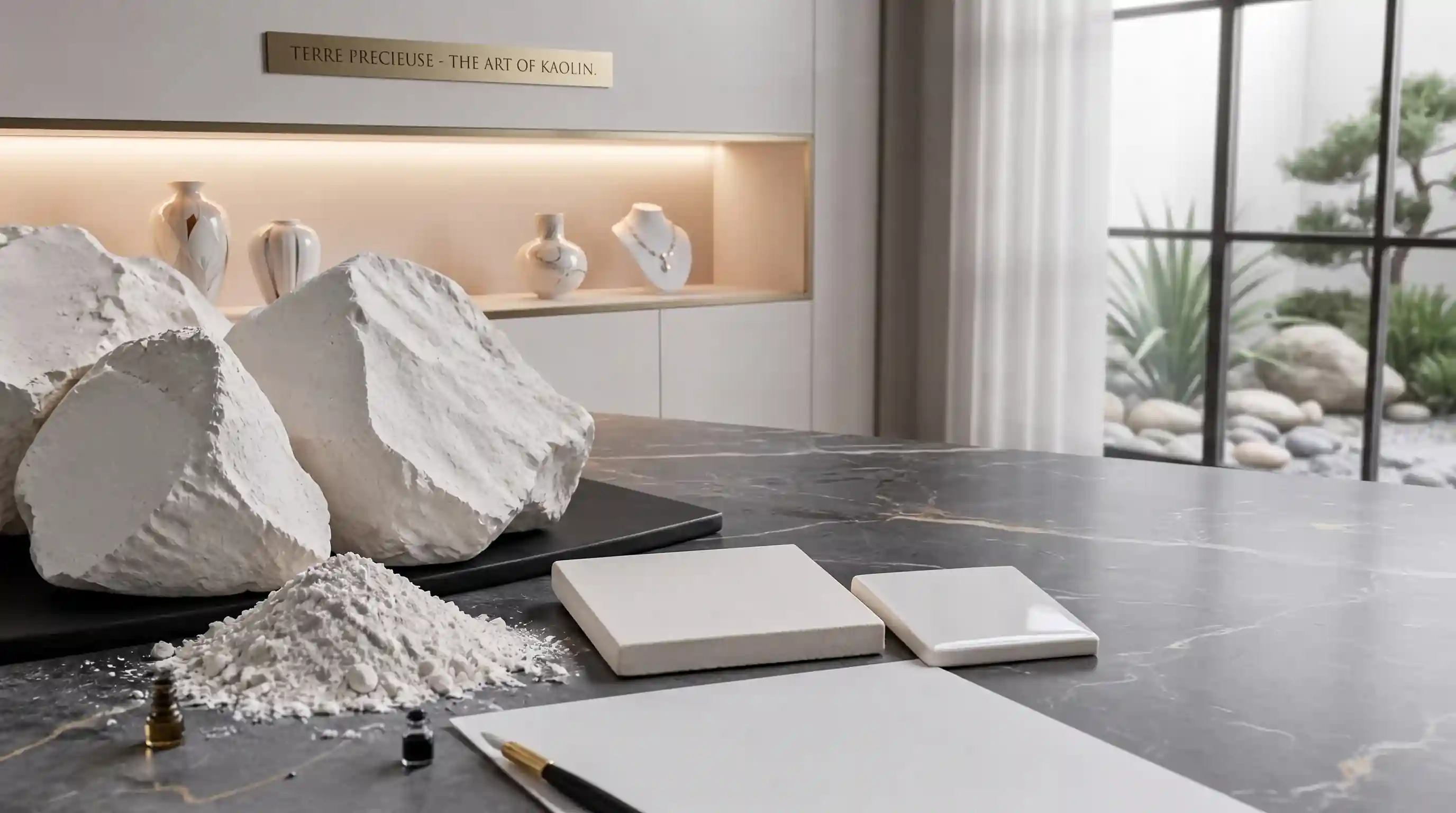
Kaolin (Kaolin), also known in Persian as "china clay", is one of the most widely used clay minerals in the world. This mineral with the chemical formula Al2Si2O5(OH)4 is formed over millions of years from the long-term erosion and weathering of feldspar-rich rocks such as granite and rhyolite. The name of this mineral is taken from a region called "Gauling" in China, where this material was first extracted, and for this reason, it is also known as china clay.
The prominent feature of kaolin is its very bright white color, soft texture, low adhesion, and high resistance to chemicals and heat. This combination of features makes kaolin a strategic material for various industries. Today, this mineral is widely used in the production of tiles, ceramic products, glazes, paper, and paint, and the scope of its applications is expanding every day.
However, the importance of kaolin is not limited only to its physical and chemical properties. In recent decades, increasing competition in global markets, continuous pressure to reduce production costs, and the necessity of complying with environmental standards have highlighted the position of this white mineral more than ever. Factories have realized that using high-quality kaolin with appropriate particle size distribution can both improve the quality of the final product and significantly reduce production costs.
In fact, it can be said that kaolin is a "versatile mineral"; an abundant, economical, and multipurpose material that is present in the composition of many products we use every day. Worldwide, billions of dollars of economic value flow through the production, processing, and consumption of this mineral, and Iran, due to having suitable reserves, holds a special place in this regard.
In today's mining industry, kaolin plays a role beyond a simple raw material. This mineral practically emerges as a "cost-reduction factor": it can both replace more expensive materials and reduce energy consumption and time by improving production processes. That is why examining the role of kaolin in reducing production costs in the mining industry has become a vital topic for managers, engineers, and factory decision-makers.
In this article, we want to examine how kaolin helps reduce costs in various industries and why choosing the right type and particle size of this material can have a profound impact on the profitability of production lines. But above all, we need to become more familiar with the technical and specialized features of this mineral.
One of the most important factors determining the quality, application, and price of kaolin is its particle size. In industry, the particle size of minerals is measured by the unit "mesh"; a unit that indicates how many holes exist in each square inch of a sieve. The higher the mesh number, the finer the particles, their specific surface area increases, and the behavior of the material in industrial processes changes.
The kaolin supplied by Amiran Mineral Stone Project is produced and supplied in a range from 450 to 1500 mesh; a wide range that meets the diverse needs of various industries. This diversity allows factories to choose the exact grade that their production process requires and prevents the purchase of extra, unsuitable, or uecessarily expensive materials.
Mesh range and its applications
- 450 mesh kaolin: Relatively coarser particles for applications such as tile bodies and ceramic products that require texture, strength, and shaping.
- 800 to 1000 mesh kaolin: Suitable for the paper and paint industry that require filling, coating, and a smooth surface.
- 1200 to 1500 mesh kaolin: Very fine particles for precise applications such as glazes and special coatings where uniformity is of high importance.
Key properties of kaolin
- Bright white color: The most important property of kaolin, which makes it ideal for decorative, hygienic, and printing products.
- Adhesion and low viscosity: Makes it easy to use, pump, and control in formulations.
- High chemical resistance: Shows good resistance against acids and bases and maintains product stability.
- Uniform particle distribution: Ensures process stability and consistent quality of the final product.
- Free of impurities: Low iron and titanium impurities preserve the color and quality of the final product.
Along with these well-known applications, kaolin also holds a special place in more advanced industries such as the production of chemical catalysts; those interested in this field can read the article The role of kaolin in the production of advanced chemical catalysts.
The importance of correctly selecting the mesh range is that finer particles have a larger specific surface area and consequently perform better in processes like paper coating or glazing; however, at the same time, processing them is more expensive. Therefore, selecting the appropriate grade is both a technical and economic decision that directly affects the final cost of the product.
Ultimately, sourcing kaolin from a high-quality supplier that properly and uniformly maintains the mesh range prevents issues such as color variation, cracking, loss of strength, or product quality fluctuations, thereby minimizing hidden costs resulting from waste and rework.
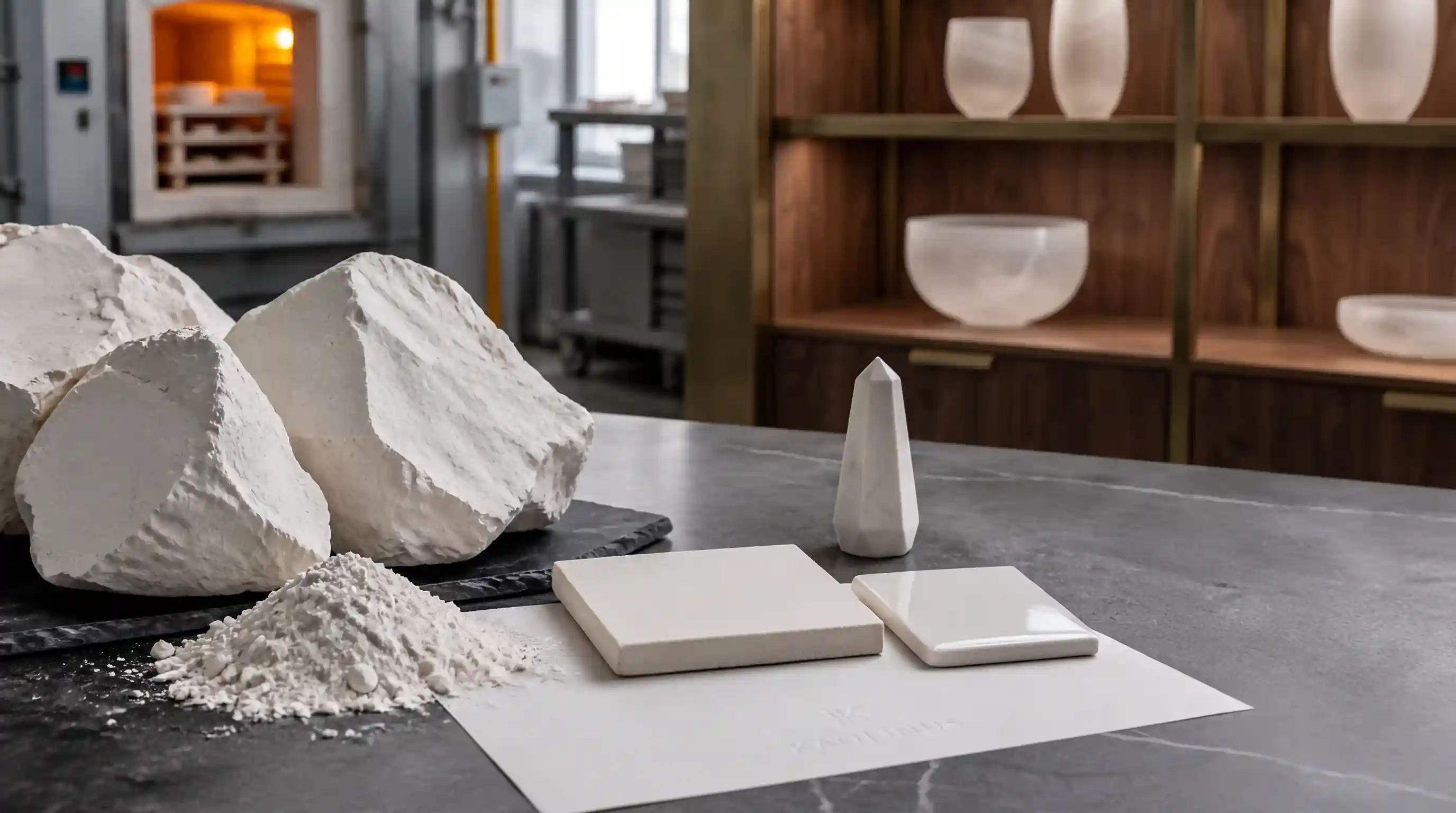
The tile and ceramic industry is one of the largest consumers of kaolin in the world. Kaolin is used as a primary and basic raw material in tile bodies, sanitary ware, ceramic dishes, and other ceramic products. Due to its specific chemical composition (source of alumina and silica), this mineral creates a stable, hard, and resistant structure during firing, which guarantees the mechanical properties of the final product.
Cost reduction through the substitution of expensive materials
One of the most important ways kaolin helps reduce production costs in the ceramic industry is by replacing more expensive and scarce minerals. In many formulations, kaolin can replace part of the feldspar, talc, or silica while maintaining the desired technical characteristics. Since kaolin is an abundant and relatively inexpensive mineral, this substitution directly leads to a reduction in the raw material cost and shifts the factory's economic equation in its favor.
Lowering firing temperature and saving energy
The presence of kaolin in the composition of the ceramic body can help lower the firing temperature and shorten the kiln cycle. Ceramic kilns are among the most energy-consuming equipment in the industry, and every degree reduction in firing temperature means significant savings in gas or electricity consumption. Furthermore, reducing the firing cycle time increases line production capacity and spreads overhead costs over a larger volume of product.
Reducing waste and increasing efficiency
With uniform particle distribution and high purity, kaolin improves the plasticity and formability of the ceramic body. This means the final products crack less, deform less, and production line waste is reduced. Less waste means better utilization of raw materials, lower rework costs, reduced energy consumption, and ultimately increased factory profitability.
Improving the quality of the final product
Kaolin gives ceramic products mechanical strength, whiteness, and a beautiful appearance. Higher quality products command higher prices in the market and elevate the factory's brand positioning in the customer's mind. Moreover, tiles and ceramics produced with high-quality kaolin show greater resistance to abrasion, impact, and moisture, increasing the product's lifespan.
For tile manufacturing plants, using 450-mesh kaolin for the body and finer grades for the glaze is an optimal combination that both enhances process efficiency and controls costs. In the Kani Sang Amiranj project, kaolin is produced in the 450 to 1500 mesh range and can meet this diverse and dual requirement in a single production line.
Glaze is one of the most important parts of a ceramic product; a glassy layer placed on the surface of tiles, dishes, and sanitary ware that provides beauty, waterproofness, and resistance. In glaze production, kaolin plays a vital role, and almost no glaze formulation is complete without it. This is why glaze quality, and consequently the quality of the final product, is directly related to the kaolin used.
The role of kaolin as a suspending agent
The most important application of kaolin in glaze is its function as a suspending agent (Suspender). Very fine kaolin particles allow other materials in the glaze to remain suspended in water and not settle. This feature keeps the glaze homogeneous during use and creates a uniform coverage on the surface. Without sufficient kaolin, the glaze settles rapidly, provides heterogeneous coverage, and the product quality drops sharply.
Why is fine kaolin needed?
In the glazing industry, very fine grades of kaolin (1200 to 1500 mesh) are usually used. Finer particles have a higher specific surface area and create better rheological behavior in the glaze paste. Also, during firing, the fine particles melt faster and build a smooth, flawless glass surface. Sourcing this fine grade from a reputable manufacturer ensures that the glaze has consistent quality every time it is produced.
Cost reduction in the glazing process
- Reduced glaze consumption: Uniform and high-quality coverage means a thier layer and less consumption of expensive materials.
- Reduced waste: Homogeneous glaze reduces problems such as dripping, bubbling, color crawling, or poor adhesion.
- Shorter preparation time: High-quality kaolin disperses faster in water and shortens the glaze paste preparation time.
- Extended shelf life: Glaze containing good kaolin remains usable for a longer period and reduces the need for re-production and disposal.
Chemical stabilization and surface durability
Kaolin in glaze acts as a source of alumina and silica, helping to stabilize the chemical composition of the glaze. This material has high chemical resistance, making the glaze surface more resistant to detergents, acids, and abrasion. The end result is a higher quality and more durable product that commands a better price in the market.
Since kaolin is relatively inexpensive and readily available, replacing more expensive materials with it in the glaze formulation is a simple, practical, and effective way to control production costs. Many glaze manufacturers have managed to reduce production costs without sacrificing quality and survive in the competitive market by optimizing the kaolin ratio in their formulas.
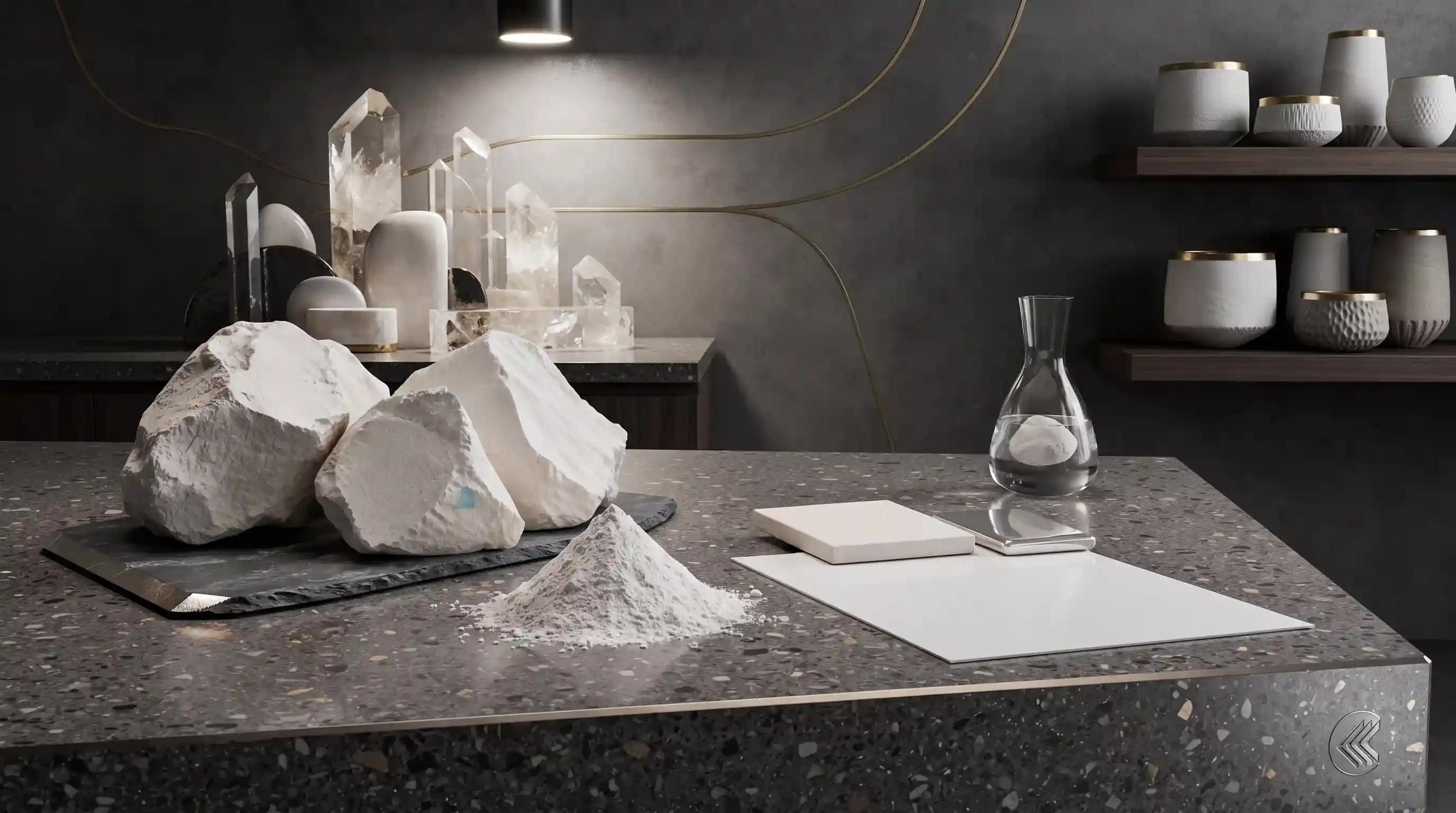
The papermaking industry is one of the largest consumers of kaolin in the world. In this industry, kaolin has two main applications: as a filler (Filler) inside the paper fibers and as a coating (Coating) on the surface of the paper. Both applications help reduce production costs and improve the quality of the final product, which is why kaolin is considered a strategic material for paper mills.
Kaolin as a filler
Cellulose fibers are the main raw material for paper, but these fibers are expensive and forest resources to supply them are limited. Kaolin, acting as a mineral filler, positions itself between the fibers and increases the bulk of the paper without the need to use more fibers. This means that by adding kaolin, paper with similar weight and volume can be produced while reducing the consumption of expensive fibers. This is one of the most effective and well-known cost-reduction methods in the paper industry worldwide.
Kaolin as a coating
A layer of kaolin coating is applied to the surface of high-quality papers such as magazine paper, writing and printing paper, and packaging paper. This layer creates a smooth, bright surface suitable for printing. Kaolin with fine particles (usually 800 mesh and above) is the best choice for this application because it builds a completely smooth and uniform surface that receives printing ink very well.
Benefits of using kaolin in papermaking
- Brighter paper: Kaolin increases the whiteness and gloss of the paper, which is of high importance for high-quality printing.
- Smoother surface: The kaolin coating creates a uniform surface for precise printing.
- Porosity Control: Kaolin adjusts paper porosity and improves ink behavior on the surface.
- Reduction in Fiber Consumption: Significant cost savings in cellulosic raw materials.
- Increased Production Speed: Kaolin helps faster dewatering of paper pulp and increases machine speed.
Cost Reduction and Increased Efficiency
Overall, using kaolin in the papermaking industry is a win-win equation: raw material costs are reduced, production machine speed is increased, and the quality of the final product is improved. For paper mills, choosing kaolin with the right particle distribution and high whiteness is a strategic decision that directly affects their profitability and maintains their competitive advantage in the market.
Interestingly, high-quality papers can have up to about 30% of their weight made of kaolin; this figure well illustrates the importance of this mineral in the paper industry and is the reason why cost reduction in this industry is almost impossible without kaolin.
The paint manufacturing industry is another major consumer of kaolin. In the production of architectural, industrial, and even artistic paints, kaolin is used as a mineral filler and a base material. Due to its white color, proper particle distribution, favorable rheological behavior, and economical price, this material holds a special place in paint formulations.
Why is kaolin used in paint?
Paint rendering consists of three main parts: pigment, binder or resin, and solvent. As an inexpensive filler, kaolin replaces part of expensive pigments such as titanium dioxide (TiO₂). This substitution is one of the most effective ways to reduce costs in the paint industry, because titanium dioxide is considered one of the most expensive raw materials in paint formulation and accounts for a large share of the final cost.
Technical Advantages of Kaolin in Paint
- Better Coverage: Kaolin particles help scatter light and increase the covering power of the paint.
- Viscosity Stability: Kaolin helps control paint concentration and consistency, making the paint ready for use.
- Prevention of Settling: Kaolin prevents pigments from settling in the can over time.
- Increased Durability: The paint film containing kaolin has higher resistance to abrasion and moisture.
- High Whiteness: Ideal for bright and white paints and helps paint brilliance.
Cost Reduction Without Sacrificing Quality
One of the biggest challenges for paint manufacturers is maintaining product quality while reducing costs. Kaolin solves this exact challenge: replacing part of the titanium dioxide with high-quality kaolin can significantly reduce production costs while paint quality remains almost constant. Many paint manufacturers, by optimizing formulation and using suitable kaolin, have been able to stay in the competitive market and maintain their profit margins.
Choosing the Right Grade for Paint
For the paint industry, 800 to 1200 mesh kaolin is usually used. Particles of this size both provide good coverage and easily mix and disperse in the paint production process. High-purity kaolin with bright white color is the best choice for this industry, because any impurity can affect the final product color.
Finally, paint produced with high-quality kaolin performs better, has greater durability, and brings more satisfied customers; all of these mean a reduction in hidden costs such as product retus, customer complaints, and re-advertising costs, which in the long run affects the factory's profitability.
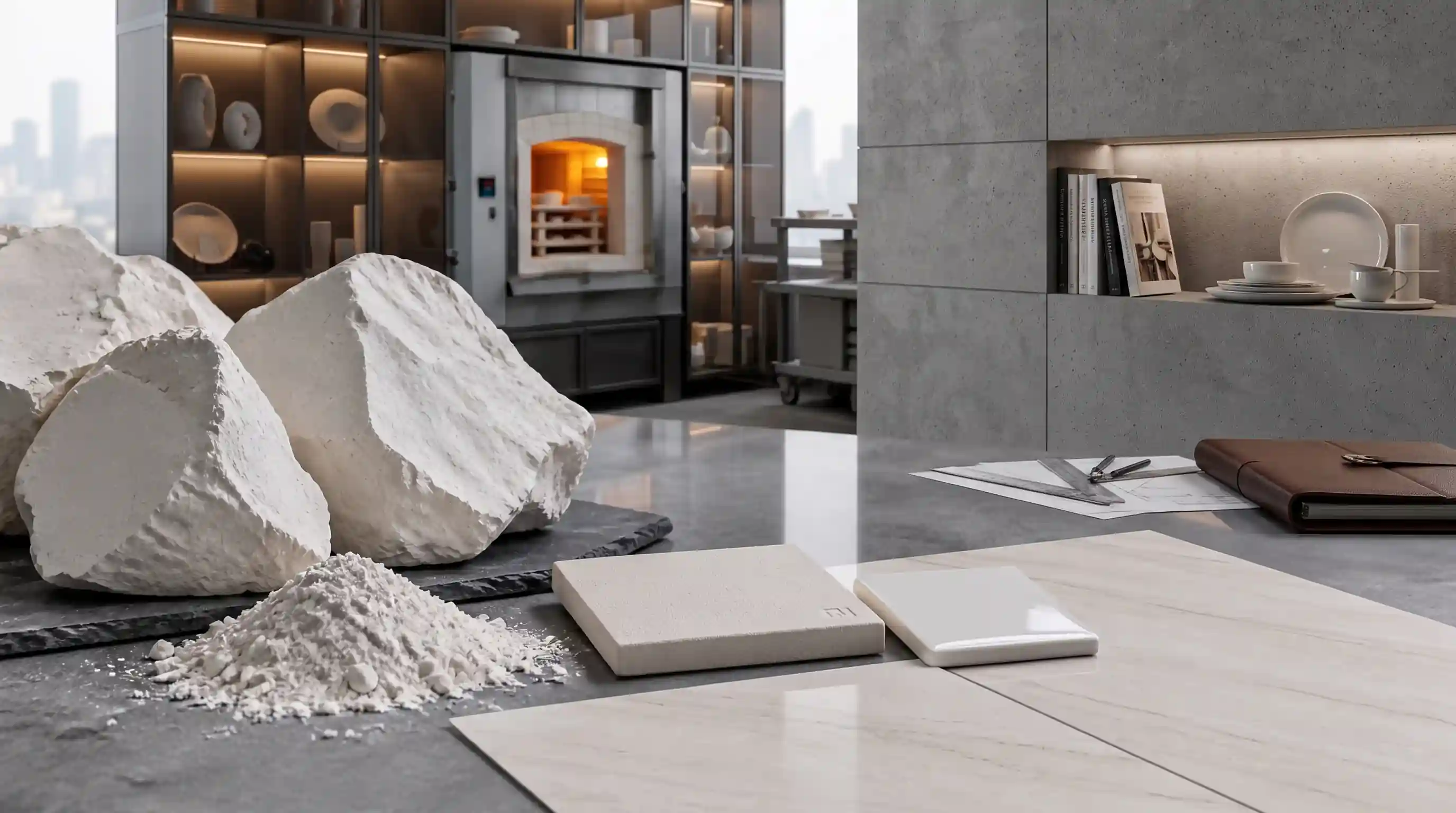
So far, we have seen how kaolin helps reduce costs in a unique way in every industry. But in this chapter, we want to examine this topic from a more general and strategic angle: general cost-reduction strategies in mining industries using economic minerals like kaolin.
1. Replacing expensive materials
The simplest and most effective way to reduce costs is to replace expensive materials with cheaper ones of similar performance. Kaolin can replace part of talc, feldspar, titanium dioxide, and even some pigments. This strategy is widely used in the ceramic, paint, and paper industries, bringing tangible financial results.
2. Reducing energy consumption
In industries that require product firing (such as ceramics and tiles), energy is one of the largest components of production cost. By lowering the firing temperature and shortening the kiln cycle, kaolin can help achieve significant savings in gas and electricity consumption. Energy savings both reduce costs and minimize the environmental impact of industries.
3. Reducing production waste
Waste is a cost that directly subtracts from factory profit. With uniform particle distribution and high purity, kaolin reduces production errors and makes the final product more stable. Reducing waste means optimal use of materials, labor, and energy, and increasing the overall efficiency of the production line.
4. Process optimization and production speed
By improving the rheology of pastes (in glazes and paints) and enhancing dewatering (in the paper industry), kaolin increases the speed and stability of the production line. A faster and more stable production line reduces the overhead cost per unit of product and increases the retu on investment in machinery.
5. Supply chain savings
Sourcing kaolin from a reputable domestic producer reduces transportation costs, customs fees, delays, and currency fluctuations. By producing kaolin in the 450 to 1500 mesh range, the Amiran Stone Mineral Project can be a stable and reliable supplier for various industries, guaranteeing the supply chain security of factories.
Of course, kaolin is not the only economical mineral in industries; other minerals such as dolomite also play an important role in reducing costs and improving industrial sustainability. For further reading, you can read the article The Impact of Dolomite on Reducing Production Costs in Mining Industries and also The Role of Dolomite in Reducing the Environmental Impact of Industries to gain a more complete perspective on the role of minerals in industry.
In this article, we examined the role of kaolin in reducing production costs in mining industries. From tiles and ceramics to glazes, paper, and paint, this white and versatile mineral, wherever present, can enhance product quality and reduce costs. These two achievements are exactly what every factory is looking for.
Summary of Key Points
- Kaolin is an abundant and economical mineral that can replace expensive materials.
- Choosing the appropriate grade (450 to 1500 mesh) for each industry is a technical and economic decision.
- By lowering firing temperature, reducing waste, and improving processes, kaolin helps save energy and time.
- In the paper and paint industries, kaolin is an effective replacement for expensive fibers and costly pigments.
- Sourcing kaolin from a reliable source guarantees stability in quality and price over time.
How to Choose the Right Grade?
Choosing the right grade of kaolin depends on various factors: industry type, production process, desired quality, and budget. As a general rule, for coarser applications like tile bodies, 450 mesh grades are more suitable, whereas for glazes and precise coating, 1200 to 1500 mesh grades perform better. Consulting with a reputable manufacturer that has a complete product range is the best way to ensure the right choice.
Why Kaolin from the Amiran Stone Mineral Project?
With experience in mineral production, the Amiran Stone Mineral Project produces and supplies its kaolin in the 450 to 1500 mesh range for various applications (tiles, ceramics, glazes, paper, and paint). This variety allows factories to choose the exact grade they need. If you are looking for high-quality kaolin, you can view the product page of Kaolin of Amiran Stone Mineral Project and get in touch with our experts.
The Future of Kaolin in the Mining Industry
Given population growth, the development of the construction industry, and the steadily increasing demand for paper and paint, the future of kaolin looks bright. Factories that invest in economical, high-quality minerals today will win the competitive market tomorrow. Kaolin is not just a raw material; it is a strategy for cost reduction and quality enhancement.
We hope this article has helped you better understand the role of kaolin in the mining industry. If you have any questions, need technical consultation, or require sample requests, the experts at the Amiran Mineral Stone Project are ready to assist and cooperate with you.
| Question | Answer |
|---|---|
| What is kaolin? | Kaolin, or china clay, is a white clay mineral with the formula Al₂Si₂O₅(OH)₄, which is widely used in the tile, ceramic, glaze, paper, and paint industries. |
| What is the mesh range of kaolin from the Amiran Mineral Stone Project? | The kaolin of this project is produced and supplied in a range of 450 to 1500 mesh. |
| How does kaolin reduce production costs? | By replacing expensive materials, lowering firing temperatures, reducing waste, and improving the efficiency of the production process. |
| Which grade of kaolin is suitable for tiles and ceramics? | Usually, the 450-mesh grade is suitable for tile bodies and ceramic products. |
| Which grade of kaolin is suitable for glaze? | For glazes, fine grades of 1200 to 1500 mesh are typically used. |
| What is the role of kaolin in the paper industry? | Kaolin is used as a filler inside the fibers and as a coating on the surface of the paper, reducing the consumption of expensive fibers. |
| Is kaolin used in the paint industry? | Yes, kaolin is used as a filler and as a partial replacement for titanium dioxide in paint. |
| What is the difference between kaolin and china clay? | There is no difference; china clay is another name for kaolin, derived from the name of the Gaoling region in China. |
| Why is the whiteness of kaolin important? | High whiteness results in a brighter final product and better visual quality in paper, paint, tiles, and glazes. |
| How to buy quality kaolin? | Purchase from a reputable manufacturer like the Amiran Mineral Stone Project, which offers a 450 to 1500 mesh range with uniform distribution. |
This article has been prepared based on technical data and kaolin product specifications (450 to 1500 mesh range) on the website of the Amiran Mineral Stone Project (https://ksamiran.ir)
برچسب: Kaolin,The Role of Kaolin in Reducing Production Costs in the Mining Industry,
نویسنده: رساوب آفرین