
درباره سایت
آخرین مطالب
- The role of industrial barite in the papermaking and specialty coatings industries
- How to find the best kaolin supplier in the country?
- How to properly examine feldspar analysis?
- ما هي استخدامات التالك الصناعي في صناعة البلاستيك والمطاط؟
- بررسی مزایای خرید عمده اکسید لیمونیت (گل ماش)
- Calcium Carbonate vs. Silica: Which mineral is more suitable?
- The effect of limonite oxide (yellow ochre) on the quality of construction materials
- ما هي أنواع السيليكا المعدنية وما الفرق بينها؟ دراسة شاملة
- كيف نفحص تحليل الفلسبار بشكل صحيح؟
- كيف تختار أفضل أكسيد حديد أحمر (مغرة) لمشروعك؟
امکانات وب
Complete introduction of red iron oxide (ochre) and its basic features
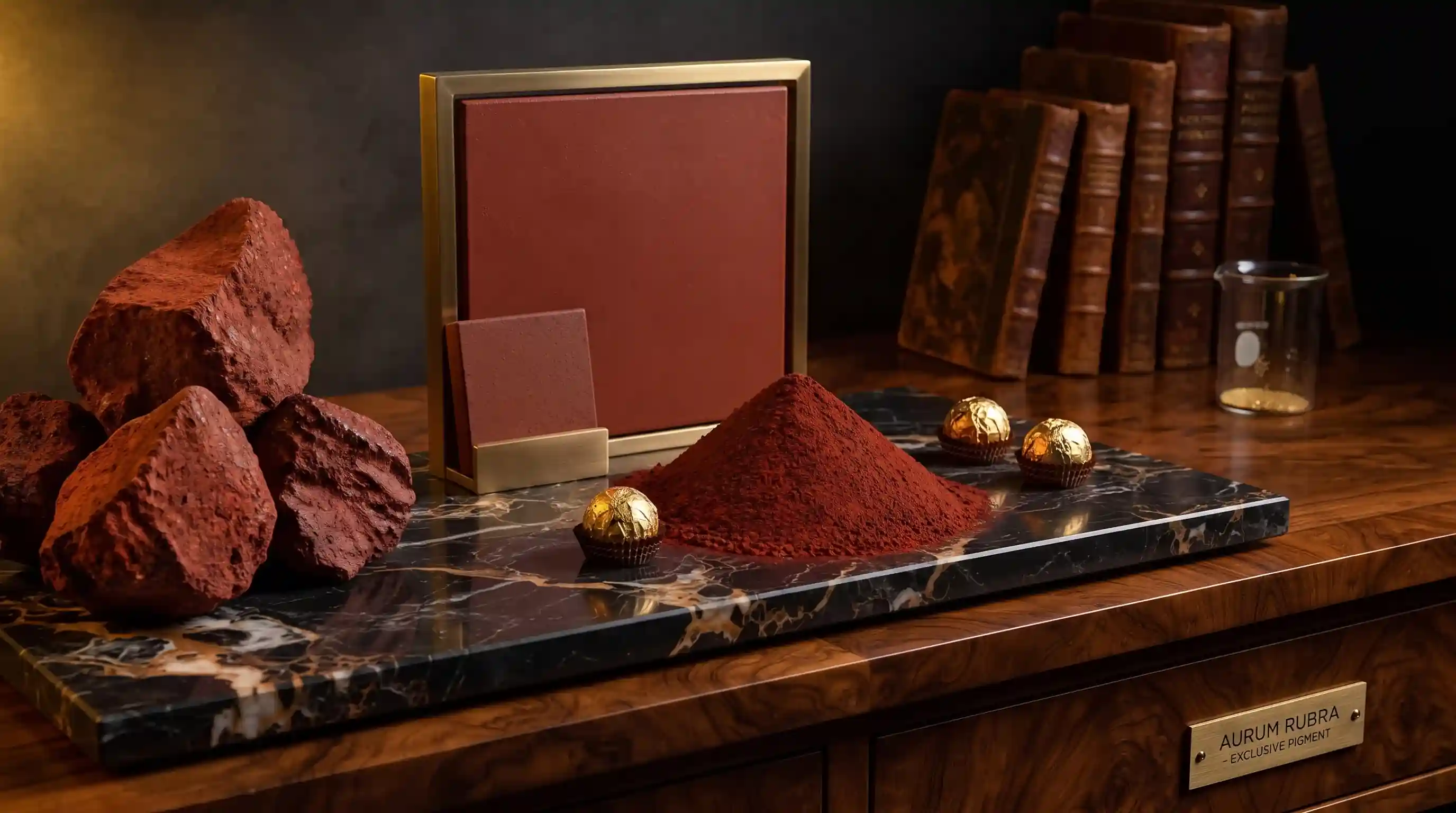
Red iron oxide (ochre) is one of the most well-known and widely used mineral pigments in the world, known by the chemical formula Fe2O3. In the Persian language, this substance is also known by other names such as "Ochre", "Hematite Iron Oxide", and "Earth Orpiment". Due to its distinct red color, high chemical stability, and resistance to light and heat, it is used in various industries. In the Amiran Stone Mineral project, this product is supplied as a powder with precise meshing for pigment, coating, cement, and ceramic product applications.
The importance of red iron oxide (ochre) in mode industries is not limited only to its beautiful color. Due to its special crystalline structure, controlled particle size, and uniform distribution, this mineral has a very high covering power on various surfaces. This exact feature has led paint, ceramic, concrete, and tile manufacturers to rely on it as a key raw material. In fact, the high hiding power of this pigment is one of the most important reasons for replacing many synthetic and expensive dyes with it.
From an appearance perspective, red iron oxide (ochre) is a soft, dry powder with a color ranging from red to reddish-brown. The final color of this product can vary from bright red to dark red depending on purity, particle size, and processing method. The smaller the particle size and the more uniform their distribution, the more vibrant the final color and the better the coverage on the surface. For this reason, precise control of meshing in the production process is considered one of the most important quality factors of this product.
Chemically, red iron oxide (ochre) is a stable compound insoluble in water and most organic solvents. This feature makes the product highly resistant to air humidity, rainfall, and even the alkaline conditions present in mortars and concretes. Additionally, this material does not fade under the sun's ultraviolet rays, making it an ideal choice for outdoor applications and building facades. The thermal stability of this product is also suitable up to relatively high temperatures, which is of great importance in the ceramic industry.
Ultimately, red iron oxide (ochre) is not just a coloring agent, but an efficient technical additive that improves the mechanical and aesthetic properties of the final product. In the following chapters, we will examine in detail the reasons for the high hiding power, the role of particle size, meshing, and the specialized applications of this product in various industries. If you are looking to read more about selecting and purchasing this product, reading the Buying guide for high quality and purity red iron oxide (ochre) will help you better understand the key quality criteria.
Crystalline structure and scientific reasons for the hiding power of red iron oxide (ochre)
High hiding power in red iron oxide (ochre) is not a coincidence, but is rooted in the crystalline structure and optical properties of this material. This pigment belongs to the hematite structure, which crystallizes in the trigonal crystal system. In this structure, iron and oxygen atoms are arranged regularly and densely next to each other, creating a high density that is itself one of the main factors of the coloring power and covering capability of this material.
From an optical perspective, when light strikes a red iron oxide (ochre) particle, a large part of it is absorbed and another part is diffusely reflected. This light scattering and absorption allows the particles of this pigment to completely cover the underlying surface and create a distinct red color on the surface. The closer the particle size is to the wavelength of visible light, the more the light reflection is improved and the more complete the impression of coverage is created. This feature shows the main difference between mineral pigments and weak synthetic coloring materials.
Another main reason for the hiding power is the shape and morphology of red iron oxide (ochre) particles. The particles of this product are usually produced in flake, spherical, or irregular forms, and depending on the processing method, they can create different arrangements on the surface. Flake particles are particularly capable of covering large surfaces because they lie on top of each other like overlapping layers and prevent light from penetrating the underlying surface. This feature is very valuable in architectural paints and industrial coatings.
In addition to particle structure, the high density of red iron oxide (ochre) is also effective in its hiding power. A high-density material contains a larger amount of solid particles in a smaller volume of the product, resulting in a colored layer formed on the surface with greater thickness and strength. This causes the consumption rate of this pigment to decrease compared to ordinary paints and reduces the final production cost. Simply put, red iron oxide (ochre) offers more coverage with a smaller amount.
Another important point is particle size distribution. The presence of particles with very diverse and uncontrolled sizes reduces color uniformity and decreases hiding power. However, in a high-quality product, this distribution is precisely controlled so that the particles are within a specific and coordinated range. To better understand the differences between various types of this product and choose the appropriate type, you can read the Guide to choosing the best type of red iron oxide (ochre) . This guide helps you better understand the relationship between particle structure and final application.
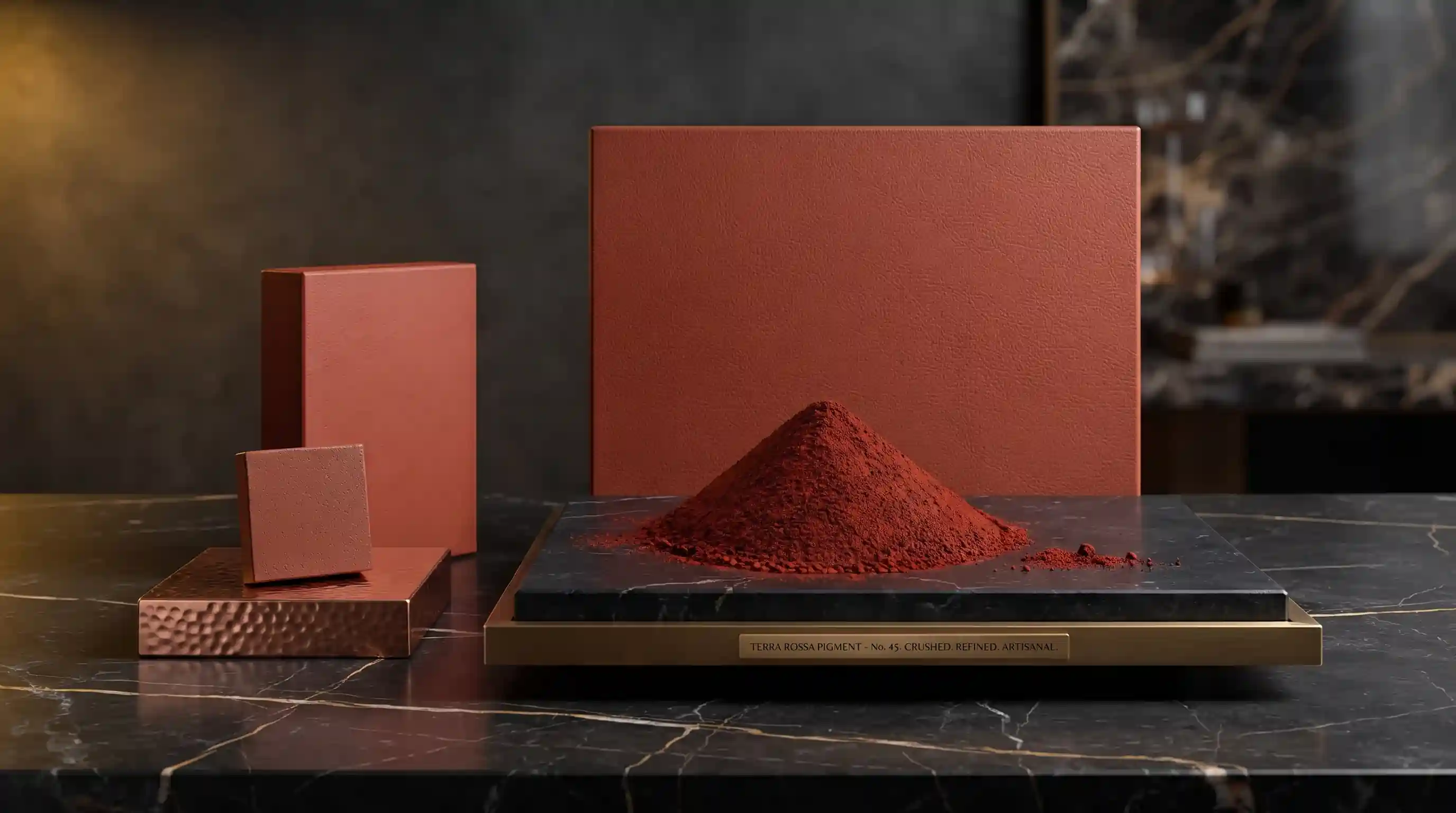
The role of particle size and 450 to 1500 mesh grading in coating quality
Particle size is one of the most vital parameters in determining the quality of red iron oxide (ochre) and its hiding power. In the mineral pigment manufacturing industry, particle size is expressed in units of "mesh". The higher the mesh number, the smaller the particle size. The product supplied in the Amiran Stone Mineral project is produced in the range of 450 to 1500 mesh, indicating very fine and homogeneous particles. This fineness of particles has a direct impact on coating quality and color dispersion in the final product.
When red iron oxide (ochre) particles are very fine, their specific surface area increases. A higher specific surface area means there are more particles in one gram of the product, and each particle can cover a portion of the underlying surface. The result is the creation of a dense, uniform, and flawless colored layer. Furthermore, finer particles have a better ability to disperse within color carriers (such as resin, water, or oil) and prevent rapid settling. This feature is of great importance in the production of industrial paints and high-quality coatings.
On the other hand, excessively fine particles can also create challenges. Very fine particles tend to aggregate and clump together because inter-particle forces (such as Van der Waals forces) are felt more strongly in small particles. Therefore, the manufacturer must use appropriate methods to prevent their aggregation in addition to micronizing the particles. To familiarize yourself with practical methods to prevent this problem, the article How to prevent clumping of red iron oxide (ochre)? provides useful solutions. Controlling moisture, proper packaging, and using anti-caking agents are among the common methods.
The mesh range of 450 to 1500 mesh allows the user to choose the product suitable for their needs. For example, for precision pigments and high-quality paints, higher (finer) meshes are more suitable because the final color becomes clearer and more uniform. Conversely, for applications such as cement or concrete that require deep coloring and penetration into the matrix, middle meshes yield better efficiency. Correct mesh selection directly affects the final cost and project quality.
Technical reviews show that a product with precise mesh grading and homogeneous distribution can reduce pigment consumption to a significant level. The reason for this is the high efficiency of each particle in covering and the absence of useless large particles. As a result, purchasing a high-quality product with standard mesh grading not only raises the quality of the final product, but is also economically justifiable. This matter is doubly important in large construction projects and mass ceramic production.
Application of red iron oxide (ochre) in pigment and coating industries
The main and most extensive application of red iron oxide (ochre) is in the pigment industry and the production of colored coatings. This material is used as a high-quality mineral pigment in the production of architectural paints, industrial paints, metal coatings, marine paints, and even printing inks. The main reason for this wide application is the stable color, high hiding power, and resistance to environmental conditions that this product provides. In many construction projects, paints based on red iron oxide (ochre) are used for facades, walls, railings, and even floors.
In the industrial coatings industry, this pigment plays a vital role in protecting metal and concrete surfaces. Red iron oxide (ochre) as a coating pigment not only creates a pleasing appearance, but also acts as a physical barrier against the penetration of moisture, oxygen, and chemicals. This feature is extremely valuable in bridges, pipelines, marine structures, and agricultural machinery. The combination of high hiding power with chemical resistance extends the lifespan of the coating and reduces maintenance costs.
In the production of watercolors, plastics, and paper, red iron oxide (ochre) is also used as a mineral coloring agent. The main advantage of this material over synthetic dyes is that it is non-toxic and poses no risk to human health or the environment. This feature has made the use of this pigment in consumer products such as toys, food packaging, and health products authorized and growing. Many manufacturers are looking to replace chemical dyes with safe mineral pigments.
One of the important characteristics in pigment application is the "Dispersion" of the product. High-quality red iron oxide (ochre) must disperse well in the solvent medium and not settle. Dispersion quality depends on particle size, particle shape, and the presence of impurities on the particle surface. A product with precise mesh grading and high purity exhibits better dispersion, resulting in a final color that is more transparent, uniform, and durable. This is a key quality assessment criterion in the production of high-quality paints.
Finally, red iron oxide (ochre) is ideal for exterior and outdoor applications due to its UV light stability. Architectural paints that use this pigment remain without fading or discoloration for years. If you intend to purchase this product for pigment applications, viewing the page Red iron oxide (ochre) on the Amiran Rock Minerals Project website can provide you with useful information. Choosing the right product with the correct mesh and purity guarantees the quality of your final product.
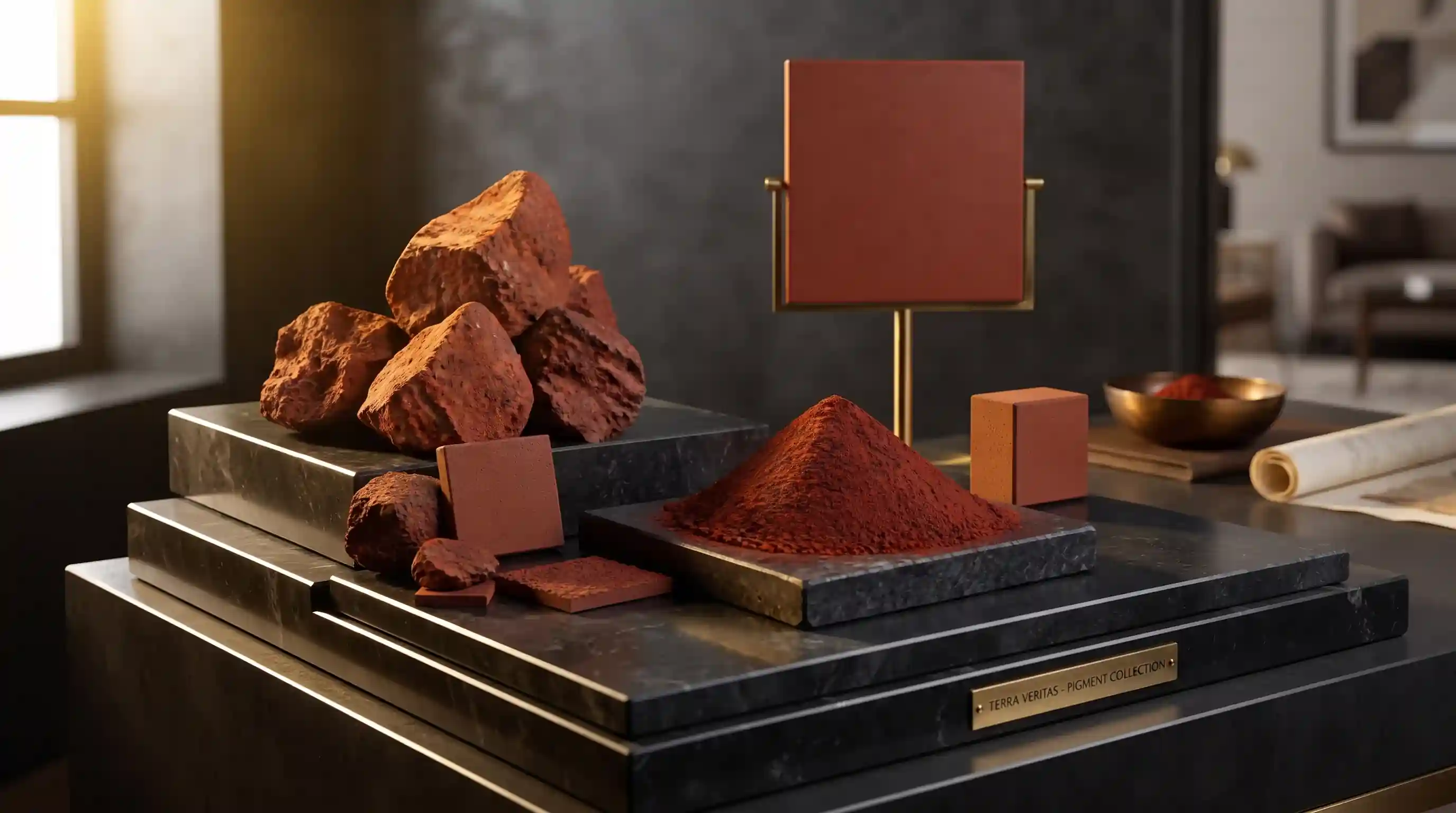
Application of red iron oxide (ochre) in the cement and concrete industry
One of the most important and yet lesser-known applications of red iron oxide (ochre) is in the cement and concrete industry. This product is used as a coloring agent and technical additive in the production of colored concrete, decorative mortars, cement bricks, artificial stones, and even industrial flooring. The main reason for this application is the high resistance of this pigment in the highly alkaline environment of cement and its ability to retain color over time.
The cement paste environment has a very high pH (around 12 to 13), which degrades or fades many organic and synthetic pigments over time. However, red iron oxide (ochre) as a stable mineral oxide does not change in this corrosive environment and retains its color for decades. For this reason, colored concretes made with this material are widely used in building facades, sidewalks, squares, and urban spaces. Color durability in civil engineering projects is an important quality criterion.
In the production of colored concrete, red iron oxide (ochre) with a medium mesh is usually used. The reason for this is the need for proper dispersion within the cement matrix and prevention of particle segregation. Particles must be fine enough to create a uniform color, but not so fine as to cause rapid setting or reduce concrete workability. The consumption percentage of this pigment in concrete usually varies between 1 to 5 percent of the cement weight and is determined depending on the required color intensity. Excessive consumption can negatively affect the mechanical strength of concrete.
In addition to coloring, red iron oxide (ochre) plays another technical role in the cement industry. This material, as a mineral additive, can be effective in the clinkering process and setting time adjustment of cement. The presence of iron oxide in the raw cement mixture helps form the required mineral phases at kiln temperatures, thereby improving the final cement quality. This is an example of the technical applications of this product, beyond its coloring use.
In large concrete projects, color uniformity between different batches is very important. If the pigment quality changes during production, the final color of the concrete will vary in different parts of the building. For this reason, using a high-quality product with consistent specifications is a necessity. The product supplied in the Amiran Rock Minerals Project, with controlled mesh grading and appropriate purity, is a reliable option for this application. Also, resistance to freezing and thawing/wet-dry cycles makes colored concrete containing this pigment perform well in various climatic conditions.
Application of red iron oxide (ochre) in ceramic products
The ceramic industry is another major consumer of red iron oxide (ochre). This product is widely used in the production of tiles, ceramics, porcelain tableware, facing bricks, decorative ceramics, and even sanitary porcelain bodies. In this industry, red iron oxide (ochre) is used both as a coloring pigment in glazes and as an effective material in the structure of ceramic bodies. The ability of this material to withstand high temperatures makes it a key material in ceramic firing kilns.
In glazing, red iron oxide (ochre) acts as a coloring pigment, creating red, brown, cream, and even yellow colors (depending on the combination with other oxides and kiln conditions). This pigment performs well in alkaline, lead, and brilliant glazes and maintains its stability at firing temperatures of 900 to 1200 degrees Celsius. The important point is that the final color in the glaze strongly depends on the kiln atmosphere conditions (oxidizing or reducing) as well as the pigment particle size. Therefore, precise control of product specifications is vital in this industry.
In the ceramic body, red iron oxide (ochre) can affect the post-firing color, porosity level, and even product strength. For example, in the production of facing bricks and decorative ceramics, this material helps create a warm and natural color that is very popular in traditional and mode architecture. Also, in traditional Iranian ceramics, the use of this pigment has a long history and is still used by artists and manufacturers.
An important challenge in ceramic application is color uniformity in mass production. If the particle size or their distribution changes in a batch of product, the tile color will differ in various parts of the kiln. This leads to increased waste and reduced manufacturer profit. For this reason, using a product with precise mesh grading (such as the 450 1500 mesh range) and controlled purity is a competitive necessity for ceramic manufacturers. The Amiran Rock Minerals Project product is processed according to these needs.
In addition, red iron oxide (ochre) is also used in the production of engobe and silex paints. In these applications, very fine particles (high meshes) contribute to clearer colors and better coverage on the raw surface. As a result, the final ceramic will have a uniform and high-quality appearance. The combination of thermal stability, beautiful color, and high coverage makes this product an irreplaceable material in the ceramic industry.
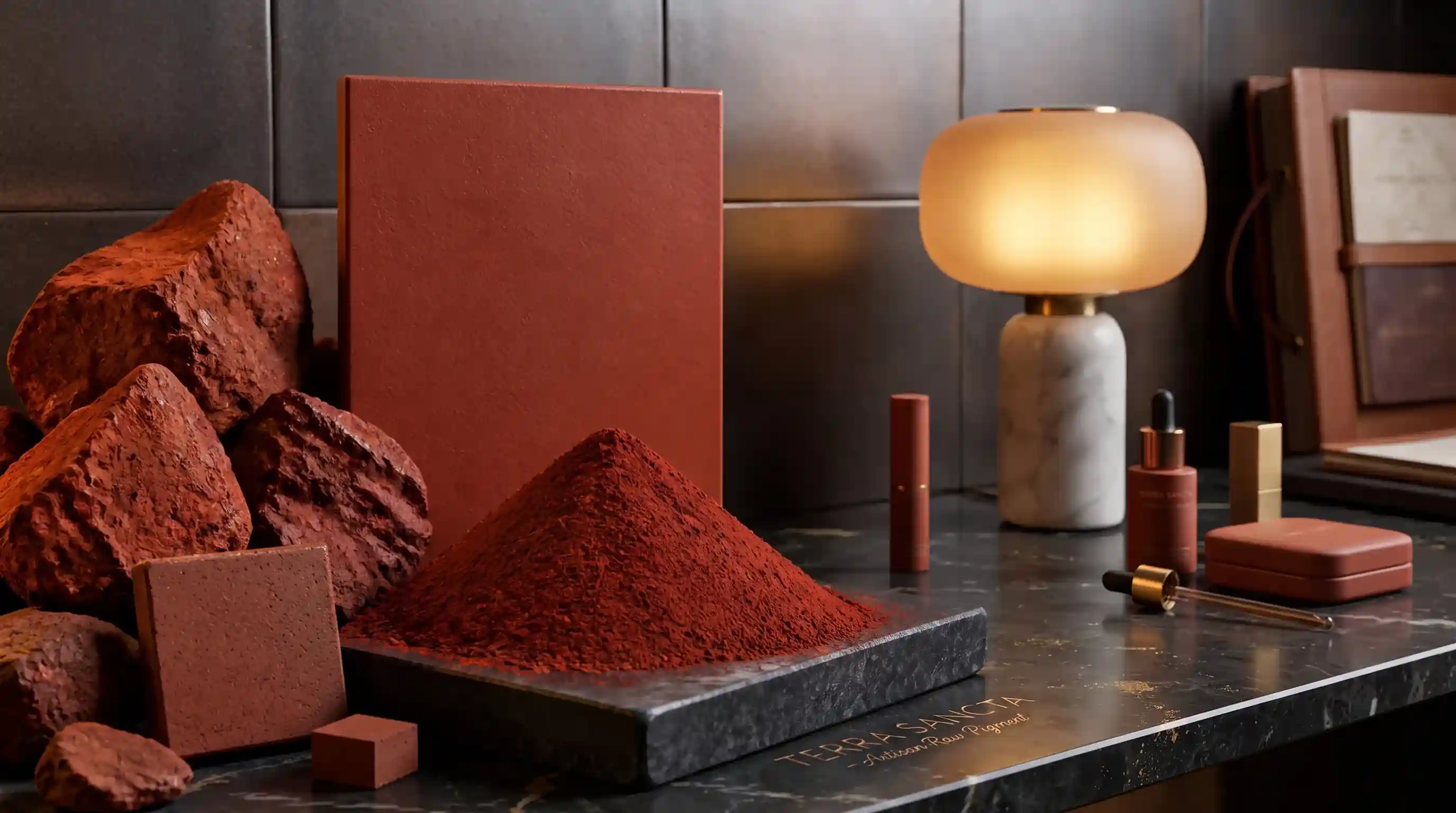
Quality control, purity, and storage of red iron oxide (ochre)
The quality of red iron oxide (ochre) depends on a set of parameters that must be carefully controlled during the production process. The most important of these parameters are: chemical purity (Fe2O3 percentage), particle size distribution, moisture content, color and tinting strength, and the presence of impurities such as silica, alumina, and carbonates. Each of these factors can affect the final product quality and its application in various industries.
Chemical purity is one of the most important criteria. The higher the Fe2O3 percentage, the more intense the red color and the greater the hiding power. Impurities present in the product can cause color changes, reduced color intensity, and even spotting on the final surface. For example, the presence of free silica can cause a reduction in color intensity, while the presence of carbonate compounds can cause bubbles in ceramic glazes or reduced adhesion in paints. Therefore, precise processing and evaluation of the product is essential.
Moisture is a very important factor in the storage of red iron oxide (ochre). This product is supplied in powder form, and if its moisture is high, the particles stick together and form lumps. Caking not only causes a drop in color quality, but also creates problems in the production process (such as clogged pipes and filters). To prevent this problem, the product moisture must be kept within the allowable limit and stored in suitable packaging in a dry space. Methods for preventing caking are discussed in full in the specialized article How to prevent caking of red iron oxide (ochre)? have been thoroughly examined.
In terms of storage, this product should be kept in dry, cool, and well-ventilated warehouses. Direct exposure to rain, ground moisture, and water leaks causes a rapid drop in its quality. Also, the packaging should be such that it prevents the ingress of moisture and exteal contamination. In large projects, it is recommended to consume product inventory on a rotational basis to avoid long-term storage and the risk of caking.
Finally, product quality evaluation should include laboratory tests such as particle size analysis, Fe2O3 percentage determination, color test, and hiding power test. Professional buyers usually sample and review laboratory results before purchasing in high volumes. To get acquainted with key quality evaluation tips before purchasing, Buying guide for high quality and purity red iron oxide (ochre) is a practical resource. This guide helps you recognize true quality standards and avoid purchasing the wrong product.
Conclusion: Why does red iron oxide (ochra) have a high hiding power?
In this article, we examined the various reasons for the high hiding power of red iron oxide (ochra). From the hematite crystal structure and high density of this material to the fine particle size and their uniform distribution, each plays a role in creating a strong and durable colored coating. The combination of these factors allows this mineral pigment to cover a larger surface area with a smaller consumption amount, making it an economical and high-quality option for various industries.
The chemical properties of this product, namely stability in alkaline environments, UV resistance, water insolubility, and high thermal stability, make it suitable for demanding applications such as concrete, ceramics, and industrial coatings. While many synthetic dyes degrade under these conditions, red iron oxide (ochra) retains its color for many years. This durability is the main reason for the popularity of this material in construction projects and industrial manufacturing.
The mesh size range of 450 to 1500 mesh allows users to choose the product that suits their needs. For precise pigments and ceramic glazes, higher meshes are more suitable, while for concrete and cement, middle meshes perform better. Understanding these differences helps optimize costs and improve the quality of the final product. Additionally, moisture control and preventing caking are simple yet vital measures to maintain product quality during storage.
From an environmental perspective, red iron oxide (ochra) is a safe and non-toxic mineral substance that poses fewer health risks to workers and consumers compared to many chemical dyes. This feature, along with affordable pricing and the availability of raw materials, has solidified this product's position in the paint, ceramics, and construction industries. At the Amiran Stone Mineral project, this product is processed with strict quality control and standard mesh sizing for pigment, coating, cement, and ceramic product applications.
Ultimately, choosing a reputable supplier familiar with the technical specifications of the product guarantees the quality of your project. For complete information about the product and to request a supply, you can visit the page red iron oxide (ochra). Also, to choose the appropriate type of product for your application, reading the guide to choosing the best type of red iron oxide (ochra) is recommended. With a proper understanding of this product's characteristics, you can haess its full potential in your projects.
| Question | Answer |
|---|---|
| What is red iron oxide (ochra)? | It is a mineral pigment with the formula Fe2O3 used for coloring and coating in the paint, cement, and ceramic industries. |
| Why does this product have high hiding power? | Due to the hematite crystal structure, high density, fine particles, and uniform particle size distribution which creates complete surface coverage. |
| What is the mesh range of this product? | This product is supplied in a mesh range of 450 to 1500 mesh, indicating very fine particles. |
| What are the main applications of red iron oxide (ochra)? | Pigment, industrial coatings, colored cement and concrete, and ceramic products such as tiles and glazes. |
| Does this product fade in sunlight? | No, this product has high resistance to UV radiation and retains its color outdoors. |
| Is red iron oxide (ochra) stable in the alkaline environment of cement? | Yes, this product is stable in the highly alkaline environment of cement and concrete and retains its color. |
| What should be done to prevent caking? | Moisture control, proper packaging, and storage in a dry place are the most important solutions. |
| What role does it play in ceramics? | It is used as a colorant in ceramic glazes and bodies and is stable at kiln temperatures. |
| How much is used in colored concrete? | Usually between 1 and 5 percent of the cement weight is used, depending on the required color intensity. |
| How to identify a high-quality product? | Checking Fe2O3 purity, particle size distribution, moisture, and color testing are the main criteria for quality evaluation. |
Technical specifications and applications of red iron oxide (ochre) in this article have been prepared based on product information of Kani Sang Amiran project (https://ksamiran.ir/products/red-iron-oxide/)
برچسب: Red iron oxide (ochre),Why does red iron oxide (ochre) have high hiding power?,
نویسنده: رساوب آفرین