
درباره سایت
آخرین مطالب
- تأثیر کیفیت سیلیس بر دوام و استحکام بتن صنعتی
- انتخاب بهترین دولومیت مش 10 تا 40 کاربردی در تولید شیشه
- انتخاب بهترین دولومیت مش 10 تا 40 کاربردی در تولید شیشه
- بهترین دولومیت صنعتی برای مصارف شیشه و مصالح ساختمانی
- دليل تقديم طلب شراء أكسيد الليمونيت (جول ماش)
- مزایای استفاده از اکسید لیمونیت (گل ماش)
- نقش تالک صنعتی در صنایع گچ و مصالح ساختمانی
- Benefits of Using Limonite Oxide (Gol Mash)
- دور التلك الصناعي في صناعات الجبس ومواد البناء
- The Impact of Silica Quality on the Durability and Strength of Industrial Concrete
امکانات وب
Introduction to the Importance of Silica in Advanced Manufacturing Industries
In today's world, manufacturing industries are constantly looking for raw materials that can impart the highest levels of quality, durability, and sustainability to their final products. Amidst this, silica as one of the most fundamental and strategic mineral materials, plays a vital role in various industrial processes. The quality of this mineral directly affects the physical and chemical properties of the final product, which is why engineers and manufacturers always pay special attention to its purity and granulation. Understanding this critical need, the Kani Sang Amiran project has undertaken the processing and supply of this valuable material so that various industries can access standard raw materials with complete peace of mind.
Technical investigations show that the presence of impurities in raw mineral materials can weaken the structure of the final product and cause serious defects in production lines. For example, in sensitive industries that require high precision, the careful selection of raw materials makes the difference between a prime-quality product and a rejected one. To lea more about the technical details and specifications of this product, you can visit the dedicated silica page to obtain comprehensive information about its mesh range and applications. Covering a mesh range from 10 to 450, this material meets a wide spectrum of industrial needs.
Furthermore, in the mineral supply chain, a precise understanding of other raw materials also greatly helps in optimizing production processes. For instance, studying Reviewing the technical benefits of using kaolin in ceramics helps manufacturers gain a better understanding of the synergy between different minerals in firing kilns and ceramic structures. This combined knowledge lays the foundation for producing higher quality products that are more resistant to thermal and mechanical stresses.
The Vital Role of Silica in the Glass and Crystal Industry
The glass industry is one of the oldest yet most advanced fields consuming mineral materials, where the purity and quality of silica are the primary determinants of the transparency, thermal resistance, and durability of the manufactured glass. Silicon dioxide acts as the primary skeleton and network former of the glass structure. Any impurity, especially iron oxides in the structure of this material, can cause colored spots, bubbles, or structural weak points in the final glass, which is completely unacceptable for the pharmaceutical, automotive, and architectural glass industries.
Glass manufacturers require raw materials with a completely homogenous and controlled granulation so that the melting of materials in kilns occurs uniformly. The standard mesh range plays an important role in melting speed and reducing kiln energy consumption. The use of high-quality processed materials ensures that the glass structure remains free of inteal stresses. Flat glass, crystalware, and glass fibers all heavily depend on this mineral.
Precise control of physical and chemical parameters in the raw material preparation process guarantees high efficiency in glass manufacturing plants. Engineers in this field guarantee the quality of their output products by carefully selecting the processed minerals provided by Kani Sang Amiran, safeguarding themselves against damages caused by hidden impurities.
Application of Silica in Founding and Molding Industries
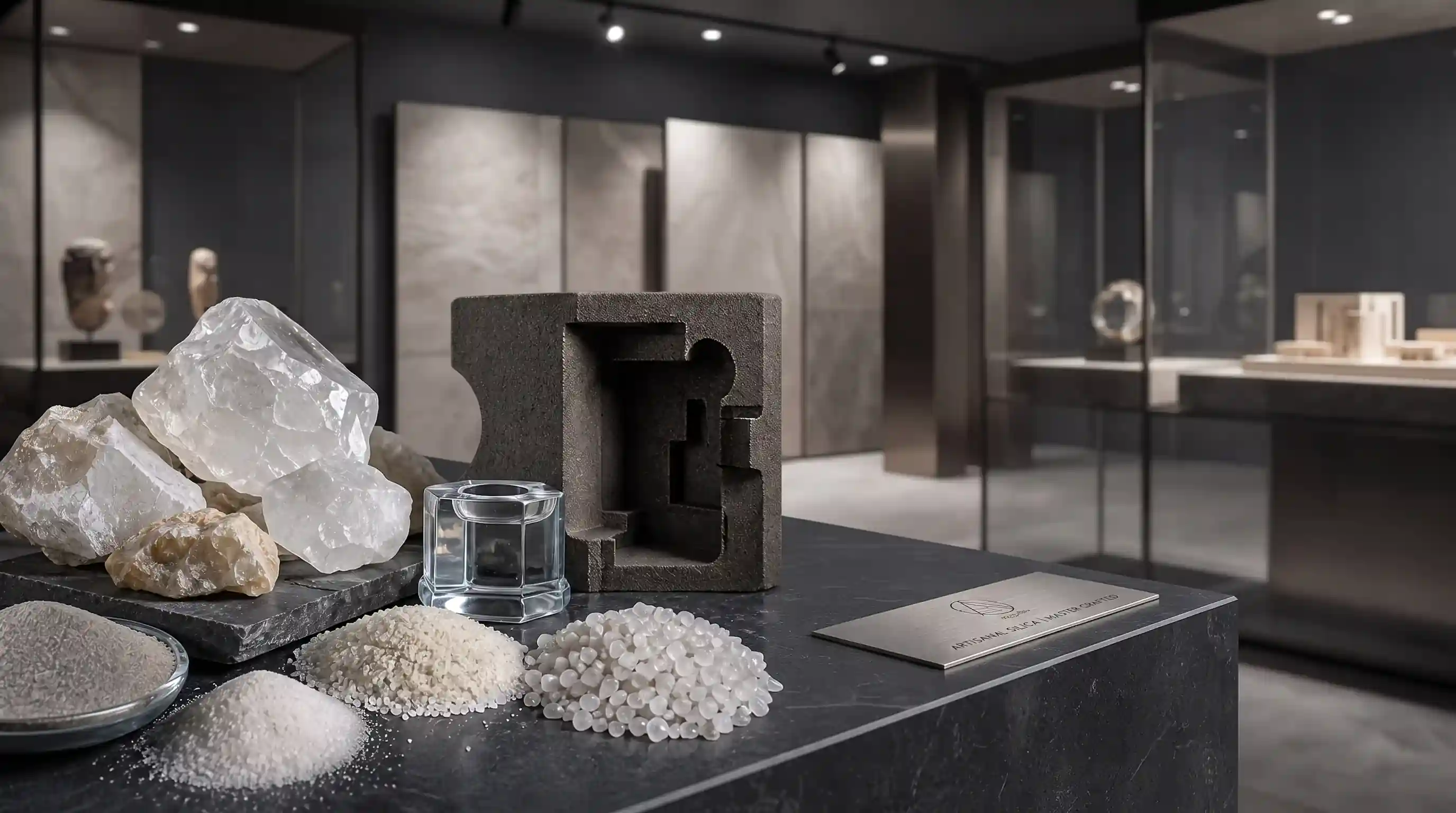
In the foundry industry, resistance to extremely high temperatures and the preservation of dimensional stability in molds are of vital importance. Due to its high melting point and specific thermal expansion, silica is used as the primary material in the manufacture of molding sands and foundry cores. The quality of this material determines how smooth, crack-free, and compliant with engineering tolerances the surface of the cast piece will be.
The presence of high-purity particles in foundry sand prevents undesirable chemical reactions between the molten metal and the mold walls. This is exceptionally crucial in steel and cast iron casting. Moreover, alongside metal industries, materials engineering in other fields also utilizes specialized minerals; for example, Industrial barite applications in the production of sound and thermal insulation demonstrates how the intelligent combination of different minerals can significantly enhance the final properties of industrial structures and equipment.
The appropriate mesh range (from 10 to 450 mesh) allows foundry specialists to choose the best granulation combination depending on the part type and molding method (green sand, dry sand, or bonded sand), ensuring both good gas permeability and the preservation of the mold's mechanical strength.
Silica in the Ceramic and Tile Manufacturing Industry
The ceramic and tile manufacturing industry relies heavily on the crystalline structure and chemical properties of mineral raw materials. Silica acts as an inert filler in the ceramic body and is present as a glass network former in glazes. Precise control of the amount and purity of this material prevents unwanted dimensional changes, tile warping, and glaze cracking during the kiln firing stage.
Tile and ceramic manufacturers require micronized, high-quality raw materials to achieve high mechanical strength and standard water absorption. Diversity in the mesh range enables formulation engineers to precisely control the behavior of slip and pressed powder. This directly impacts the surface quality, dimensional stability, and aesthetics of the final product.
By supplying premium raw materials, the Kani Sang Amiran project comprehensively covers the needs of tile and ceramic factories. The synergy of this material with other mineral compounds consumed in this industry steers production lines toward maximum efficiency and reduced waste.
The Key Role of Silica in Mode Construction Materials
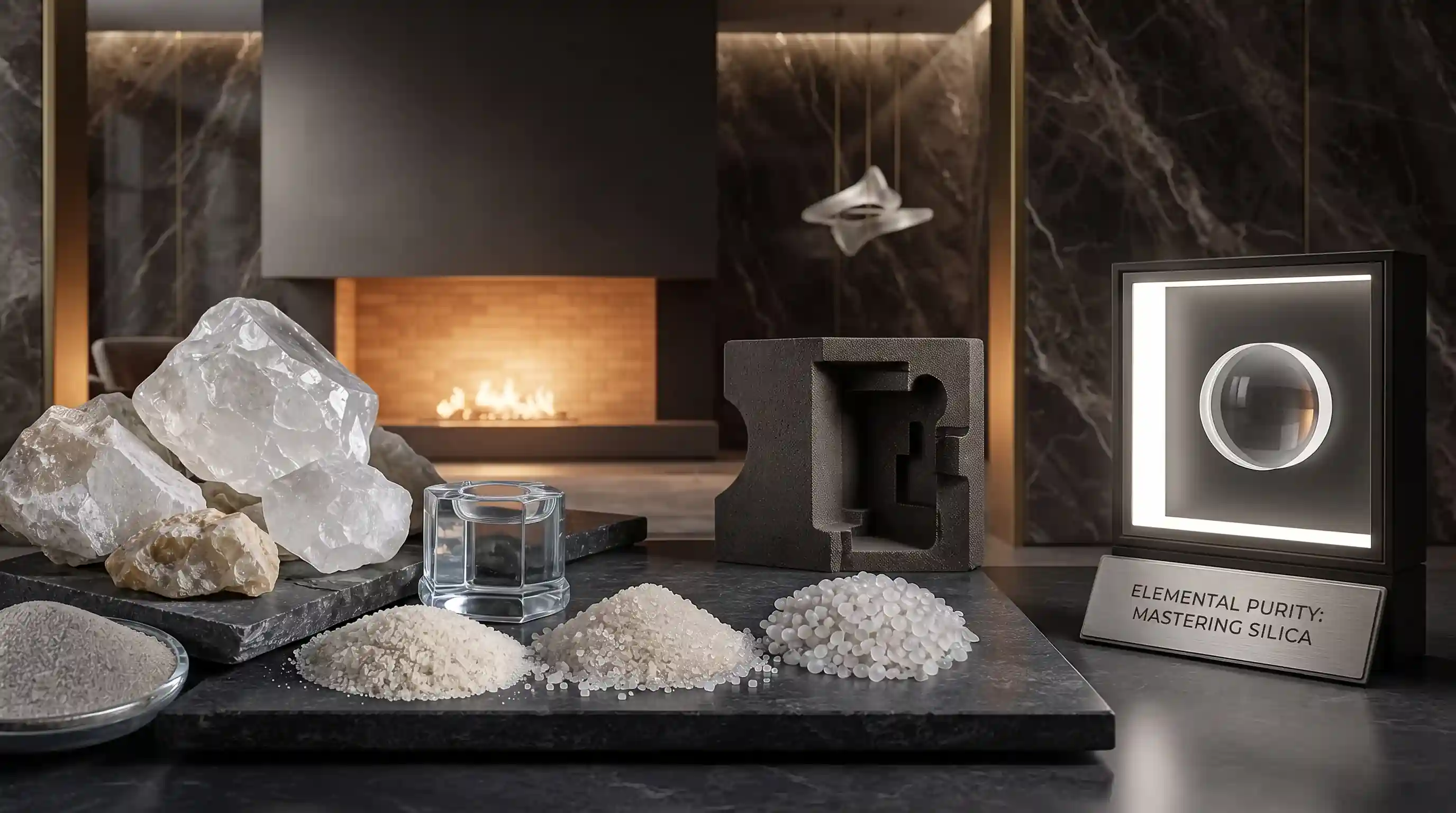
The construction industry is constantly seeking to improve compressive strength, concrete durability, and reduce the permeability of structures against environmental factors. The use of micronized and granulated silica in the production of high-strength concretes, specialized mortars, tile adhesives, and grouts has become an engineering standard. The very fine particles of this material combine with the free calcium hydroxide released during the cement reaction to create dense calcium silicate, which has a strongly positive effect on the final strength.
In addition to concrete, precision in choosing raw materials also plays a decisive role in producing various other mineral-based building materials. For instance, similar standards are observed in industries related to polymers and pipe manufacturing; as the article The role of calcium carbonate in plastic pipe manufacturing clearly clarifies, how careful selection of fillers can transform the mechanical and economic properties of a product. This engineering approach is similarly implemented in the construction materials sector using high-quality silica.
Resistance to chemical attacks, reduction of thermal cracks, and extension of structural lifespans are prominent achievements of utilizing this standard mineral in large civil and infrastructural projects.
The Importance of Mesh Range and Granulation in Final Production Quality
One of the most important technical parameters in purchasing and consuming silica is paying attention to the mesh range and particle size distribution. Inappropriate granulation can disrupt the entire production process; excessively coarse particles increase melting or reaction time, while overly fine particles cause agglomeration and feeding problems in machinery. The 10 to 450 mesh range encompasses a complete spectrum of coarse grains down to exceptionally fine micronized powders.
Each industry requires its own specific mesh range. For example, the glass industry requires medium and completely uniform granulations, whereas the ceramic industry and advanced construction materials utilize micronized powders with high meshes. Utilizing mode granulation and milling equipment, the Kani Sang Amiran project supplies this material to the market with the most precise particle size distribution standards.
Continuous quality control over meshing guarantees the repeatability of physical properties in the factory's manufactured products. This stability in quality minimizes quality control costs and production line waste.

Standardization and Quality Control of Silica at Kani Sang Amiran
Mineral quality assurance requires the establishment of strict quality control systems from the mine to the factory. The silica supplied by the Kani Sang Amiran project undergoes rigorous entropy testing, chemical analysis (XRF), and particle size analysis (PSA) to ensure that no harmful impurities enter the customers' production chain.
Maintaining high chemical purity and minimizing iron oxides, heavy metals, and organic matter are primary objectives in processing this product. Manufacturers who care about the quality of their products always need a reliable supplier capable of delivering consistent and stable analysis over time.
Compliance with national and inteational standards in extraction, crushing, washing, and granulation makes this product an unrivaled option for sensitive industries. The trust that major industries place in Kani Sang Amiran products testifies to this collection's commitment to elevating the qualitative level of domestic production.
Future Outlook and Mode Technologies in Silica Processing
With the rapid development of mode technologies and the increasing precision required in high-tech industries, the demand for higher purity and more accurate meshing of silica is on the rise. The electronics industry, solar energies, and advanced composites increasingly require high-purity silicon, and mode processing must respond to these new needs.
Monitoring global trends in the mineral industry, the Kani Sang Amiran project moves in sync with up-to-date global standards to provide the best and purest products for domestic and regional industries. Investing in advanced granulation and quality control equipment is the primary strategy for maintaining a superior position in the mineral market.
Ultimately, the intelligent choice of high-grade raw materials not only reduces production costs in the long run but also guarantees the quality, credibility, and competitive edge of final products in both domestic and foreign markets. This strategic mineral serves as the backbone of quality in many mother industries.
| Question | Answer |
|---|---|
| What is silica and what are its applications? | Silica is a strategic mineral widely used in the glass, foundry, ceramic, and construction materials industries. |
| What is the meshing range of Kani Sang Amiran silica? | This product is processed and supplied in a mesh range of 10 to 450 mesh, tailored to the needs of various industries. |
| Why is silica purity important in the glass manufacturing industry? | High purity and the absence of iron oxides increase transparency, resistance, and eliminate bubbles and spots in the final glass. |
| What is the role of silica in foundry industries? | As molding sand and core-making material, it guarantees high thermal tolerance and dimensional stability of the mold. |
| Does silica play a role in ceramic and tile industries? | Yes, it acts as an inert filler in the body and a network former in glazes, preventing cracking. |
| What is the application of this material in construction materials? | It is used in high-strength concretes, mortars, and tile adhesives to increase compressive strength and reduce permeability. |
| How can this product be purchased? | To view complete specifications and order the product, you can visit the dedicated silica page on the Kani Sang Amiran website. |
| Does silica quality affect production costs? | Yes, using standard and pure raw materials reduces production waste and drastically improves the quality of the final product. |
| Why is controlling the mesh range important in industries? | Proper granulation optimizes melting speed, reactivity, and machine performance on the production line. |
| What standards do Kani Sang Amiran products meet? | They are supplied under rigorous chemical analysis and particle size distribution tests to guarantee the highest quality. |
Kani Sang Amiran Project — Reference for Production and Processing of Standard Minerals (https://ksamiran.ir/products/silica/)
برچسب: Silica,Why is Silica Purity the Main Factor in Production Quality?,
نویسنده: رساوب آفرین