
درباره سایت
آخرین مطالب
- تأثیر کیفیت سیلیس بر دوام و استحکام بتن صنعتی
- انتخاب بهترین دولومیت مش 10 تا 40 کاربردی در تولید شیشه
- انتخاب بهترین دولومیت مش 10 تا 40 کاربردی در تولید شیشه
- بهترین دولومیت صنعتی برای مصارف شیشه و مصالح ساختمانی
- دليل تقديم طلب شراء أكسيد الليمونيت (جول ماش)
- مزایای استفاده از اکسید لیمونیت (گل ماش)
- نقش تالک صنعتی در صنایع گچ و مصالح ساختمانی
- Benefits of Using Limonite Oxide (Gol Mash)
- دور التلك الصناعي في صناعات الجبس ومواد البناء
- The Impact of Silica Quality on the Durability and Strength of Industrial Concrete
امکانات وب
An Introduction to the Importance of Choosing Calcium Carbonate
Selecting high-quality raw materials in various manufacturing industries plays a key role in determining the durability, efficiency, and final cost of the product. Among all mineral fillers, calcium carbonate is recognized as one of the most widely used and strategic raw materials, with its presence clearly evident in the formulations of the polymer, paint, paper, and engineered product industries. A precise understanding of the physical and chemical properties of this material helps manufacturers make the best decisions for their production lines.
At the Kani Sang Amiran project, this mineral is offered with strict standards and in diverse mesh ranges to cover the specific needs of different industries. From applications in the production of construction pipes to advanced masterbatch and artificial leather industries, choosing the right mineral powder guarantees an improvement in the mechanical and aesthetic properties of the product. To see more details about this product, you can visit the calcium carbonate page.
The goal of this comprehensive article is to carefully examine the parameters effective in choosing the best mineral powder tailored to your industrial needs. Join us to lea about the technical and practical dimensions of this valuable material, step by step.
The Role of Calcium Carbonate in Polymer and PVC Pipe Industries
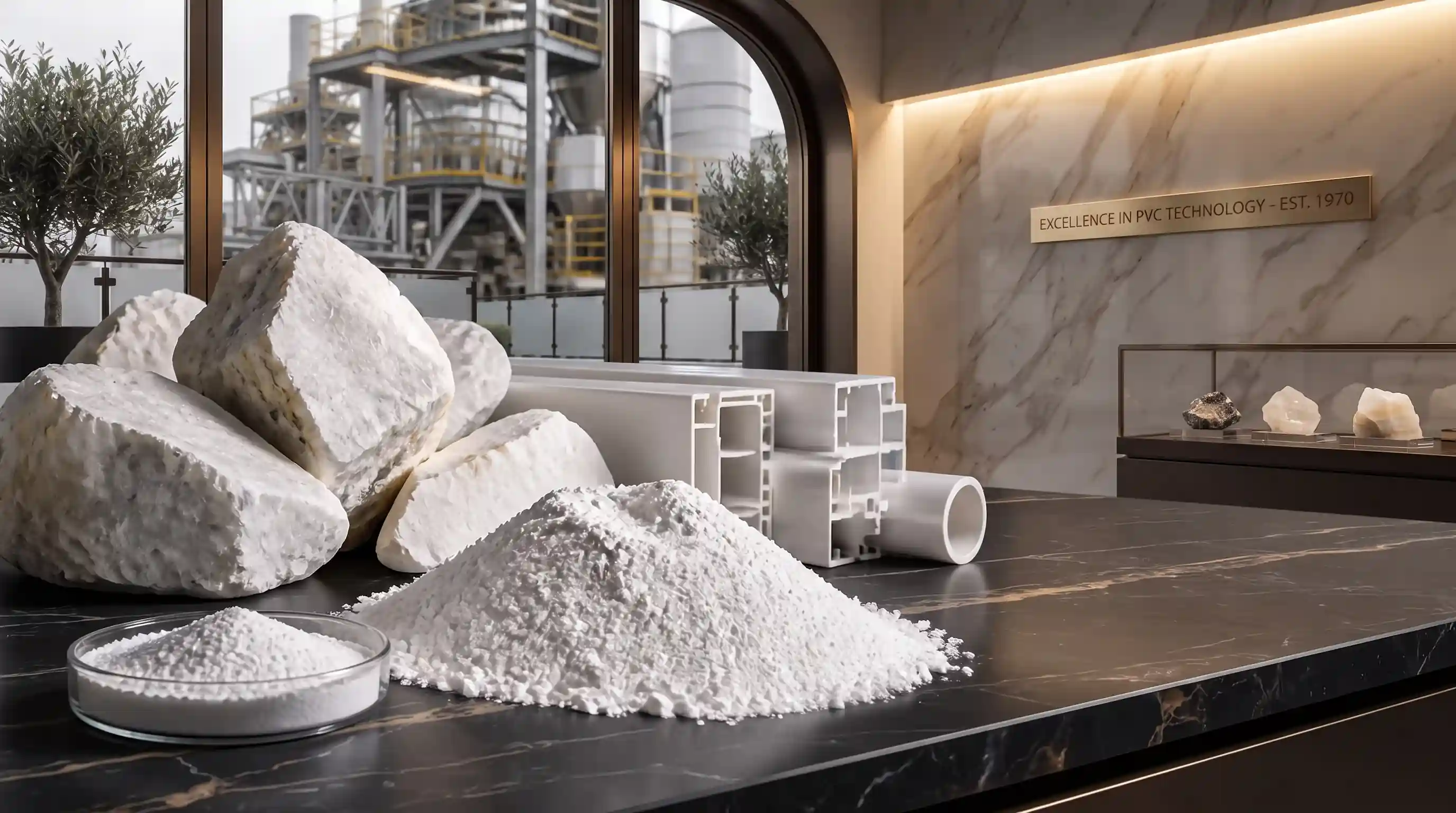
The polymer industry is one of the largest consumers of mineral materials, and in this regard, calcium carbonate holds an unparalleled position. As an economical filler and a property enhancer, this material plays an important role in the production of PVC/UPVC profiles and pipes. Using the appropriate mesh of this material in the formulation of plastic pipes, in addition to reducing production costs, contributes significantly to increasing the modulus of elasticity and rigidity of the final product.
In addition to pipes, this material is widely used in the production of masterbatches and cables. Uniform particle distribution in the polymer matrix improves dimensional stability and mechanical properties. Technical knowledge and quality control in the production process of these powders have a direct impact on the thermal and mechanical behavior of polymers, and for a better understanding of these mechanisms, reading the article How does coated calcium carbonate help the thermal stability of polymers? will be very helpful.
Also, precise adjustment of the loading percentage of this material in polymer products requires knowledge of the mixture's rheological behavior to prevent any loss in impact resistance properties. The use of appropriate coated or uncoated grades is determined depending on the type of final application in profiles and cables.

Examining the Mesh Range and Its Importance in Final Quality
One of the most important parameters in choosing the best calcium carbonate is paying attention to its mesh range. The mesh range available for this material varies from 100 to 3500 mesh, each optimized for a specific application. Coarser meshes are usually used in industries requiring high volumetric filling, and very fine meshes (micronized and nano) are used in sensitive industries such as paint, paper, adhesives, and artificial leather.
Particle size and their size distribution directly affect the gloss, coverage, and viscosity of the final product. For example, in the production of industrial paints and coatings, the use of high mesh increases coverage power and improves surface smoothness. Meanwhile, in heavier industries such as engineered stone production, a combination of different meshes is used to achieve optimal structural density.
Choosing an inappropriate mesh can lead to problems such as clumping, decreased mechanical properties, and a drop in aesthetic quality. Therefore, matching the mineral powder mesh precisely with the process needs of the production line is a vital step in the purchasing and application process of this material.
Applications in the Paint, Paper, and Adhesive Industries
The paint and construction and industrial coatings industries are always looking for fillers with high whiteness and homogeneous particle distribution. Calcium carbonate, by possessing these features, is used as a complementary pigment and inexpensive filler in paint formulations, helping to improve optical stability and reduce titanium dioxide consumption.
In the paper industry, this material also plays a key role in improving the whiteness, brightness, and opacity of paper. The presence of this mineral powder in the paper structure leads to improved printability and reduced ink permeability. Also, in the adhesives and sealants manufacturing industries, this material helps significantly in adjusting viscosity and improving the static and dynamic properties of the adhesive.
Choosing the appropriate grade for these sensitive industries requires a careful examination of chemical purity and the moisture content of the powder to prevent any undesirable reaction in the final formulation.

Engineered Stone and Artificial Leather; Advanced Applications
The production of engineered stone and artificial leather are other specialized fields where the use of calcium carbonate is proposed as a main structural component. In the production of engineered stones, this material is placed as the main filler alongside polymer resins to produce a product with high mechanical resistance, a luxurious appearance, and suitable weight.
In the artificial leather industry, this mineral powder helps improve hand-feel properties, flexibility, and the durability of coating layers. Using high-quality and pure grades ensures that the final product shows better resistance to wear and environmental factors. To obtain more information about how to upgrade the resistance of products containing this material, reading the article How does coated calcium carbonate increase the resistance of polymer products? is recommended.
Precision in selecting the mixing percentage of these materials with other additives enables formulators to offer products with global standards and competitive quality in domestic and foreign markets.
A Guide to Identifying Mineral Powder Quality and Purity
Given the variety of suppliers in the market, identifying the true quality and purity of calcium carbonate is of particular importance to industrialists. Impurities present in the mineral powder, such as metal oxides or free silica, can damage production machinery and severely reduce the quality of the final product. Reviewing the Technical Data Sheet (TDS) and conducting initial quality control tests are requirements for a safe purchase.
Numerous factors such as apparent whiteness, moisture content, loss on ignition, and particle size distribution must be carefully evaluated. To lea about scientific and practical methods for distinguishing high-quality materials from low-quality samples, you can refer to the specialized article How do we identify original calcium carbonate powder? which examines this process step by step.
Observing quality standards in choosing this material not only increases the useful life of equipment but will also bring satisfaction to final customers.
Factors Affecting Price and Economic Purchasing
Cost management in the supply chain is the main conce of every production manager. The price of calcium carbonate is determined by various factors such as purity grade, mesh range, processing level (such as being coated or micronized), and transportation costs. Purchasing directly from reputable manufacturers like the Kani Sang Amiran project allows for the removal of intermediaries and the procurement of raw materials at a real price with guaranteed quality.
When purchasing, one should not only settle for a lower price, because cheap, low-quality powders may impose many hidden costs on the production line, such as high waste, a drop in final product quality, and machinery breakdown. Economic choice means creating a balance between the purchase price and the added value created in the final product.
Checking the purchase volume, packaging type (bag, jumbo bag), and delivery conditions are other points that should be considered in raw material supply contracts.
Conclusion and Final Summary
Choosing the best calcium carbonate requires precise knowledge of technical parameters, the intended application in polymer, paint, paper, and engineered product industries, as well as attention to the mesh range and powder quality. This mineral, despite its simple structure, plays a very complex and decisive role in improving the physical, mechanical, and economic properties of final products.
By relying on production standards in the Kani Sang Amiran project and using diverse mesh ranges from 100 to 3500 mesh, industrialists can choose the best option tailored to their production line. Reviewing specialized articles related to authenticity identification and thermal stability also greatly helps in making an informed decision.
We hope this comprehensive guide has been able to provide a clear and practical perspective for optimally choosing this vital material so that you can take an effective step towards improving the quality of your manufactured products.

| Question | Answer |
|---|---|
| What is calcium carbonate and what are its applications? | It is a widely used mineral in polymer, PVC pipe, paint, paper, adhesive, and engineered stone industries, used as a filler and property enhancer. |
| What is the mesh range of Amiran's calcium carbonate? | These products are produced and supplied in a mesh range of 100 to 3500 mesh according to the needs of different industries. |
| How can you identify original powder? | By reviewing the technical specifications sheet, whiteness test, particle size, and studying the authenticity guide on the Kani Sang Amiran website. |
| Does this material play a role in PVC pipe production? | Yes, it is used in the production of PVC/UPVC profiles and pipes to increase rigidity and reduce production costs. |
| What is the difference with coated calcium carbonate? | The coated type is covered with stearic acid, which creates better compatibility with polymers and increases thermal stability. |
| Which industries use fine (micronized) meshes? | Paint, paper, artificial leather, and adhesive industries need very fine meshes (up to 3500 mesh). |
| How can this product be purchased? | It can be ordered through the dedicated product page on the Kani Sang Amiran website at https://ksamiran.ir/products/calcium-carbonate/ |
| What factors affect the price of this mineral powder? | Purity grade, mesh range, processing level (coated or simple), and packaging type are the main factors determining the price. |
| Is this material used in the engineered stone industry? | Yes, it is used as the main structural filler alongside resins to produce engineered stone. |
| Why does the quality of the mineral powder affect machinery? | The presence of impurities or improper particle distribution can cause equipment wear and a drop in final product quality. |
Kani Sang Amiran Project — Production of minerals and specialized calcium carbonate.

برچسب: Calcium Carbonate,How to Choose the Best Calcium Carbonate?,
نویسنده: رساوب آفرین