
درباره سایت
آخرین مطالب
- Benefits of Using White Talc in Paint and Resin Formulations
- كيفية اختيار التلك الصناعي المناسب لصناعتك
- سیلیس چیست؟ راهنمای جامع کاربردهای این ماده معدنی در صنایع مختلف
- السيليكا أم البنتونيت؟ أي معدن مناسب لصناعتك؟
- 7 Applications of Industrial Talc in Various Industries You Should Know
- مزایای استفاده از تالک سفید در فرمولاسیون رنگها و رزینها
- التطبيق المتخصص لكربونات الكالسيوم المغلفة في صناعة أعمدة الأبواب والنوافذ
- What is White Talc? Applications and Benefits of This Mineral in Industries
- What is the Difference Between Silica and Calcium Carbonate in Manufacturing Industries? A Complete Review
- تالک صنعتی یا کربنات کلسیم؟ مقایسه کاربرد و قیمت در صنعت
امکانات وب
An Introduction to the Importance of Kaolin in Mode Industries
Industrial minerals play a key role in the development and advancement of various industries, and among these materials, kaolin is recognized as an aluminosilicate clay with unique characteristics. Due to its layered structure, high whiteness, and stable physical and chemical properties, this valuable mineral holds a special place in production processes. A precise understanding of this material helps engineers and manufacturers significantly increase the productivity of their production lines. At the Kani Sang Amiran project — mineral production, the effort is to maintain the highest quality standards in the processing of this material.
Consuming industries are always looking for raw materials that guarantee quality stability. This material acts as an excellent filter and coating agent, and due to its suitable purity, it has high demand in domestic and foreign markets. To lea more about the diversity of industrial minerals, reading articles on the guide to buying industrial talc with the best quality and reasonable price (Guide to buying industrial talc with the best quality and reasonable price) can provide a comprehensive perspective to industry activists.
In this specialized article, we intend to examine the various dimensions of analysis, applications, and how to obtain the technical catalog for this mineral so that industrialists can make the best decisions in supplying their raw materials. Proper use of this material has a direct impact on improving the quality of the final product and will lead to the optimization of industrial processes.
Technical Specifications and Kaolin Mesh Range
One of the most important factors in determining the quality of powdered minerals is their granulation and mesh range. This material is processed and supplied in the range of 450 to 1500 mesh, and this variety in mesh sizing allows it to be used in a wide range of engineering processes. Micronized powders with high mesh have a larger surface area and can create better reactive and covering properties in industrial formulations.
Mode grinding and particle classification equipment at the Kani Sang Amiran project — mineral production has made it possible for the particle size distribution to be completely uniform and in accordance with the stringent needs of consuming industries. Precise control of granulation prevents the formation of unwanted lumps and improves the flowability of the powder in the production line feeding equipment.
For a better understanding of the preparation and standardization processes of similar minerals, reviewing the guide to obtaining the technical catalog of calcium carbonate (Guide to obtaining the technical catalog of calcium carbonate) provides valuable information in the field of mesh and granulation analysis to engineers and quality control experts.
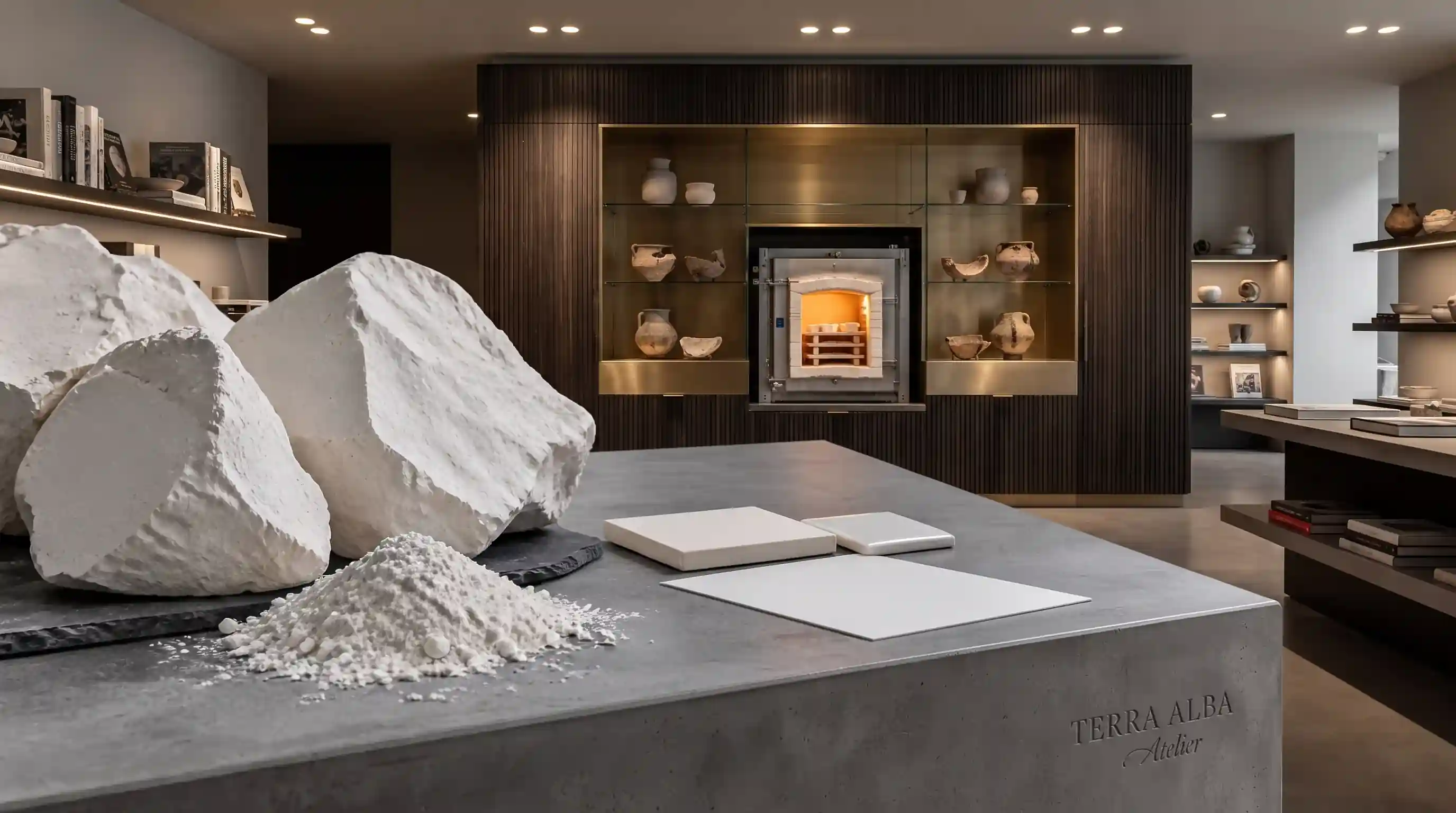
Application of Kaolin in the Tile, Ceramic, and Glaze Industry
The ceramic and tile industry is considered the largest consumer of industrial clays, and this material is an inseparable part of the body and glaze formulation of tiles. The presence of this material in the ceramic body increases dry strength, improves firing properties, and reduces shrinkage during the thermal process. Also, the exceptional whiteness of this material after firing provides a suitable background for creating transparent designs and colors.
In the glaze manufacturing sector, this material acts as an excellent suspending agent and prevents the settling of heavy particles in the glaze suspension. This feature causes uniform coverage of the glaze on the tile and ceramic surface and prevents surface defects such as pinholes or orange peel effect.
Manufacturers can refer to the dedicated product page for more accurate information, technical specifications, and ordering details of this material, and take action to review the documentation through Kaolin to create the best match with their factory formulation.
The Key Role of Kaolin in the Paper and Paint Industry
In addition to the ceramic industry, this material has very wide applications in the paper production and paint coating industries. In the paper industry, this material is used as a filler and surface coating for paper. The presence of micronized particles of this material in the paper texture increases whiteness, improves printability, increases brightness, and reduces ink penetration, which ultimately leads to the production of high-quality papers.
In the paint and industrial coatings industry, due to its suitable refractive index and high chemical stability, this material is used as an active pigment and filler. This material helps significantly in improving paint adhesion, increasing resistance to peeling, and reducing the consumption of expensive pigments such as titanium dioxide.
Observing the standards for storing powdered minerals in the paint and paper industries is of high importance. For this purpose, studying the comprehensive guide to maintenance and storage of coated industrial calcium carbonate (Comprehensive guide to maintenance and storage of coated industrial calcium carbonate) provides similar practical tips for maintaining the quality of powdered raw materials in industrial warehouses.

Chemical Analysis and the Importance of Purity in Industrial Processes
The chemical and mineral analysis of this material is the main determinant of its application in sensitive industries. The percentage of metal oxides such as iron and titanium has a direct impact on the whiteness degree of the final product, and their high levels can negatively affect the quality of ceramic paint and glaze. Powders processed in the Kani Sang Amiran project — mineral production are subjected to rigorous quality control tests to have the minimum amount of impurities.
Common tests include determining Loss on Ignition (LOI), free silica percentage, alumina, and iron oxide. Matching laboratory analysis results with production line needs will guarantee the optimal performance of the material in the final product. Factory technical experts can apply optimal ratios in their formulations by examining these analyses.
A precise understanding of chemical analysis parameters allows engineers to minimize possible fluctuations in production lines and prevent financial losses caused by raw material non-conformity. Consistency in analysis quality is the signature of a mineral producer's credibility.
Expert Guide to Obtaining Catalogs and Technical Documentation
Access to accurate technical information, Material Safety Data Sheets (MSDS), and chemical analysis tables is the first step toward selecting the correct industrial raw materials. Technical catalogs provide a complete reference of physical properties, mesh range, purity percentage, and recommended applications to procurement managers and process engineers.
To obtain the comprehensive catalog of this material, applicants can take action through the official website's communication chaels and receive up-to-date documentation. Quick access to this information will accelerate the decision-making process and technical evaluation of the mineral materials required for production lines.
The technical support team of the Kani Sang Amiran project — mineral production is ready to provide the necessary guidance regarding the selection of the most precise mesh size tailored to the needs of each industry. Transparency in providing technical documentation is the basis for creating a sustainable and professional cooperation with consuming industries.

Safety Tips, Packaging, and Kaolin Storage Principles
Micronized mineral powders require strict adherence to packaging and storage principles due to the fine size of the particles to prevent moisture absorption and caking. Standard packaging of this material plays an important role in maintaining quality and preventing material waste during transport and handling in factory warehouses.
The use of appropriate personal protective equipment such as anti-dust masks by workers and warehouse operators during loading and unloading of this material is mandatory. Mineral powders can affect the respiratory system if suspended in the air, so proper warehouse ventilation is considered a safety requirement.
Adhering to the principles of pallet stacking, keeping away from direct moisture sources, and properly covering the pallets with plastic shrink ensures that the materials remain without quality loss until they are consumed in the production line. Proper warehouse management significantly increases supply chain efficiency.
Market Outlook and Advantages of Supplying from Kani Sang Amiran
The industrial mineral market always requires stability in supply, uniform quality, and competitive pricing. The Kani Sang Amiran project — mineral production, by utilizing rich mines and advanced processing lines, has been able to meet the stringent needs of various industries including tiles, ceramics, glaze, paper, and paint.
Investing in mode micronization technologies and strict quality control has created a great competitive advantage for this collection. Industrialists can prepare their required raw materials with peace of mind about supply continuity and analysis stability, and optimize their production costs.
Commitment to customer orientation, providing specialized advice before purchase, and continuous technical support are the fundamental principles of this collection in interaction with the country's industries. Sustainable development and improving the quality of domestic products are goals that are achieved through the precise and principled supply of mineral materials.

| Question | Answer |
|---|---|
| What is the mesh range of industrial kaolin? | This material is processed and supplied in the range of 450 to 1500 mesh based on the needs of consuming industries. |
| What are the main uses of kaolin? | Tile, ceramic products, glaze, paper, and paint industries are the main consumers of this material. |
| How can one obtain the product's technical catalog? | Applicants can take action to receive documentation through the Kani Sang Amiran project website and the product page. |
| Is the chemical analysis of this material customizable? | Yes, depending on the type of industrial application, suitable analyses and mesh sizes can be provided. |
| What is the role of kaolin in the tile and ceramic industry? | Increasing dry strength, improving firing properties, and increasing the whiteness of the body and glaze are among its most important roles. |
| How can we prevent kaolin powder from caking in the warehouse? | Storage on pallets, away from direct moisture, and observing the storage principles of mineral powders are essential. |
| Is this material used as a pigment in the paint industry? | Yes, it is effective as a filler and active pigment in improving coverage and reducing titanium dioxide consumption. |
| What impact does the whiteness level of kaolin have on papermaking? | High whiteness leads to increased brightness, improved printability, and reduced ink penetration in paper production. |
| Are protective equipment required for powder storage? | Yes, due to the fine-grained nature of the powder, the use of a respiratory mask and proper warehouse ventilation is recommended. |
| What is the advantage of supplying kaolin from Kani Sang Amiran? | Quality stability, high purity, precise control of mesh size, and continuity in supply are the main advantages of this collection. |
Reference: National and specialized standards for mineral processing and technical resources of the Kani Sang Amiran project.

برچسب: Kaolin,Expert Guide to Obtaining Industrial Kaolin Catalog and Analysis,
نویسنده: رساوب آفرین