
درباره سایت
آخرین مطالب
- Review of the Application of White Talc in Ceramic and Tile Manufacturing Industries
- دور البنتونیت في الزراعة وتحسين جودة التربة الزراعية
- Introduction to Limonite Oxide (Ochre) Resources and Mines
- The Impact of Coated Calcium Carbonate Granulation on Final Product Quality
- The Role of White Talc in Increasing the Thermal Resistance of Industrial Materials
- The Role of Feldspar in the Thermal Stability of Mineral Materials
- چرا کیفیت کربنات کلسیم برای صنایع مهم است؟
- کاربرد اکسید آهن قرمز (اخرا) در تولید ضدزنگ ساختمانی
- تأثير تحبيب كربونات الكالسيوم المغطاة على جودة المنتج النهائي
- Benefits of Using Industrial Talc in New Formulations
امکانات وب
Introduction to White Talc and Its Importance in Mode Industries
White talc is recognized as one of the most widely used minerals in various industries, holding a special position due to its unique physical and chemical properties. The Kani Sang Amiran project, as a mineral producer, supplies this high-quality material with standard technical specifications for various industries. In the process of selecting industrial raw materials, having a precise understanding of the properties of white talc is highly important to achieve maximum efficiency in production lines. With its layered structure and characteristic softness, this mineral plays a key role in improving the final properties of industrial products.
For industry professionals, the correct selection of mesh size and mineral purity has a direct impact on the quality of the final product. A detailed examination of white talc's properties shows that this material has a high capacity to improve the mechanical, optical, and thermal properties of products. Therefore, a precise understanding of this mineral is an essential step for the development and optimization of industrial processes. In this article, we intend to provide a comprehensive review of the features, applications, and key points in selecting this valuable material.
The use of standard minerals in the polymer, paint, paper, and ceramic industries requires awareness of technical parameters. Alongside talc, other minerals have similar applications, and studying them can provide a better perspective; for example, reading the Guide to Choosing the Right Industrial Kaolin Granulation provides useful supplementary information in this field. However, due to its specific properties, white talc remains one of the top choices for engineers and industrial formulation designers.
In the following sections of this article, we will examine the different mesh ranges of this product and the specialized applications of each in detail. We will also strive to provide a comprehensive guide for selecting the best grade of this mineral based on the specific needs of each industry so that buyers and industrial professionals can make more informed decisions.
Review of Technical Specifications and White Talc Mesh Range
One of the most important factors in selecting white talc for industrial applications is examining its mesh range and granulation. This product is produced and supplied with a mesh range of 450 to 2500 mesh, covering a wide spectrum of the needs of various industries. The precise granulation of this mineral has a direct impact on the dispersion, gloss, and mechanical properties of the final product. The Kani Sang Amiran project prepares this product with high precision in various mesh sizes, ready for delivery to our valued customers.
Lower meshes such as 450 mesh are usually used in industries that require coarser particles and volumetric fillers, while higher meshes such as 2500 mesh are used for very sensitive applications that require a smooth, glossy, and uniform surface. Choosing the appropriate mesh requires a precise understanding of the formulation and mixing equipment in each industrial unit. For more information on how to choose the right mesh in similar polymer industries, you can read the article Guide to Choosing the Right Coated Calcium Carbonate Mesh for Plastic Injection.
Correct selection of the white talc mesh range helps to minimize problems such as clumping, loss of mechanical properties, or issues in the injection and extrusion process. Material engineers select the optimal mesh by considering viscosity, oil absorption levels, and the melt flow index in polymers or paints. Adhering to these technical points increases productivity and reduces production costs.
On the dedicated product page on the Kani Sang Amiran project website, namely White Talc, more information and details regarding this mineral are available. Reviewing these specifications helps buyers to proceed with their orders with complete confidence.
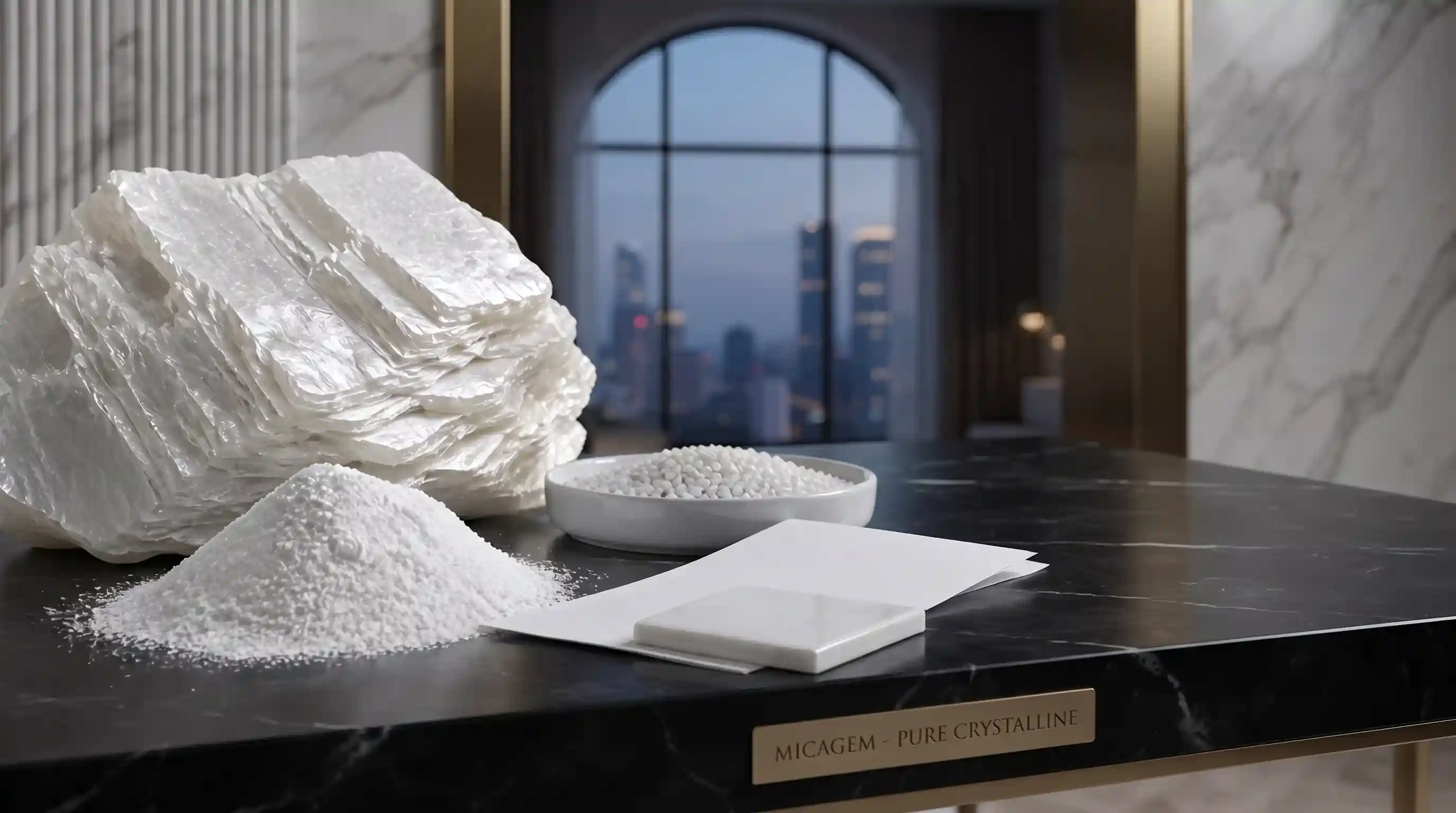
Application of White Talc in the Masterbatch and Compounding Industry
The plastics, masterbatch, and compounding industries are among the largest consumers of white talc. Adding this mineral to polymer matrices improves stiffness, thermal resistance, dimensional stability, and reduces shrinkage in manufactured parts. Due to its layered structure, white talc disperses well in polymers and significantly enhances the final mechanical properties of plastic parts.
In the production of filler and colored masterbatches, the presence of white talc acts as a dispersing agent and matrix improver. This material also significantly helps reduce the final production cost of plastic parts without causing a noticeable drop in mechanical quality. Selecting the right grade with high meshes helps ensure that in plastic injection and extrusion processes, the surface of the final part is completely polished and free of any irregularities.
To obtain more comprehensive information regarding the purchase of various mineral grades for the plastic and polymer industries, reading the article Guide to Buying Industrial Talc with Best Quality and Reasonable Price will be very helpful. This guide helps industrialists make the best decisions by considering qualitative and economic factors.
The Kani Sang Amiran project, by supplying high-quality and standard white talc, covers the needs of masterbatch and compound producers in the best way. The consistency of this mineral's quality guarantees the stability of properties in large industrial production lines.
The Role of White Talc in the Paint and Industrial Coatings Industry
In the paint and industrial coatings industry, white talc is known as a key filler pigment and extender. The optical properties and platy structure of talc particles lead to improved coverage, resistance to peeling, and stability of the paint film against atmospheric factors. Due to its suitable whiteness, this material does not negatively affect the color hue and helps increase the efficiency of construction and industrial paints.
The use of white talc in paint formulations helps control viscosity and improves the flow characteristics of the paint. The fine particles of this material disperse well in the resin and prevent rapid settling of the paint during storage. In addition, corrosion resistance and improved paint adhesion to metal surfaces are other prominent advantages of this mineral additive.
Paint manufacturers can achieve the desired gloss or matte finish in final coatings by carefully selecting the appropriate mesh from the 450 to 2500 mesh range. Higher meshes are used for glossy paints and thin automotive or wood coatings, while lower meshes are used for matte construction paints.
The Kani Sang Amiran project has met the needs of paint manufacturing factories for this valuable material by providing access to high-purity white talc. The quality standards of this product have brought satisfaction to the country's paint industry.

Application of White Talc in the Paper and Cellulose Industries
The paper industry is another sector where white talc plays a vital role. This mineral is used as a filler and surface coating for paper to improve properties such as whiteness, surface smoothness, ink receptivity, and paper opacity. The soft structure of talc causes less wear on paper machinery equipment compared to other mineral fillers.
In the paper production process, the use of white talc helps improve transparency and printability. Also, by absorbing fats and resinous substances present in the paper pulp (Pitch Control), this material prevents technical problems and paper tearing on the production line. This feature directly leads to increased productivity and reduced downtime in paper mill production lines.
Selecting the right granulation for papermaking is very important so that particles are evenly distributed in the cellulose fiber network. The Kani Sang Amiran project guarantees the quality stability of cellulose products by supplying white talc with precise granulation.
Optimized use of this mineral in the paper industry not only enhances the visual and technical quality of the product but is also cost-effective for producers.
Application of White Talc in the Ceramic and Tile Production Industries
In the ceramics, chinaware, and tile production industries, white talc is used as an important raw material to regulate the thermal behavior of the body and glaze. Because it contains magnesium oxide, this mineral helps form desirable mineral phases at high firing temperatures and reduces firing shrinkage. This increases the mechanical strength and dimensional stability of ceramic parts.
The development of ceramic body structures is improved by adding white talc, and resistance to thermal shock is increased. Also, in glaze formulations, this material acts as a weak thermal flux and helps control the viscosity of the molten glaze, resulting in a smooth, bubble-free, and high-quality surface.
The Kani Sang Amiran project meets the needs of tile and ceramic manufacturers for this strategic material by supplying high-quality white talc. Precise control of the quality and purity of this material prevents unwanted changes in the color and firing properties of the ceramic body.
Principled use of white talc in the ceramic industry leads to the optimization of energy consumption in kilns and the enhancement of final product standards.

Comprehensive Guide to Selecting and Buying Industrial White Talc
Selecting and buying the right white talc requires a detailed examination of numerous technical parameters. Factors such as chemical purity percentage, whiteness level, particle size distribution (PSD), moisture content, and mesh range are among the factors that must be checked before placing an order. The Kani Sang Amiran project helps industrialists choose the best grade suitable for their production process by providing expert advice.
Before purchasing, buyers should evaluate the exact needs of their production line in terms of consumption volume and expected technical specifications. For example, the talc used in thin masterbatch has slight structural differences from the talc used in the ceramic industry, and being aware of these differences prevents financial losses and loss of product quality.
Quality assurance and continuity in mineral supply are major conces for purchasing managers. Relying on reliable mineral sources and advanced processing lines, the Kani Sang Amiran project supplies white talc to the market with the highest quality standards.
Checking prices and comparing different grades, alongside consultation with this collection's sales experts, provides a safe, reliable, and economical purchasing path for various industries.
Conclusion and Outlook for the Use of White Talc in Industries
As a strategic mineral, white talc plays an unparalleled role in enhancing the quality of industrial products such as masterbatch, compounds, paint, paper, and ceramics. The 450 to 2500 mesh range of this product has provided access to a wide spectrum of applications. A precise understanding of technical features and correct selection of granulation is the key to success in using this valuable material in production lines.
By producing and supplying high-quality white talc, the Kani Sang Amiran project has been able to meet the needs of the country's various industries with the highest possible standards. Commitment to quality, continuity in supply, and providing expert advice are the fundamental values of this collection in serving the country's industry.
It is hoped that this comprehensive guide has been able to provide you with useful information regarding the selection and application of white talc. Dear industrialists can visit the dedicated product page for more information and to place an order.
With the ever-increasing development of production technologies, the importance of using high-quality minerals becomes more apparent than ever, and the Kani Sang Amiran project will always be alongside Iran's industries to supply the best minerals.
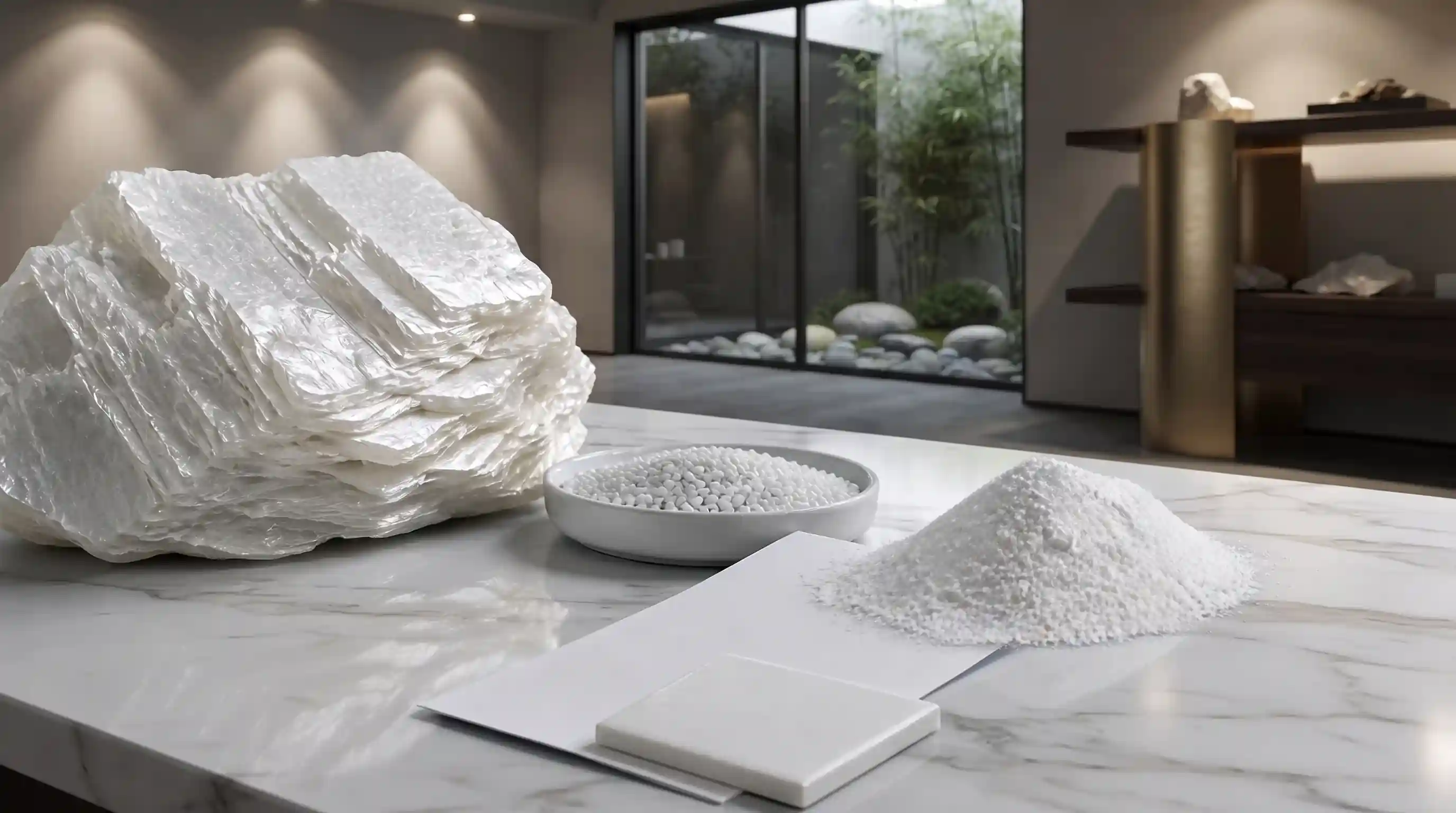
| Question | Answer |
|---|---|
| What is the mesh range of white talc? | This product is produced and supplied in a mesh range of 450 to 2500. |
| What are the main applications of white talc? | Masterbatch, compounding, paint, paper, and ceramic products are its main applications. |
| Is white talc used in the plastic industry? | Yes, it is used as a filler in masterbatch and compounds to improve mechanical properties. |
| What is the role of white talc in the paint industry? | It is used as a filler pigment, coverage improver, and viscosity controller. |
| Why is talc used in papermaking? | It is used to improve whiteness, surface smoothness, and resin absorption (Pitch Control). |
| What is the application of talc in ceramics? | It improves thermal behavior, reduces firing shrinkage, and increases the strength of the ceramic body. |
| Who is the main supplier of this product? | The Kani Sang Amiran project is the producer and supplier of this mineral. |
| How do we choose the right mesh for the production line? | According to the type of application, mixing equipment, and consultation with Amiran's technical experts. |
| Does this material affect the final cost? | Yes, its optimized use helps reduce production costs. |
| How can I place a purchase order? | By visiting the White Talc product page on the Kani Sang Amiran website. |
Kani Sang Amiran Project — Mineral Production

برچسب: White Talc,Comprehensive Guide to Selecting the Right White Talc for Industrial Applications,
نویسنده: رساوب آفرین