
درباره سایت
آخرین مطالب
- معايير جودة الباريت الأبيض؛ 5 عوامل رئيسية في التقييم
- Applications of White Talc in Plastic Production and Industrial Polymer Industries
- Applications of Coated Calcium Carbonate in Chemical and Plastic Industries
- What is Coated Calcium Carbonate? A Guide to Its Application in the Construction Industry
- كيفية اختيار كربونات الكالسيوم المطلي بناءً على التدرج الحبيبي
- How to Choose High-Quality White Barite: Key Purchasing Tips
- استانداردهای دانهبندی تالک سفید برای مصارف گوناگون در صنایع
- White Talc in the Construction Industry: Its Applications and Key Features
- Industrial Barite or Calcium Carbonate? A Complete Comparison of Applications and Benefits
- استانداردهای کیفیت باریت صنعتی و روشهای آزمایش و کنترل آن
امکانات وب
Introduction to the Importance of Silica and Understanding Its Fundamental Properties
In today's world, minerals play a vital role in the development and advancement of various industries. One of the most fundamental and widely used materials is silica, which is recognized as one of the most abundant compounds in the Earth's crust. A precise understanding of the physical and chemical structure of this material allows engineers and production specialists to achieve the best efficiency in their industrial processes. Focusing on principled extraction and processing, the Kani Sang Amiran project has prepared and supplied this vital material with the highest quality.
The unique characteristics of this material have made it recognized as a key raw material in many production lines. Among the factors that guarantee processing quality is precision in granulation, which is applied across various mesh ranges. Later in this article, we will examine the various dimensions of this material's application in different industries to further clarify its structural role. Also, for more precise information and familiarity with supply details, you can visit the dedicated silica page and read its complete specifications.
Reviewing quality standards in the mineral production process has always been a primary conce for industrialists. To better understand this topic, reading the specialized article Silica Quality Standards in Mode Manufacturing Industries can provide you with comprehensive perspectives on technical requirements and purity criteria so you can make a more informed choice in raw material procurement.
The Vital Role of Silica in the Glassmaking Industry
The glassmaking industry is one of the oldest yet most advanced fields heavily dependent on the mineral silica. This material is used as the core and essential foundation in the manufacturing of various flat glasses, glass containers, glass fibers, and specialized glasses. The high melting point and chemical stability of this material enable the glass structure to acquire the necessary strength and transparency after the heat treatment process.
In the glass production process, granulation and raw material purity are of dual importance. The presence of impurities can affect the final product quality; therefore, using processed products with the standard mesh range of 10 to 450 mesh plays a role in the precise control of physical glass properties. Careful selection of raw materials helps producers manufacture products with the highest quality standards and resistance against thermal shocks, perfectly covering the needs of the consumer market.
In addition to glass, understanding the application of other cooperative minerals in various industries is also worthwhile. For example, to become familiar with the role of other widely used minerals in related industries, reading the article Application of Dolomite in Paint and Resin Industries provides useful information regarding mineral synergy in the glass and ceramic industries.

Advanced Applications of Silica in Foundry Products
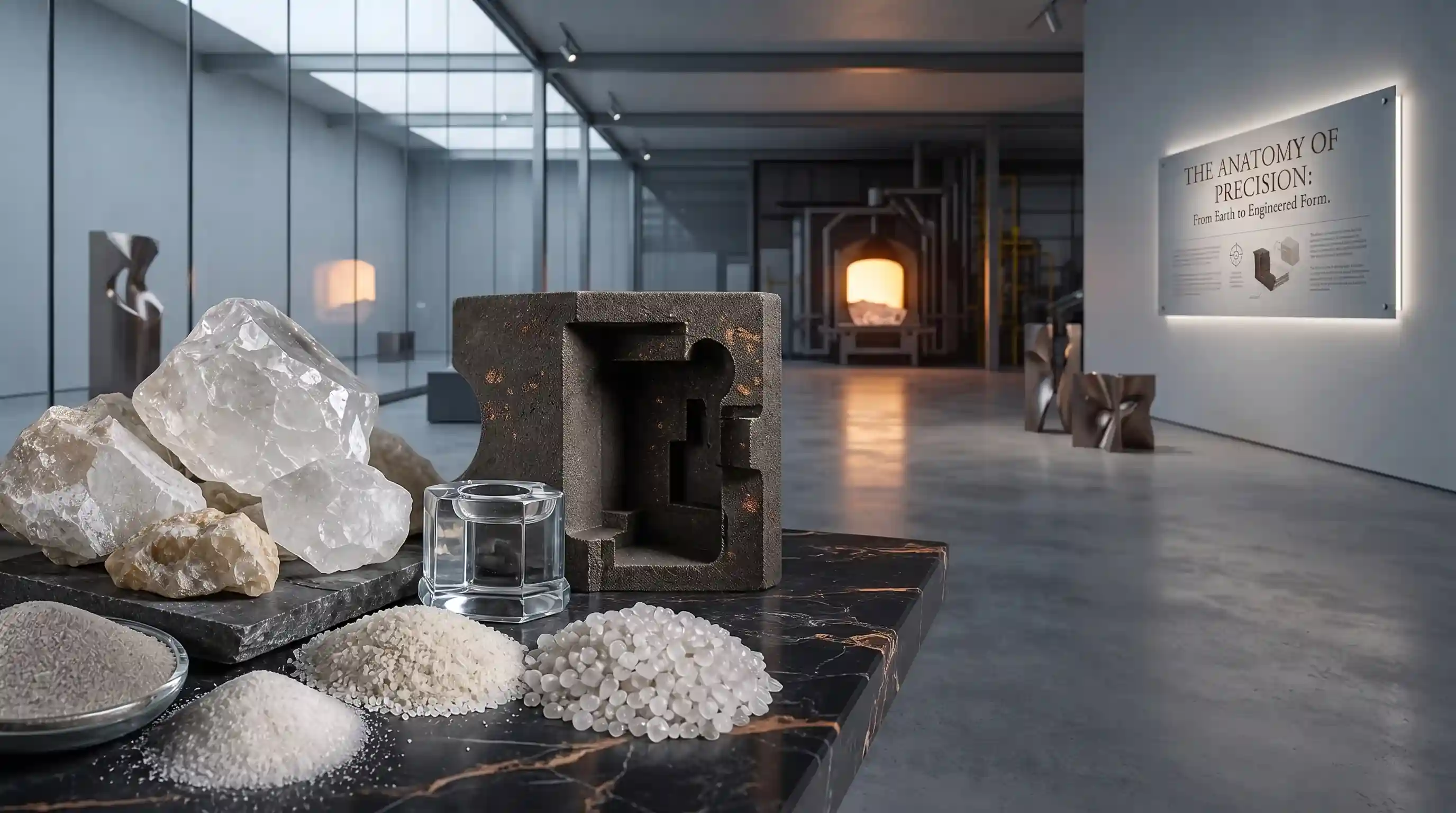
As one of the main pillars of industrial and automotive component production, the foundry industry requires refractory materials that are resistant to extremely high temperatures. Meanwhile, silica is recognized as one of the primary components in manufacturing foundry molds and molding sands. The ability to withstand high melting temperatures, dimensional stability against heat, and suitable compactability are among the features that make this material an unrivaled choice in this industry.
Selecting the appropriate mesh for foundry applications depends directly on the type of metal being cast and the expected surface quality of the final part. The 10 to 450 mesh range makes it possible to select the optimal granulation according to the exact needs of production lines. This prevents surface defects in cast parts and significantly increases overall production efficiency.
In mode industrial processes, optimizing the mechanical and thermal properties of raw materials is of vital importance. To better understand optimization techniques in similar structural and polymer industries, reviewing the article Technical Benefits of Coated Calcium Carbonate in Extrusion can provide engineers with valuable engineering insights regarding the behavior of fillers and mineral materials.
Silica in Ceramic Industries and Tile Production
The ceramics industry and the production of tiles and ceramics constitute another field that accounts for major consumption of silica. This material acts as the framework in the ceramic body composition and as a glass-forming and gloss-producing agent in glazes. The presence of this mineral reduces thermal shrinkage during firing and increases the mechanical strength of ceramic parts.
Precise adjustment of granulation within a specified mesh range plays an important role in the quality of the glaze and ceramic body. Particles with finer mesh sizing help chemical reactions in firing kilns occur with greater speed and uniformity, resulting in a crack-free product with high strength. By continuously supplying this raw material, the Kani Sang Amiran project fulfills the needs of tile and ceramic manufacturers in the best possible way.
Continuous quality control in the ceramics sector guarantees the durability and beauty of the final product. Using high-purity minerals, in addition to improving technical properties, reduces production costs due to decreased waste in the firing line and brings about energy consumption optimization.

Widespread Application of Silica in Construction Materials and Civil Engineering
The construction and civil engineering industry is one of the largest consumers of minerals in the world, and silica holds a special place in this field. This material is used as a filler and aggregate in the production of high-strength concrete, dry mortars, tile adhesives, and various building coatings. Increasing the durability of structures against atmospheric and chemical factors is a prominent benefit of this material's presence in material formulations.
Appropriate granulation in the 10 to 450 mesh range allows particle distribution to be optimized in the manufacturing of various mortars and building coatings, maximizing final adhesion and strength. This becomes especially important in large civil projects that require stringent compressive and tensile strength standards.
Using standard minerals in construction materials not only increases the useful life of the structure but also guarantees the overall safety of the project. By utilizing high-quality resources, construction material manufacturers send products with stable and reliable performance into the consumer market.
Technical Review of the 10 to 450 Mesh Range and the Importance of Granulation
One of the most important parameters in the purchase and industrial application of silica is the precise review of its mesh range and granulation. The 10 to 450 mesh range covers a wide spectrum of coarse particles down to highly micronized powders. Each of these ranges has a specific application in the glass, foundry, ceramics, and construction materials industries, and incorrect mesh selection can disrupt the final efficiency of the product.
Coarser particles are usually used in foundry and sandblasting industries, while finer mesh and powder forms are utilized in ceramics, advanced glass production, and specific construction materials. The crushing and precise granulation process in the Kani Sang Amiran project is carried out using mode equipment so that the particle size distribution completely matches the customers' requested standards.
Understanding the technical differences between various meshes helps engineers achieve more optimized formulations. Precise control of particle size improves fluid behavior, compactability, and material reactivity in thermal and mechanical processes.
Economic and Technical Benefits of Using High-Quality Silica
Using high-quality silica brings numerous benefits from technical and economic perspectives for production units. From a technical standpoint, high purity and uniformity in granulation result in the stability of final product properties, a reduction in production waste, and an increase in the useful life of industrial equipment. Furthermore, the high thermal and chemical stability of this material guarantees reliable operation under harsh industrial conditions.
From an economic standpoint, supplying raw materials from reputable sources such as the Kani Sang Amiran project brings stability to the supply chain and reduces production overhead costs. Manufacturers who use standard raw materials face product quality drops less frequently and consequently gain customer satisfaction and a larger market share.
Investing in the purchase of high-quality processed minerals reduces machinery repair and maintenance costs in the long run and enhances the overall productivity of the production line, which is considered a competitive advantage for any industry.
Conclusion and Future Outlook for Silica Supply and Consumption
In this article, we provided a comprehensive review of the application of silica in key industries such as glass, foundry, ceramics, and construction materials, and analyzed the technical and economic benefits of the 10 to 450 mesh range. It became clear that this mineral plays an undeniable role as the backbone of many industrial processes, and its quality directly impacts the quality of the final product.
With technological advancements and the increasing need of industries for high-purity raw materials, the role of leading processing companies such as the Kani Sang Amiran project in the sustainable and precise supply of these materials becomes increasingly important. Compliance with quality standards, precision in granulation, and responsiveness to diverse market needs pave the way for the sustainable development of dependent industries.
We hope this comprehensive review has been able to provide useful information regarding the selection and application of this valuable material to you, esteemed industrialists and researchers, so you can take an effective step toward improving your production processes.

| Question | Answer |
|---|---|
| What is silica and what are its applications? | Silica is one of the most abundant minerals in the Earth's crust, widely used in the glassmaking, foundry, ceramics, and construction materials industries. |
| What is the mesh sizing range of the supplied silica? | This product is processed and supplied in the 10 to 450 mesh range, tailored to the needs of various industries. |
| What is the role of silica in the glassmaking industry? | This material is used as the main foundation and as an agent for creating thermal stability and transparency in manufacturing various types of glass. |
| Why is silica used in foundries? | It is used in manufacturing foundry molds due to its high melting point, excellent thermal resistance, and suitable dimensional stability. |
| What is the application of silica in the ceramics industry? | It is consumed in ceramic body compositions as a framework and in glazes to create gloss and reduce thermal shrinkage. |
| What is the role of silica in construction materials? | It is used as a filler and aggregate in high-strength concrete, dry mortars, and construction adhesives. |
| How can silica be ordered? | To view complete specifications and order the product, you can visit the dedicated silica page on the Kani Sang Amiran website. |
| Does silica granulation affect the final product quality? | Yes, selecting the precise mesh suited to the industry type has a direct impact on the quality, strength, and efficiency of the final product. |
| What standards are observed in the production of this material? | The production and granulation process is carried out with precise purity control and in accordance with the technical requirements of consumer industries. |
| Why is a mineral supplier important? | Supplying from reputable sources like the Kani Sang Amiran project guarantees supply chain stability and sustainable quality. |
Kani Sang Amiran Project - Specialized reference for mineral production and processing.

برچسب: Silica,Application of Silica in Various Industries and Examination of Its Benefits,
نویسنده: رساوب آفرین