
درباره سایت
آخرین مطالب
- معايير جودة الباريت الأبيض؛ 5 عوامل رئيسية في التقييم
- Applications of White Talc in Plastic Production and Industrial Polymer Industries
- Applications of Coated Calcium Carbonate in Chemical and Plastic Industries
- What is Coated Calcium Carbonate? A Guide to Its Application in the Construction Industry
- كيفية اختيار كربونات الكالسيوم المطلي بناءً على التدرج الحبيبي
- How to Choose High-Quality White Barite: Key Purchasing Tips
- استانداردهای دانهبندی تالک سفید برای مصارف گوناگون در صنایع
- White Talc in the Construction Industry: Its Applications and Key Features
- Industrial Barite or Calcium Carbonate? A Complete Comparison of Applications and Benefits
- استانداردهای کیفیت باریت صنعتی و روشهای آزمایش و کنترل آن
امکانات وب
Introduction to the Importance of Minerals in Agriculture and the Significance of White Talc
The fertilizer and agricultural pesticides manufacturing industries have always sought high-quality and efficient raw materials to improve the quality of their final products. Meanwhile, the use of mineral fillers and carriers plays a vital role in the stability, moisture removal, and uniform distribution of active ingredients. White talc, as one of the purest and softest natural magnesium silicates, has found a special place in industrial formulations. With its unique characteristics such as high purity, particle softness, and chemical stability, this material significantly helps improve the physical and chemical properties of agricultural products.
In the production process of fertilizers and pesticides, storage stability and particle dispersibility are of high importance. Amiran Mineral Rock Project Company, by providing this high-quality mineral, has enabled various industries, including white talc, to benefit from it. A precise understanding of the physical and chemical properties of this material enables manufacturers to create more optimized formulations and maximize the efficiency of their products in agricultural fields.
In addition to agricultural applications, this material is widely used in other industries such as masterbatch, compounding, paint, paper, and ceramics. The mesh range of 450 to 2500 of this material indicates the diversity in granulation and its adaptability to precise engineering requirements in various production lines. Examining the quality and production standards of this mineral is a topic discussed in detail in specialized articles such as Reviewing National and Inteational Standards in White Talc Production.
The Role of White Talc as a Carrier and Filler in Agricultural Pesticides
Plant protection pesticides are produced in the form of wettable powders, granules, or dust powders, in all of which the presence of a neutral and stable carrier is mandatory. White talc, with its layered structure and extraordinary softness, acts as the primary carrier in powder pesticides. This material ensures that the active ingredient of the pesticide is distributed completely homogeneously over the surface of leaves and plants and prevents the pesticide from caking in humid environments.
The chemically inert nature of this material ensures that no unwanted reactions occur with the active compounds of the pesticides, increasing the shelf life of the pesticide's effect. In the production of agricultural pesticides, the use of fine and micronized granulations is important, which is easily obtainable using the 450 2500 mesh range of this material. This precise granulation helps improve the flowability of powders in spraying equipment and prevents nozzle clogging.
In addition to agricultural applications, similar physical properties are observed in other mineral sectors; for example, specialized mineral powders are also used in the building materials sector, applications similar to which can be seen in The Role of Industrial Talc in the Gypsum and Building Materials Industries. However, the high purity and whiteness of this material make it specifically suitable for industries that require a bright appearance and no color interference.
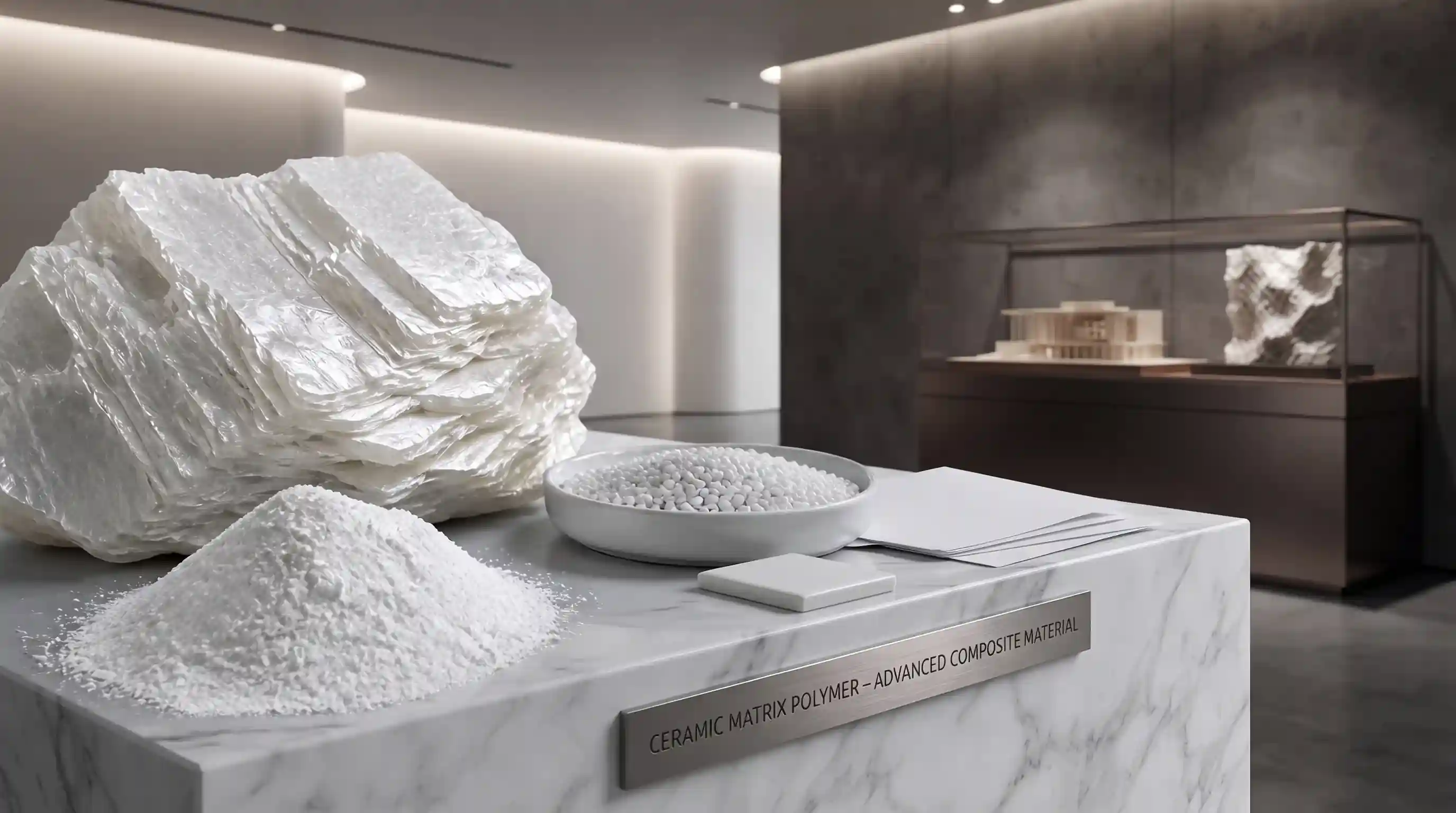
Improving the Physical Properties of Chemical Fertilizers Using White Talc
Granular and powdered chemical fertilizers are exposed to the absorption of atmospheric moisture, a phenomenon that leads to caking, loss of flowability, and problems during storage and spreading. Adding white talc as an anti-caking agent to the surface of fertilizer granules creates a protective layer that prevents moisture absorption. This feature ensures that the fertilizers do not stick together in bags and are spread uniformly across fields by fertilizer spreading equipment.
The softness and natural lubricity of this mineral also act as a dry lubricant in the pressing and shaping processes of granular fertilizers, minimizing the wear and tear of production machinery parts. Given that this material is supplied in a mesh range of 450 to 2500, fertilizer manufacturers can choose the best particle size according to their machinery type and production method to achieve the highest efficiency.
The use of this mineral not only improves the apparent quality of the fertilizer but also increases its consumption efficiency in agricultural fields. The uniform distribution of nutrients in the soil strengthens plant root development and raises overall agricultural production productivity without leaving any chemical pollution or harmful residue for the soil.
Technical Specifications and Mesh Range of White Talc in Industries
One of the most important parameters in selecting mineral materials for sensitive industries is the careful examination of their technical specifications and granulation. White talc, utilizing advanced crushing technologies, is produced and supplied in the 450 2500 mesh range. This wide mesh range allows industrialists to use semi-micron to very fine and nanometric powders based on their formulation needs.
Fine granulation in higher ranges (such as meshes above 1500) increases the contact surface area of the particles and helps improve mechanical properties, opacity, and coverage. Meanwhile, lower meshes are used for better flowability in the fertilizer and pesticide manufacturing industries. Diversity in granulation makes this material a versatile raw material used not only in agriculture but also in industries such as masterbatch, compounding, paint, paper, and ceramic products.
Precision in measuring particle size distribution (PSD) ensures that the final product is free of coarse lumps and uniform quality is maintained across all shipments sent by Amiran Mineral Rock Project. This quality stability is of great importance for manufacturing factories with continuous production lines and minimizes quality control costs.

Diverse Applications of White Talc in Related Industries (Masterbatch, Compounding, and Paint)
Beyond the agricultural industries, white talc plays a key role in the polymer and coating industries. In masterbatch and compounding production, this material is recognized as an inexpensive yet high-quality mineral filler that drastically improves the flexural modulus, dimensional stability, and heat resistance of plastic parts. The layered structure of this material creates a reinforcing effect within the polymer matrix.
In the paint and coating industry, the high whiteness, gloss, and matting properties of this material are extremely important. This mineral powder is used as a white filler in architectural and industrial paints, helping to improve coverage, abrasion resistance, and weather stability. The presence of this material in paint formulations prevents rapid pigment settling in the can.
It is worth noting that the application of minerals and metal oxides is not limited to polymers and paints; for example, various mineral compounds are also used in specialized glass and ceramic industries, the role of which can be studied similarly in The Role of Red Iron Oxide (Ochre) in Glass Manufacturing Industries. However, white talc holds an unrivaled position in the ceramic and papermaking industries due to its purity and specific characteristics.
The Role of White Talc in Papermaking and Ceramic Products Industries
The papermaking industry is a major consumer of mineral powders to increase whiteness, surface smoothness, and improve paper printability. White talc acts as an excellent filler and coating agent in paper pulp. The softness of the particles of this material fills the empty space between cellulose fibers, creating a smooth, matte paper with very high printability.
In the ceramic industry, this material is used as a source of magnesium and silica in the body and glaze of ceramic products. The presence of appropriate amounts of magnesium oxide in the structure of this material reduces the firing temperature of the ceramic body, increases mechanical strength, and prevents the product from warping in the kiln. These features help manufacturers produce higher quality ceramic products with lower energy consumption.
The variety of applications from manufacturing ceramic products to improving paper quality demonstrates the high versatility of this mineral. Papermaking and ceramic factories, by carefully selecting the 450 2500 mesh range suited to their wet or dry process, receive the best results in terms of energy consumption optimization and improving the final product's properties.

Economic and Functional Benefits of Using White Talc in Mass Production
In today's industrial economy, reducing the finished cost of production without sacrificing quality is the primary goal of any production manager. The use of white talc as an abundant and cost-effective mineral raw material makes it possible to reduce formulation costs in industries such as masterbatch, compounding, paint, paper, and ceramics. By replacing a portion of more expensive materials, this substance increases the profitability of production lines while maintaining or even improving mechanical and appearance properties.
From a functional perspective, improving flowability, reducing moisture absorption in fertilizers, increasing coverage in paint, and upgrading heat resistance in compounds are among the benefits that create high added value for the final product. The chemical stability of this material prevents undesirable reactions during the production process and long-term storage.
Amiran Mineral Rock Project, by continuously and standardly supplying this mineral, has relieved manufacturers' conces regarding the raw material supply chain. Access to uniform granulations in the 450 to 2500 mesh range ensures that machine efficiency is maintained at its highest level and production waste is minimized.
Conclusion and Future Prospects of White Talc Application in Industry
A comprehensive review of the applications of white talc shows that this mineral plays a key role beyond a simple filler in improving quality, efficiency, and product stability across various industries. From sensitive agricultural industries in fertilizer and pesticide production to advanced applications in masterbatch, compounding, paint, paper, and ceramic products, this material has proven to be one of the core pillars of mode industrial formulations.
With advancements in mineral processing technologies and the achievement of more precise mesh ranges such as 450 to 2500, the applications of this material are expected to expand further. Attention to quality standards, high purity, and homogeneous granulation will be the factor for manufacturers' success in today's competitive markets.
Amiran Mineral Rock Project Company, by offering standard and specialized products, is a reliable partner for industrialists along the path of development and optimization of production lines. Continuity in research and development, utilization of rich mineral resources, and responsiveness to the precise needs of industries outline a bright outlook for the optimal use of this valuable mineral in the coming years.
| Question | Answer |
|---|---|
| What is white talc? | It is a very pure and soft natural magnesium silicate used as a filler and carrier in various industries. |
| What is the mesh range of white talc? | This material is produced and supplied in a mesh range of 450 to 2500. |
| What are the main applications of white talc? | Masterbatch, compounding, paint, paper, ceramic products, and agricultural industries. |
| What is the role of white talc in agricultural pesticides? | It acts as a neutral carrier and anti-caking agent for the homogeneous distribution of powdered pesticides. |
| How does white talc help improve chemical fertilizers? | By preventing moisture absorption, it prevents fertilizer caking and increases its flowability. |
| Does white talc react with chemicals? | No, this material is chemically inert and does not create any reactions with active ingredients. |
| What is the role of white talc in the paint industry? | It increases whiteness, gloss, coverage, and paint stability against weather conditions. |
| Why is this material used in the ceramic industry? | It is used as a source of magnesium and silica to reduce firing temperature and increase the mechanical strength of the ceramic body. |
| What is the economic advantage of using this material? | It reduces the finished cost of production and optimally replaces expensive raw materials without a drop in quality. |
| How can white talc be obtained? | It can be ordered through the Amiran Mineral Rock Project website and the dedicated product page. |
Amiran Mineral Rock Project — Mineral Production

برچسب: White Talc,The Role of White Talc in Fertilizer and Agricultural Pesticides Manufacturing Industries,
نویسنده: رساوب آفرین