
درباره سایت
آخرین مطالب
- Applications of White Talc in Plastic Production and Industrial Polymer Industries
- Applications of Coated Calcium Carbonate in Chemical and Plastic Industries
- What is Coated Calcium Carbonate? A Guide to Its Application in the Construction Industry
- كيفية اختيار كربونات الكالسيوم المطلي بناءً على التدرج الحبيبي
- How to Choose High-Quality White Barite: Key Purchasing Tips
- استانداردهای دانهبندی تالک سفید برای مصارف گوناگون در صنایع
- White Talc in the Construction Industry: Its Applications and Key Features
- Industrial Barite or Calcium Carbonate? A Complete Comparison of Applications and Benefits
- استانداردهای کیفیت باریت صنعتی و روشهای آزمایش و کنترل آن
- Application of White Barite in Producing Paint and Durable Industrial Coatings
امکانات وب
Introduction to Red Iron Oxide (Ochre) and Its Importance in the Polymer Profile Industry
Red Iron Oxide (Ochre) is one of the most important mineral pigments that plays a vital role in various industries, including the production of polymer profiles. This mineral with the chemical formula Fe2O3 is known as one of the most stable red pigments, and due to its unique properties, its use in the polymer industry has increased significantly in recent decades.
Polymer profiles are products that are produced through the extrusion or injection molding process from polymeric materials such as PVC, polypropylene, polyethylene, and other engineering polymers. These profiles have extensive applications in the construction, automotive, fuiture, and many other industries. Coloring these profiles is one of the most important production stages, which directly affects the appearance, quality, and durability of the final product.
Red Iron Oxide (Ochre), having a mesh range of 450 to 1500 mesh, enables the production of profiles with a stable and uniform red color. In addition to its coloring properties, this mineral pigment imparts other properties to polymer profiles, such as resistance to ultraviolet radiation, high thermal stability, and chemical durability. Polymer profile manufacturers are looking for a pigment that increases product lifespan in addition to aesthetic appeal, and Red Iron Oxide (Ochre) fulfills exactly this need.
To view the complete specifications of this product, you can visit the Red Iron Oxide (Ochre) page. Kani Sang Amiran Project, as a mineral materials producer, offers this product with suitable quality for various industries.
In addition to its application in polymer profiles, Red Iron Oxide (Ochre) is also used in several other industries. This mineral has extensive applications in the glass manufacturing industry and paper manufacturing industry, which demonstrates the importance and versatility of this mineral. It also plays an important role in brick manufacturing.
Chemical and Physical Structure of Red Iron Oxide (Ochre)
Red Iron Oxide (Ochre) with the chemical formula Fe2O3 belongs to the iron oxides group, which is found in nature in the form of hematite. This substance has a hexagonal crystal structure (rhombohedral) that gives it excellent physical and chemical stability. Each unit cell of this structure contains two iron atoms and three oxygen atoms, which are bonded together by strong ionic and covalent bonds.
One of the prominent features of Red Iron Oxide (Ochre) is its distinct red color, which is caused by the absorption of light at specific wavelengths by the crystal structure of this material. Color intensity and shade of red depend on factors such as particle size, particle size distribution, and chemical purity. Smaller particles usually produce a brighter and more vivid color, while larger particles create a darker and matte color.
The mesh range of 450 to 1500 mesh for Red Iron Oxide (Ochre) indicates the particle size diversity of this product, which allows the selection of the appropriate pigment for any specific application. In polymer profiles, the pigment particle size plays an important role in the quality of dispersion, color uniformity, and optical properties of the final product. Particles of the right size cause the color to be distributed uniformly throughout the profile and prevent the formation of spots or color inconsistencies.
The density of Red Iron Oxide (Ochre) is around 5.24 g/cm³, which is relatively higher than most polymers. This density difference requires special attention in the process of mixing and dispersing the pigment in the polymer matrix to prevent particle sedimentation or uneven distribution. Polymer profile manufacturers must use appropriate mixing equipment and optimal process conditions to achieve uniform dispersion.
The chemical stability of Red Iron Oxide (Ochre) against weak acids and bases makes it suitable for use in various environments. This substance is also stable at high temperatures and does not decompose, a feature that is vital for polymer extrusion processes that are carried out at high temperatures. Also, insolubility in water and common organic solvents causes this pigment to remain in the polymer matrix throughout the product's life and retain its color.
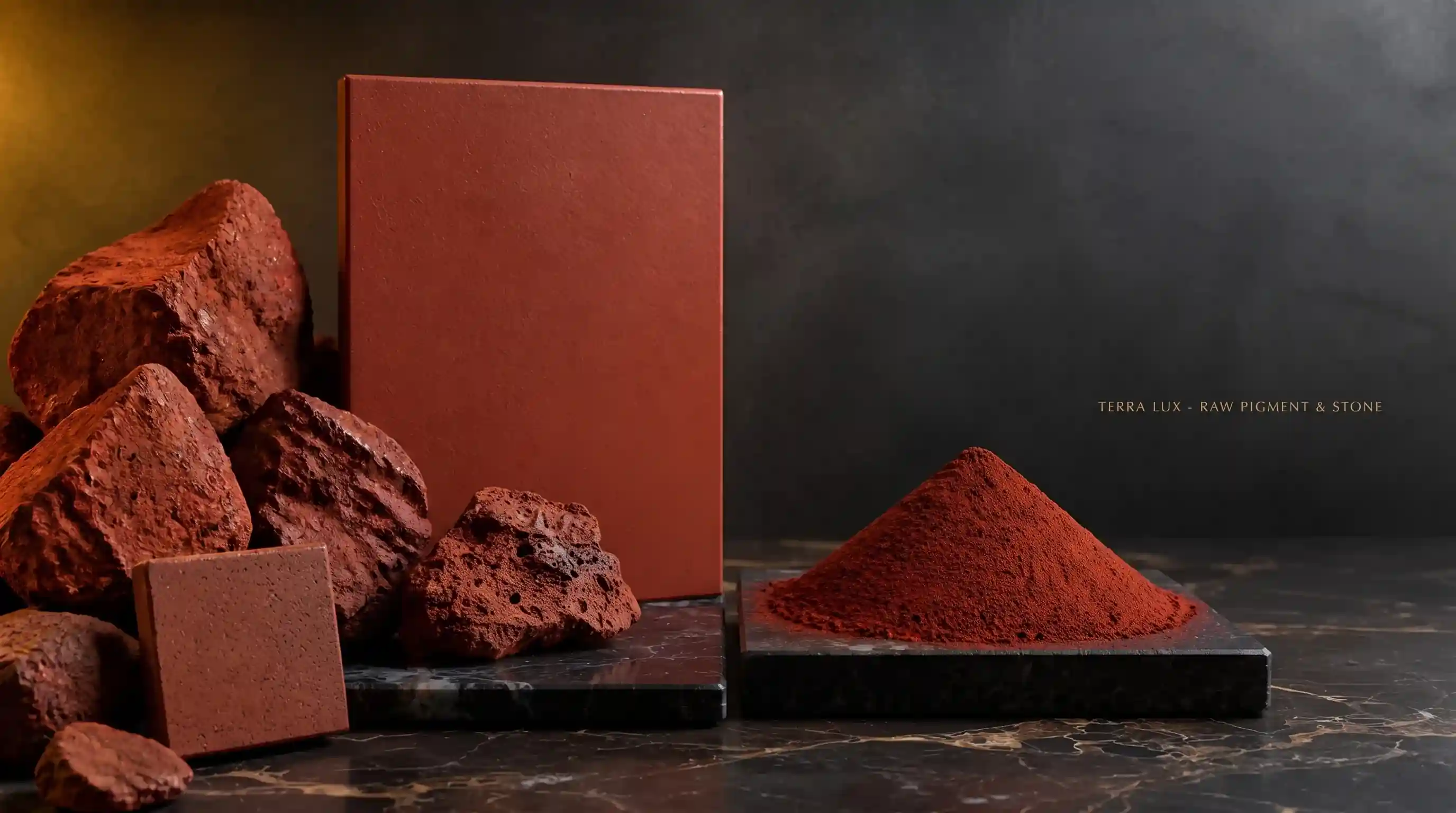
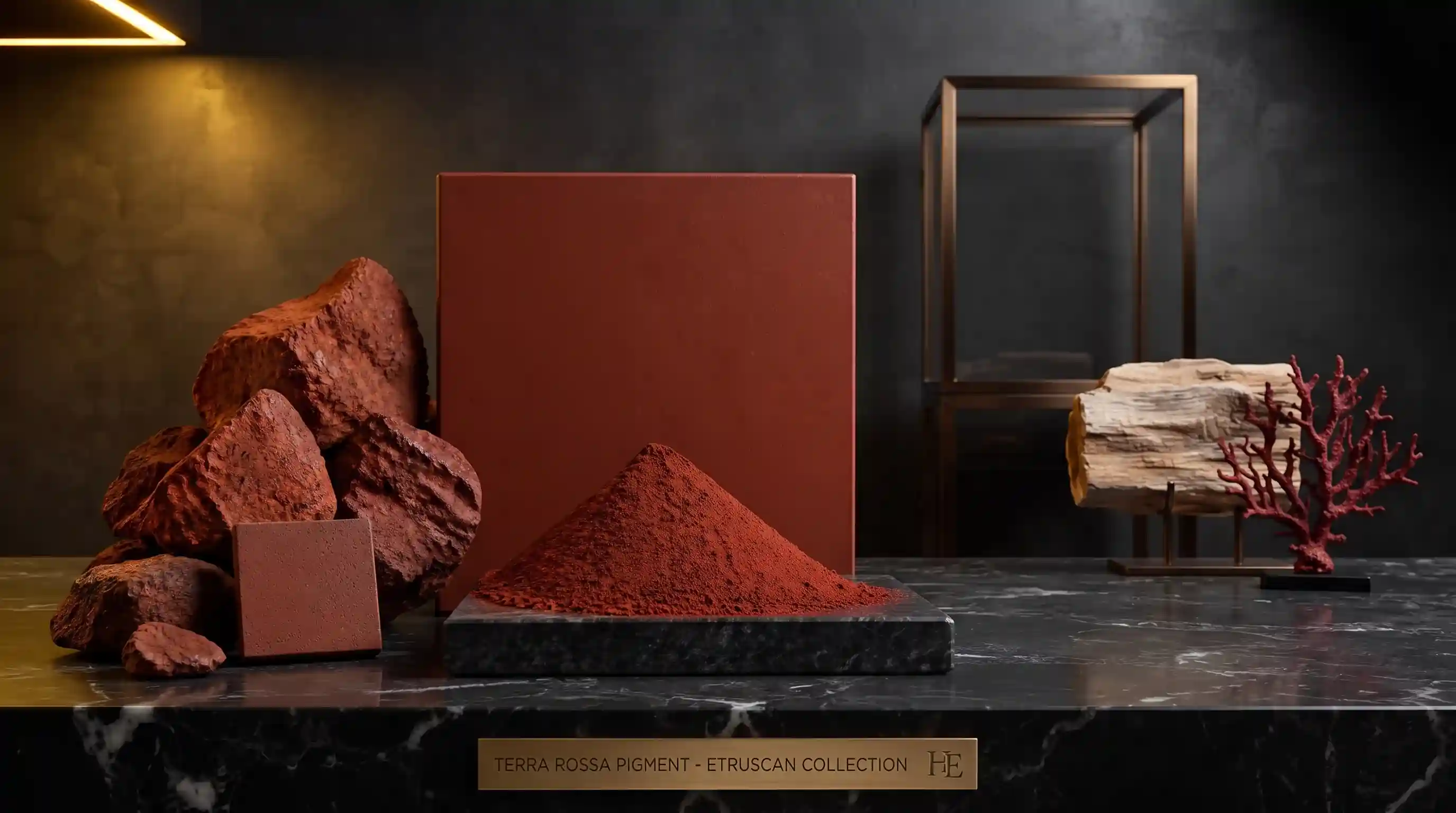
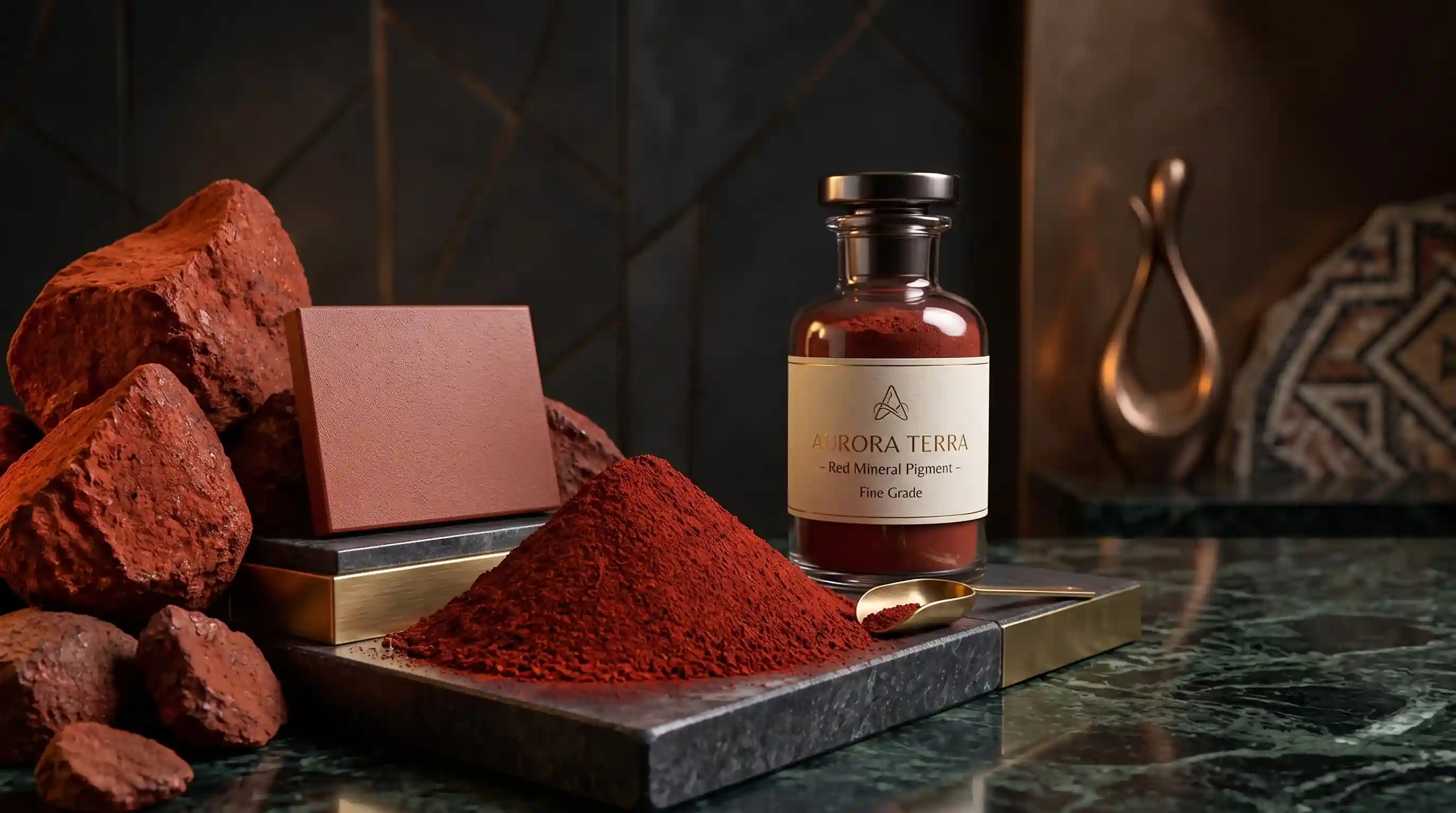
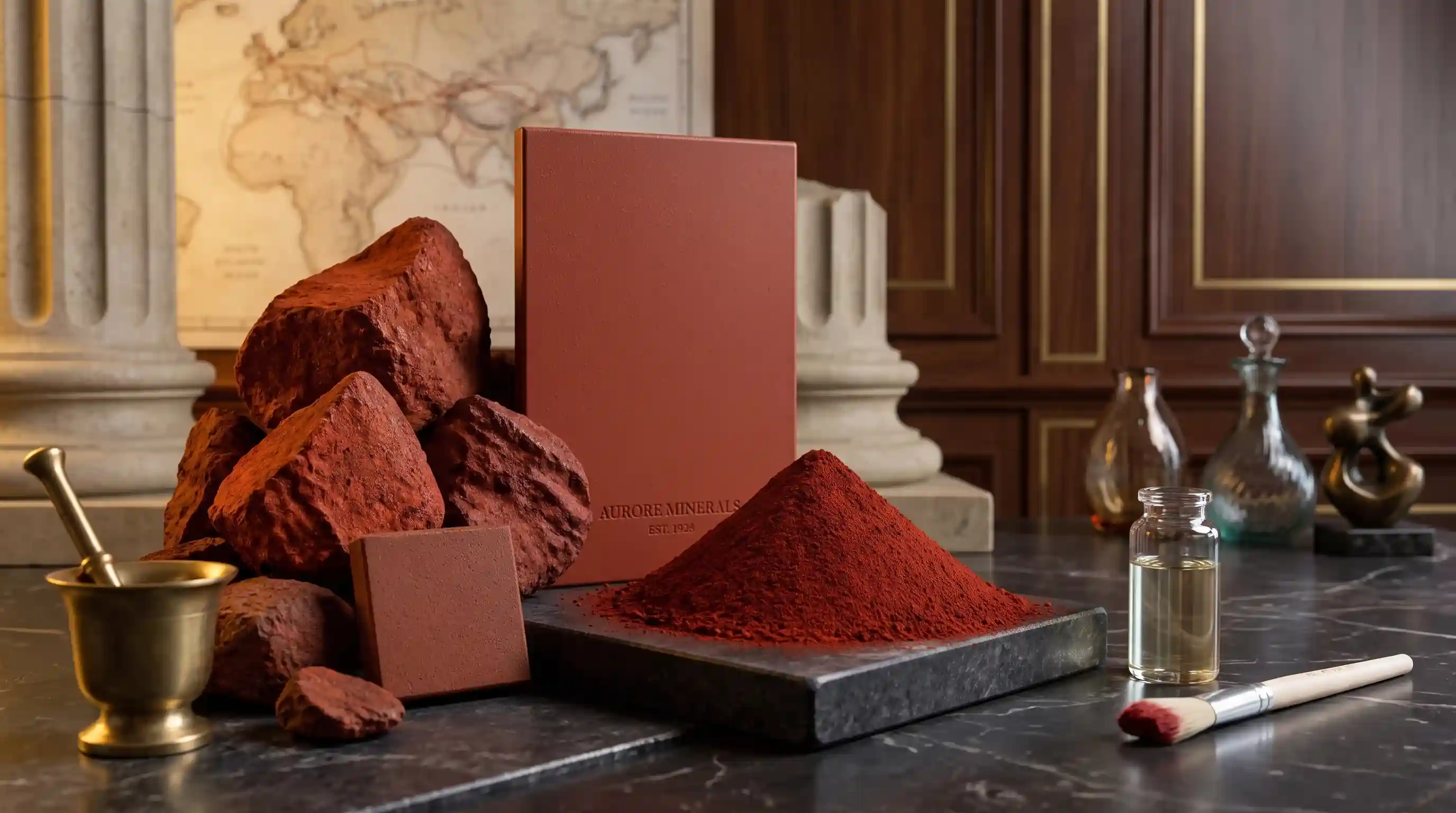
In terms of appearance, Red Iron Oxide (Ochre) is a powder with a brownish-red to bright red color that offers different shades depending on the particle size and production method. Manufacturers can choose the appropriate grade of this product based on their specific color needs.

The Role of Red Iron Oxide (Ochre) as a Pigment in Polymer Profiles
The main application of Red Iron Oxide (Ochre) in the polymer profile industry is its use as a red color pigment. Polymer profiles such as window profiles, doors, edge bands, decorative profiles, and industrial parts need coloring that is both beautiful and guarantees the product's lifespan. Due to its high coloring strength and excellent stability, Red Iron Oxide (Ochre) is one of the primary choices of manufacturers.
The coloring strength or covering power of a pigment refers to its ability to cover the underlying surface and produce saturated color. Red Iron Oxide (Ochre), having a high refractive index (around 3.0), shows very good covering power. This feature allows manufacturers to create saturated and uniform color in profiles using a smaller amount of pigment, which is also economically affordable.
One of the main challenges in coloring polymer profiles is achieving color uniformity throughout the product. Heterogeneity in pigment dispersion can lead to the formation of color spots, dark and light bands, or color variation in different parts of the profile. Red Iron Oxide (Ochre), with controlled particle size and uniform distribution, helps reduce these problems. Manufacturers usually use different concentrations of this pigment (usually between 0.5 to 5 percent by weight) depending on the desired color intensity.
Color stability over time is another important advantage of Red Iron Oxide (Ochre). Unlike organic pigments that quickly lose their color when exposed to sunlight and atmospheric conditions, this mineral pigment has very high resistance to fading. This feature is especially important for profiles that are used outdoors, such as window profiles and building facades.
In addition to pure red, Red Iron Oxide (Ochre) can be combined with other pigments to produce a wide range of colors. For example, combining it with yellow pigments can create orange and brown colors, and combining with white produces pink and pale red colors. This flexibility allows designers to create custom colors desired by customers.
In the polymer profile production process, the pigment is usually added to the polymer matrix as a masterbatch or pure powder. Masterbatch involves pigment concentrated in a polymeric carrier, which ensures better dispersion and is easier to handle. The choice between powder and masterbatch depends on the available equipment, production volume, and quality requirements.
UV Resistance and Light Stability of Red Iron Oxide (Ochre)
One of the biggest challenges in the polymer profile industry is degradation caused by the sun's ultraviolet (UV) radiation. UV rays can break chemical bonds in polymer chains and cause yellowing, brittleness, loss of gloss, and ultimately product degradation. Red Iron Oxide (Ochre) acts as a natural protector against UV radiation and helps polymer profiles resist this degradation.
The UV protection mechanism by Red Iron Oxide (Ochre) involves two main processes: absorption and reflection. Particles of this mineral pigment can absorb a significant portion of UV rays and convert them into heat, which is then safely dissipated from the product surface. Also, pigment particles on the profile surface can reflect UV rays and prevent their penetration into deeper layers of the polymer matrix. These two mechanisms together provide very effective protection.
Studies show that polymer profiles containing Red Iron Oxide (Ochre) have much better durability in harsh weather conditions compared to profiles colored with organic pigments. The red color of iron oxide does not change significantly even after years of exposure to sunlight, while organic pigments may lose their color in less than a year. This feature is critically important for profiles used in facades, windows, and other outdoor applications.
In accelerated weathering tests conducted according to standards such as ASTM G154, profiles containing Red Iron Oxide (Ochre) perform better. These tests expose profiles to cycles of UV light, humidity, and alteating temperatures to simulate long-term degradation in a short time. The results show that the loss of mechanical properties and color change in profiles containing this mineral pigment are significantly lower.
The effectiveness of UV protection depends on factors such as pigment concentration, particle size, and dispersion uniformity. Higher pigment concentrations provide more protection, but may also affect the mechanical properties and transparency of the product. Therefore, manufacturers must find an optimal concentration that guarantees both sufficient protection and desired product properties. The use of very fine particles (higher meshes) can increase UV protection because these particles offer more surface area for absorbing and reflecting rays.
Combining Red Iron Oxide (Ochre) with other UV protective additives such as Hindered Amine Light Stabilizers (HALS) and organic UV absorbers can create a synergistic effect and provide much stronger protection. This combined approach allows manufacturers to produce profiles with very high lifespans that perform well even in the harshest weather conditions.
Thermal Stability of Red Iron Oxide (Ochre) in the Polymer Profile Production Process
The production process of polymer profiles is usually carried out at high temperatures. In the extrusion process, which is the most common profile production method, the operating temperature can be between 160 to 220 degrees Celsius or even higher. These high temperatures can cause pigment decomposition, color change, and polymer degradation. Red Iron Oxide (Ochre), due to its excellent thermal stability, is one of the few pigments that performs well in these harsh conditions.
Red Iron Oxide (Ochre) is stable up to temperatures above 1000 degrees Celsius, and at polymer extrusion process temperatures, no change occurs in its structure or color. This stability assures manufacturers that the color of the final profile is the desired color and will not change during the production process. This feature is very important for quality control and production continuity.
One of the common problems in coloring polymer profiles is a phenomenon called "color migration" or "color bleeding". This phenomenon occurs when the pigment dissolves or migrates in the polymer matrix at high temperatures and causes color spots or uneven fading. Red Iron Oxide (Ochre) is very resistant to this phenomenon due to its insolubility in polymers and solvents, and its color remains stable during the production process and product life.
In addition to color stability, Red Iron Oxide (Ochre) can also act as a processing aid. Particles of this pigment can reduce friction between polymer chains and improve melt flow. This feature helps reduce the heat generated during the extrusion process and lowers the risk of thermal degradation of the polymer. The result is a more stable production process and a higher quality product.
For polymers such as PVC, which are sensitive to thermal degradation, choosing a pigment with high thermal stability is doubly important. Thermal degradation of PVC can cause the release of hydrogen chloride gas, which is both dangerous and causes product discoloration. Red Iron Oxide (Ochre) is not only resistant to these conditions itself, but can also perform some acid scavenging and help system stability.
During the production process, temperature control, screw speed, and mold design all affect the quality of pigment dispersion. Manufacturers must optimize process parameters based on the polymer type, pigment particle size, and desired concentration. The use of masterbatches containing Red Iron Oxide (Ochre) can help better dispersion and more precise process control.
Thermal stability tests such as TGA (Thermogravimetric Analysis) and DSC (Differential Scaing Calorimetry) can be used to evaluate the thermal behavior of profiles containing this pigment. These tests help manufacturers predict the product's behavior at different temperatures and determine optimal process conditions.
The Effect of Red Iron Oxide (Ochre) on the Mechanical Properties of Polymer Profiles
While the primary application of Red Iron Oxide (Ochre) in polymer profiles is coloring, this mineral can also have positive effects on the mechanical properties of the product. The mineral particles of this pigment can act as a filler phase in the polymer matrix and help improve some mechanical properties. Of course, the extent of this effect depends on factors such as particle size, concentration, dispersion, and polymer type.
Adding mineral particles to the polymer matrix usually increases hardness and elastic modulus. Hard particles of Red Iron Oxide (Ochre) can distribute stresses applied to the polymer matrix and increase the product's resistance to deformation. This feature is useful for profiles that require structural strength, such as window and door profiles.
Resistance to abrasion and scratching is another property that is improved by adding Red Iron Oxide (Ochre). The mineral particles of this pigment have high hardness and can increase the profile surface's resistance to mechanical abrasion. This feature is important for profiles exposed to abrasion, such as floor profiles, edge bands, and moving parts.
One of the challenges of using mineral particles in polymer matrices is the potential negative impact on impact resistance. Hard particles can act as stress concentration points and cause reduced toughness. But with proper control of particle size and dispersion, this negative effect can be minimized. The use of small and uniform particles, and the application of coupling agents can help maintain the balance between strength and toughness.
Dimensional stability is another feature that Red Iron Oxide (Ochre) can improve. Mineral particles have a lower coefficient of thermal expansion than polymers, and their addition can reduce the expansion and contraction of the profile at different temperatures. This feature is important for profiles used in variable environments, such as window profiles that are located both inside and outside the building.
Heat deflection temperature is also improved by adding this pigment. Mineral particles can limit the movement of polymer chains at high temperatures and increase the temperature at which the polymer begins to deform. This feature is important for profiles exposed to high temperatures, such as profiles near heat sources or industrial profiles.
Standard mechanical tests such as tensile test (ASTM D638), flexural test (ASTM D790), and impact test (ASTM D256) can be used to evaluate the effect of Red Iron Oxide (Ochre) on the mechanical properties of profiles. Manufacturers should perform these tests on their products to ensure the effect of additives on the final product properties.
Ultimately, optimizing the formulation to achieve the right balance between aesthetics, color, UV protection, and mechanical properties is the key to producing high-quality profiles. Manufacturers must determine the appropriate concentration and type of Red Iron Oxide (Ochre) for each specific application through systematic experiments.
Practical Applications of Red Iron Oxide (Ochre) in PVC Profiles and Engineering Polymers
PVC profiles are the largest consumer market for Red Iron Oxide (Ochre) in the polymer profile industry. Due to its affordable price, good physical properties, weather resistance, and ease of processing, PVC is widely used in the production of window profiles, doors, edge bands, flooring, wall coverings, and decorative profiles. Coloring these profiles is usually done using mineral pigments, of which Red Iron Oxide (Ochre) is one of the most important.
Colored PVC window profiles are one of the most important applications of this pigment. In recent years, the demand for colored windows (especially red, brown, and wood colors) has increased. Red Iron Oxide (Ochre) allows manufacturers to produce windows with a stable and beautiful red color that retain their color against sunlight and atmospheric conditions for years. These windows are usually popular in traditional homes and specific architectural styles.
In addition to PVC, Red Iron Oxide (Ochre) is also used in profiles of other polymers. Polypropylene (PP) profiles used in the automotive and packaging industries, polyethylene (PE) profiles used in the fuiture and toy industries, and ABS profiles used in electronic and industrial parts can all use this pigment for coloring. Each of these polymers has different process conditions, and Red Iron Oxide (Ochre), due to its broad stability, can be used in all of them.
Engineering profiles such as UPVC (unplasticized PVC) profiles used for pipes, fittings, and building profiles also benefit from this pigment. These profiles require high strength, dimensional stability, and durability against harsh conditions. Red Iron Oxide (Ochre) not only provides stable color but also helps improve some mechanical properties.
In the plastic fuiture industry, profiles with wood and red colors are very popular. These profiles are usually produced from wood-plastic composite (WPC) polyethylene or polypropylene and simulate the natural appearance of wood. Red Iron Oxide (Ochre), in combination with yellow and brown pigments, can produce a wide range of wood colors.
Edge band profiles, which are used to cover the edges of wooden panels, are another important application. These profiles must match the color of the panel and be resistant to abrasion and moisture. Red Iron Oxide (Ochre) offers stable color and high abrasion resistance.
In the construction industry, wall profiles, coverings, and decorative profiles in red color also have a good market. These profiles are usually used in building facades and interior decoration and need durability against sunlight and temperature changes.
The automotive industry is also an important consumer of colored polymer profiles. Weatherstrip profiles, decorative strips, glass profiles, and inteal car parts all require stable coloring. Red Iron Oxide (Ochre) is suitable for these applications due to its high thermal and light stability.
Selection Criteria and Quality Control of Red Iron Oxide (Ochre) in Polymer Profile Production
Choosing the right Red Iron Oxide (Ochre) for the production of polymer profiles is an important decision that affects the quality, cost, and performance of the final product. There are several key factors that manufacturers must consider when selecting this pigment. The first factor is the particle size or mesh range. As mentioned, this product is available in the mesh range of 450 to 1500 mesh. Finer particles (higher meshes) create a brighter color and better dispersion, while coarser particles are more economical. For high-quality profiles that require high color uniformity, finer particles are usually preferred.
The second factor is color intensity or coloring strength. Pigments with higher color intensity are consumed less and are more economical. Manufacturers should perform comparative tests on different products to choose the pigment that offers the best value. Colorimetry tests using spectrophotometer devices can help accurately evaluate color.
The third factor is dispersion. The uniformity of pigment distribution in the polymer matrix directly affects the visual quality of the profile. Pigments with good dispersion produce a more uniform color and reduce the need for complex mixing equipment. Microscopic tests and surface evaluation can show the quality of dispersion.
Quality control during production is also of great importance. Profile manufacturers must have precise quality control systems to ensure color consistency during production. This includes regular color tests, surface uniformity checks, and mechanical property evaluations. Any change in color or quality must be quickly identified and corrected.
One of the most important quality control tests is the color matching test. Manufacturers must produce profiles with a color exactly matching the reference sample. This is done using standard color systems such as CIELAB, which expresses color as numerical values L (lightness), a (redness/greeess), and b (yellowness/blueness). Deviation from reference values (Delta E) must be kept within an acceptable range.
Weathering tests are also essential to ensure color durability over time. These tests can be done naturally (placing samples outdoors) or accelerated (using weathering devices). The results of these tests help manufacturers predict the color durability of their product and provide an appropriate warranty.
Formulation optimization is a continuous process. Manufacturers must find the optimal combination of pigments, stabilizers, lubricants, and other additives through systematic experiments. This requires technical knowledge, experience, and appropriate equipment. Collaborating with raw material suppliers who provide technical services can be very helpful in this process.
Finally, future industry trends show that the demand for colored and durable polymer profiles is increasing. Red Iron Oxide (Ochre), as a stable, economical, and versatile mineral pigment, is well positioned to benefit from this growth. The Kani Sang Amiran Project, by producing this mineral with appropriate quality, helps meet the needs of the country's polymer profile industry.
| Question | Answer |
|---|---|
| What is the role of Red Iron Oxide (Ochre) in the production of polymer profiles? | This substance is used as a red color pigment, a protector against UV radiation, and an aid to thermal stability in polymer profiles. |
| What is the mesh range of Red Iron Oxide (Ochre)? | This product is produced and offered in the mesh range of 450 to 1500 mesh. |
| What are the main applications of Red Iron Oxide (Ochre)? | The main applications of this product include pigments, coatings, cement, and ceramic products. |
| Does Red Iron Oxide (Ochre) retain its color against sunlight? | Yes, this mineral pigment has very high resistance to fading caused by UV radiation. |
| At what temperatures is Red Iron Oxide (Ochre) stable? | This substance is stable up to temperatures above 1000 degrees Celsius and does not change at polymer extrusion process temperatures. |
| How much of this pigment is used in polymer profiles? | Usually between 0.5 to 5 percent by weight is used depending on the desired color intensity. |
| Can Red Iron Oxide (Ochre) be combined with other pigments? | Yes, it can be combined with other pigments to produce a wide range of colors. |
| Which polymers are compatible with this pigment? | PVC, polypropylene, polyethylene, ABS, and other engineering polymers are compatible with this pigment. |
| Does this product affect the mechanical properties of the profile? | With proper control of particle size and dispersion, it can help improve hardness and abrasion resistance. |
| Where should we go to buy Red Iron Oxide (Ochre)? | You can do so through the product page on the Kani Sang Amiran Project website. |
https://ksamiran.ir/products/red-iron-oxide/
برچسب: Red Iron Oxide (Ochre),The Role of Red Iron Oxide (Ochre) in the Production of Polymer Profiles,
نویسنده: رساوب آفرین