
درباره سایت
آخرین مطالب
- Applications of White Talc in Plastic Production and Industrial Polymer Industries
- Applications of Coated Calcium Carbonate in Chemical and Plastic Industries
- What is Coated Calcium Carbonate? A Guide to Its Application in the Construction Industry
- كيفية اختيار كربونات الكالسيوم المطلي بناءً على التدرج الحبيبي
- How to Choose High-Quality White Barite: Key Purchasing Tips
- استانداردهای دانهبندی تالک سفید برای مصارف گوناگون در صنایع
- White Talc in the Construction Industry: Its Applications and Key Features
- Industrial Barite or Calcium Carbonate? A Complete Comparison of Applications and Benefits
- استانداردهای کیفیت باریت صنعتی و روشهای آزمایش و کنترل آن
- Application of White Barite in Producing Paint and Durable Industrial Coatings
امکانات وب
Introduction to White Barite and Its Position in the Mining Industry
White barite is one of the most important industrial minerals that has attracted the attention of many paint, coating, and polymeric product manufacturers in recent years. This mineral, formed from natural barium sulfate, has become more valuable in technical product formulations than other types of barite due to its light color, high purity, and special crystalline structure. In fact, when it comes to the final quality of a paint or industrial coating, the type and grade of barite used plays a very prominent role.
In the mineral materials market, barite is generally offered in two broad categories: light and dark. Gray barite, which has been used in drilling and insulation projects for years, is a perfectly suitable option for applications where the color and final appearance of the product do not matter. But when the final product must have a light color, transparency, and high visual quality, white barite will be the only logical choice. This simple difference in base color completely separates the application categories of these two products.
Kani Sang Amiran Project, as one of the producers of mineral materials, produces white barite in the 450 to 2500 mesh range for paint, coating, and polymeric products with mineral filler applications. This wide range of particle sizes allows formulators to choose a product that exactly matches their formulation needs. The higher the mesh number, the finer the particles and the higher the specific surface area, and the product's behavior within the resin or paint solvent will be different.
What distinguishes white barite from many other mineral fillers is the combination of high density with a light color. Most light mineral fillers like calcium carbonate have low density, while white barite maintains the specific density of barium sulfate and simultaneously provides the necessary lightness for dark and light paints. That is why in the production of high-quality paints, industrial coatings, and filled polymeric parts, the presence of this mineral has become a quality standard.
In this article, we intend to examine white barite from various angles; its difference from gray barite, technical features, the role of each in the paint and polymer industries, and finally the criteria that will help you make the best choice for your production line. If you are active in the paint, coating, or polymeric products industry, familiarity with these details can have a direct impact on the quality of your final product and the efficiency of your formulation.
What is the Difference Between White Barite and Gray Barite?
The first and most obvious difference between white barite and gray barite is the color of these two products. Gray barite has a dark color due to the presence of organic impurities, iron oxides, and other accompanying minerals, which also shows itself in the final product. In contrast, white barite is extracted from mines with higher purity and after processing, achieves a light and uniform color suitable for visually sensitive applications. But the differences are not limited to color.
The second difference is in the purity level of barium sulfate. In white barite, the share of pure barium sulfate is higher, and impurities that cause color change are removed as much as possible. This issue is very vital for industries that require consistent color and reproducible quality. A paint manufacturer that produces a consistent formulation in high volumes must ensure that the barite they use has the same color behavior in every batch. Gray barite, due to more variation in composition, does not always provide this assurance.
The third difference is in the end application. Gray barite is mostly used in industries where technical properties like density and weight matter and the appearance of the final product is not important; such as drilling mud, weighting, heavy concrete, and radiation shielding. But white barite is used in industries where the appearance, color, and surface quality of the final product matter; such as architectural and industrial paints, decorative coatings, polymeric products with mineral filler, and technical parts. Therefore, choosing between these two products is actually choosing between two completely different sets of needs.
The fourth difference is in price and processing. Gray barite usually has simpler processing and enters the market directly after crushing. But white barite requires more precise processing steps so that color and purity reach the desired level. This additional processing is part of the reason for the difference in value between these two products in the market. To better understand the market flow of these products, read the article Review of the Industrial Barite Market Trend and Its Export Future.
The important point is that neither of these two products has absolute superiority over the other. Gray barite is very economical and efficient for its application, and white barite has no replacement for its own application. A common mistake in the market is that sometimes to reduce costs, gray barite is used in the formulation of light paints, which results in a drop in quality, color change, and final customer dissatisfaction. Accurate knowledge of the differences prevents such errors from occurring.
Technical Features of White Barite and the Importance of the 450 to 2500 Mesh Range
One of the most important technical parameters in selecting any mineral filler is the particle size or the mesh number. White barite produced by Kani Sang Amiran Project is offered in the 450 to 2500 mesh range; a very wide range that covers almost all the needs of the paint, coating, and polymer industries. But what exactly does this number mean and why is it so important?
The mesh number indicates how many meshes exist in a standard unit; the larger the number, the smaller the sieve holes and the finer the passing particles. For example, 450-mesh barite has coarser particles than 2500-mesh barite. This difference in particle size completely changes the product's behavior in the formulation. Coarser particles are usually cheaper, create better volumetric filling, and are more suitable for products that require thickness and high filling. Finer particles have a higher specific surface area, disperse better in the solvent or resin, and create a more uniform final surface.
In paint making, the choice of mesh depends on the type of paint and the desired surface quality. For ordinary architectural paints, meshes lower than 1000 are fully responsive and keep the final cost under control. But for industrial paints, high-quality decorative paints, and coatings that must have a completely smooth and glossy surface, higher meshes like 2000 or 2500 are chosen. Fine particles in these paints make the final surface after drying uniform and without lines or protrusions caused by coarse particles.
In polymeric products containing mineral fillers, the story is similar. Finer particles disperse better within the resin, and the mechanical properties of the final part, such as tensile strength and surface uniformity, improve. In delicate parts and polymeric parts with high surface quality, using high-mesh barite is a technical necessity. Coarse particles in such applications can cause weak points in the part and reduce final quality.
Therefore, the correct selection of white barite is not limited to choosing this mineral material itself; rather, it is the selection of the appropriate mesh according to the product type, desired surface quality, and formulation system. To receive consultation in this field, you can check the White Barite product page on the Kani Sang Amiran Project website, and to familiarize yourself with the ordering process, read the article Guide to Registering an Online Purchase Request for Industrial Barite.
Application of White Barite in the Paint Industry
The paint industry is the largest consumer of white barite globally. The reason for this is the combination of unique features of this mineral that make it an ideal filler for paint formulation. White barite simultaneously has high density, light color, chemical stability, and a reasonable price; a combination rarely found in other mineral fillers.
In a paint formulation, white barite has several simultaneous responsibilities. First, it acts as a volumetric filler and fills part of the paint volume at a lower cost than pigments. Second, due to its light color, it does not negatively affect the final color of the product and allows colored pigments to fully show their effect. Third, the high density of barite makes the paint create good coverage on the surface and the final coating become uniform. These features are especially vital in white and light-colored paints.
The type of mesh used in paint making depends entirely on the target quality. Ordinary architectural paints are produced with 450 to 1000 meshes, while industrial paints, automotive paints, and high-quality decorative paints use 1500 to 2500 meshes. Using the appropriate mesh determines the balance between price and final quality. For a deeper understanding of this topic, read the article Why is Using White Barite Essential in Paint Production?.
Another advantage of white barite in paint making is its chemical stability. Barium sulfate is resistant to weak acids and bases and does not react with paint pigments and additives. This feature makes the produced paint not change color over time and preserves the visual durability of the product. Also, white barite has anti-settling properties and prevents the paint from settling in packaging.
In industrial paints that work in harsh environments, white barite increases the abrasion resistance of the paint due to its hardness and crystalline structure. This means a paint exposed to wear or friction lasts longer. This same feature has made white barite a key material in the production of marine paints, industrial paints, and workshop floor paints. If you want to procure this product for your paint production line, see the White Barite page on the Kani Sang Amiran Project website.
The Role of White Barite in Coatings and Polymeric Products
In addition to the paint industry, white barite is widely used in the production of various industrial coatings and polymeric products containing mineral fillers. Industrial coatings include surface paints, protective coverings, powder coatings, and decorative coatings, all of which require a filler that has both high technical quality and does not affect the product's appearance. White barite provides exactly these features.
In powder coatings applied to surfaces by the electrostatic method, the particle size of barite plays a decisive role. The particles must be fine enough to create a uniform coating, yet large enough to flow easily in the spraying equipment. Middle and upper meshes of white barite are usually suitable for these applications. Also, in interior and exterior decorative coatings, the lightness of white barite allows light colors to be produced without the need for high pigment volume.
In the plastics and polymer industry, white barite is used as a mineral filler in the production of technical parts, sheets, profiles, and injected products. Adding barite to polymers improves the mechanical, dimensional, and thermal properties of the final part. The hardness of barite increases the abrasion resistance of the polymeric part, and the uniformity of particles creates good dispersion within the resin. This issue is very vital for parts that have dimensional accuracy.
One of the interesting applications of white barite in polymers is the production of parts with controlled weight and density. The high density of barite allows the formulator to produce parts with a specific weight. In technical parts that must have a certain weight or balance, this feature is very practical. Also, white barite is used as a filler in the production of polymeric films and sheets, increasing production efficiency.
In polymeric products with high surface quality, high mesh white barite is used so that the surface of the final part is uniform and smooth. Coarse particles can cause lines or protrusions on the surface of the polymeric part, which is not acceptable for delicate products. Therefore, choosing the appropriate mesh in this industry is also directly related to the final product quality, and formulation engineers must make this choice carefully.
Advantages of Using White Barite in Formulation
Using white barite in the formulation of paints, coatings, and polymeric products has several advantages that overall make this product a standard choice in industries. Knowing these advantages helps formulators and production managers make more informed decisions and improve the quality of their products.
The first advantage is lightness and color stability. White barite has a light and stable color that allows the formulator to produce light and white colors without worrying about color change caused by the filler. This feature is very vital in the production of architectural paints, decorative paints, and light industrial paints. Gray barite does not provide this possibility, and if used in light paints, the product quality drops severely.
The second advantage is high chemical stability. Barium sulfate is stable in various chemical conditions and does not react with common materials in formulations. This stability makes the produced paint or coating not change over time and increases the product's durability. In polymeric products, this chemical stability also makes the part more resistant to environmental factors.
The third advantage is the improvement of mechanical properties. In polymeric products, white barite increases the abrasion resistance and hardness of the part. In paints and coatings, this feature also makes the final surface more resistant to wear and scratching. For paints used in industrial environments or exposed to friction, this advantage clearly shows itself in the product's lifespan.
The fourth advantage is increased economic efficiency. White barite, at an affordable price, fills a large part of the formulation volume and reduces the need for expensive pigments. This issue is especially important in the production of high-quality paints that must be competitive. Choosing the appropriate mesh determines the balance between cost and quality.
The fifth advantage is good processability. White barite disperses well in solvents and resins and does not cause problems in production processes. This feature is very important for production lines that require process stability. Ultimately, all these advantages together make white barite a superior option compared to gray barite in applications where the final product quality matters.
Key Points in Buying and Selecting White Barite
Buying white barite for paint, coating, and polymeric applications requires attention to several key points. These points help you choose a product that exactly matches your production line needs and prevents potential problems in the production process.
The first point is choosing the appropriate mesh. As mentioned earlier, white barite is produced in the 450 to 2500 mesh range. Depending on the type of final product and the desired surface quality, you must choose the appropriate mesh. For ordinary paints, lower meshes are suitable, and for high-quality paints and coatings, higher meshes are appropriate. Choosing the wrong mesh can cause a drop in quality or paying extra costs.
The second point is product uniformity. In high production volumes, the uniformity of barite in different batches is very vital. If the barite you use has a different color or particle size in each batch, your formulation constantly changes and the final product quality does not remain stable. Buying from a reputable producer like Kani Sang Amiran Project provides this assurance.
The third point is purity and lightness. For light and white paints, the lightness level of barite directly affects the product's quality. You must ensure the purchased product has the necessary lightness for your formulation. Buying from a supplier that produces its product for paint and polymer applications gives you peace of mind in this regard.
The fourth point is packaging and transportation. Barite is a powdery material, and if packaged inappropriately, it can absorb moisture or the bags may be damaged during transport. For the order registration process, the guide for Registering an Online Purchase Request for Industrial Barite is available on the Kani Sang Amiran Project website.
The fifth point is technical support. A supplier that has a technical department and can guide you in choosing the mesh and formulation is of great value to your production line. Also, to see the exact product specifications, you can visit the White Barite page and, before making a final decision, discuss your needs with technical experts.
Conclusion: Which Barite Should We Choose?
After fully reviewing the features and applications of both types of barite, it is time to answer the article's main question: white barite or gray barite, which should we choose? The answer to this question depends entirely on your needs, and as we saw, neither has absolute superiority over the other.
If you work in an industry where the appearance of the final product matters — such as paint production, decorative coatings, polymeric products with high surface quality, or delicate technical parts — white barite is the only correct choice. The lightness of this product, its high purity, and its mesh variety enable the production of products with high visual and technical quality. Substituting gray barite in these applications is not at all logical.
But if your product does not need a specific color or appearance — such as drilling mud, heavy concrete, weighting, or radiation shielding — gray barite is a more economical and fully efficient option. In these applications, technical properties like density and weight are important, and the product's color plays no role. Using white barite in these cases only increases your costs for no reason.
The key point is to define your needs exactly. What is the final product? What should the surface quality be? What are the cost constraints? Answering these questions will automatically guide you towards the right choice. If you need market analysis, the article Review of the Industrial Barite Market Trend and Its Export Future can be useful.
Kani Sang Amiran Project produces white barite in the 450 to 2500 mesh range for paint, coating, and polymeric products containing mineral fillers. The mesh variety in this range allows you to choose a product that exactly matches your formulation. Choosing a reputable supplier guarantees that the product quality remains constant across different batches and your production line works without problems.
Finally, if you are still hesitant in choosing the mesh or product type, the best way is to consult with technical experts. To view the product and receive consultation, visit the White Barite page on the Kani Sang Amiran Project website. Also, to better understand the importance of this mineral in the paint industry, read the article Why is Using White Barite Essential in Paint Production?. The right choice today guarantees your product's quality in the future.
| Question | Answer |
|---|---|
| What is the main difference between white barite and gray barite? | White barite has a lighter color and higher purity and is used for applications where the product's appearance matters, while gray barite is darker and is used in technical applications like drilling mud. |
| In which industries is white barite used? | The main applications of white barite include the production of paints, coatings, and polymeric products containing mineral fillers. |
| What is the mesh range of white barite produced by Kani Sang Amiran Project? | This product is produced and offered in the 450 to 2500 mesh range. |
| Why is white barite used in paint making? | Because its light color does not negatively affect the final color, it has high density, and provides good chemical stability in the formulation. |
| Which mesh of white barite is suitable for high-quality paints? | For high-quality paints and coatings, higher meshes (1500 to 2500) are usually more suitable because they create a more uniform final surface. |
| Can gray barite be used instead of white barite in paint? | No, using gray barite in light paints causes color change and a severe drop in product quality. |
| What effect does white barite have on polymeric products? | This material, as a mineral filler, improves the mechanical properties, abrasion resistance, and surface uniformity of polymeric parts. |
| Why is the mesh number important in white barite? | Particle size directly affects dispersion in the solvent or resin, final surface quality, and product price. |
| What is white barite composed of? | White barite is mainly composed of natural barium sulfate, which after processing reaches high lightness and purity. |
| How to buy white barite? | You can proceed through the product page on the Kani Sang Amiran Project website and use the online purchase request guide for the ordering steps. |
Kani Sang Amiran Project — Mineral Material Production, White Barite Product Page: https://ksamiran.ir/products/white-barite/
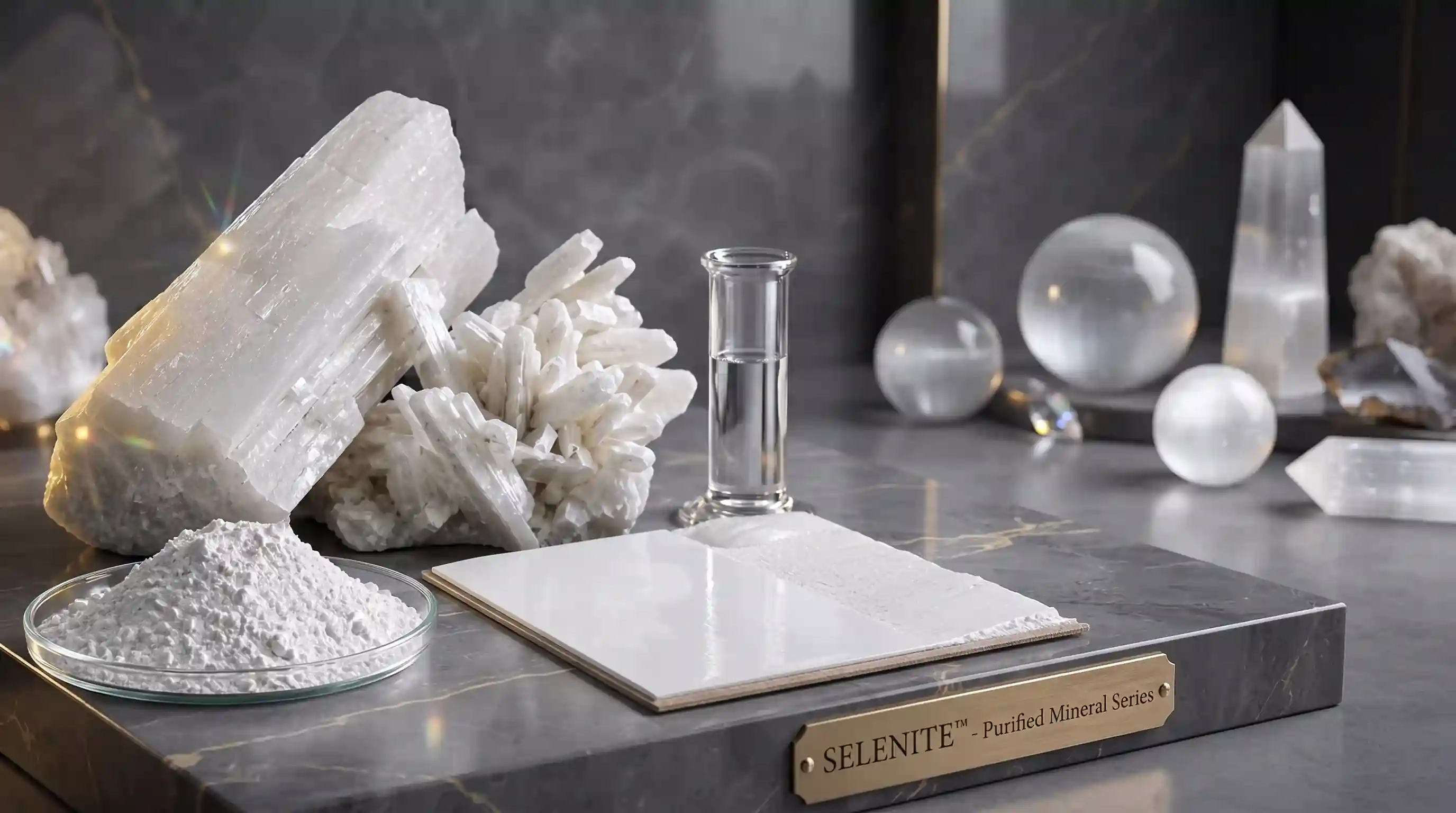
برچسب: White Barite,White Barite and Its Difference from Gray Barite; Which to Choose?,
نویسنده: رساوب آفرین