
درباره سایت
آخرین مطالب
- معايير جودة الباريت الأبيض؛ 5 عوامل رئيسية في التقييم
- Applications of White Talc in Plastic Production and Industrial Polymer Industries
- Applications of Coated Calcium Carbonate in Chemical and Plastic Industries
- What is Coated Calcium Carbonate? A Guide to Its Application in the Construction Industry
- كيفية اختيار كربونات الكالسيوم المطلي بناءً على التدرج الحبيبي
- How to Choose High-Quality White Barite: Key Purchasing Tips
- استانداردهای دانهبندی تالک سفید برای مصارف گوناگون در صنایع
- White Talc in the Construction Industry: Its Applications and Key Features
- Industrial Barite or Calcium Carbonate? A Complete Comparison of Applications and Benefits
- استانداردهای کیفیت باریت صنعتی و روشهای آزمایش و کنترل آن
امکانات وب
Introduction to the Importance of Distribution and Dispersion of Red Iron Oxide (Ochre)
Red iron oxide (ochre) mineral is one of the most widely used mineral pigments in paint manufacturing, coatings, cement production, and ceramic products. To achieve maximum quality, color stability, and ultimate durability in these applications, the method of particle dispersion is of utmost importance. If the powder particles are not well dispersed in the matrix or solvent, phenomena such as agglomeration, hue shifting, and reduced opacity will occur.
In this article, we examine the solutions, techniques, and challenges of improving the dispersion process of red iron oxide (ochre) so that industrial engineers and manufacturers can achieve the best productivity from this valuable material. Choosing raw materials with appropriate mesh and complying with process standards is the first step for a successful dispersion.
Considering that the mesh range of this material is between 450 and 1500 mesh, particle size control plays a key role in the rheological behavior and stability of suspensions. In the following sections, we will examine various mixing techniques, the role of additives, and the diverse applications of this pigment in different industries.
Physical and Chemical Properties of Red Iron Oxide (Ochre) and Its Effect on Dispersibility
A precise understanding of the physical and chemical properties of red iron oxide (ochre) is the primary prerequisite for selecting the optimal dispersion method. This material is known as a mineral pigment resistant to heat, light, and chemicals. The standard mesh range of this product varies from 450 to 1500 mesh, which indicates the variety in particle size and their specific surface area.
Finer particles (such as higher meshes close to 1500) have a larger specific surface area and consequently a greater tendency to agglomerate and attract van der Waals forces. This requires the use of stronger mechanical equipment and appropriate wetting additives. Conversely, lower meshes (close to 450) disperse easier but may have lower tinting strength.
For more information and to purchase this mineral, you can visit the Red Iron Oxide (Ochre) page on the Amiran Stone Mining Project website. Understanding these specifications helps formulators adjust grinding and mixing parameters with greater precision.
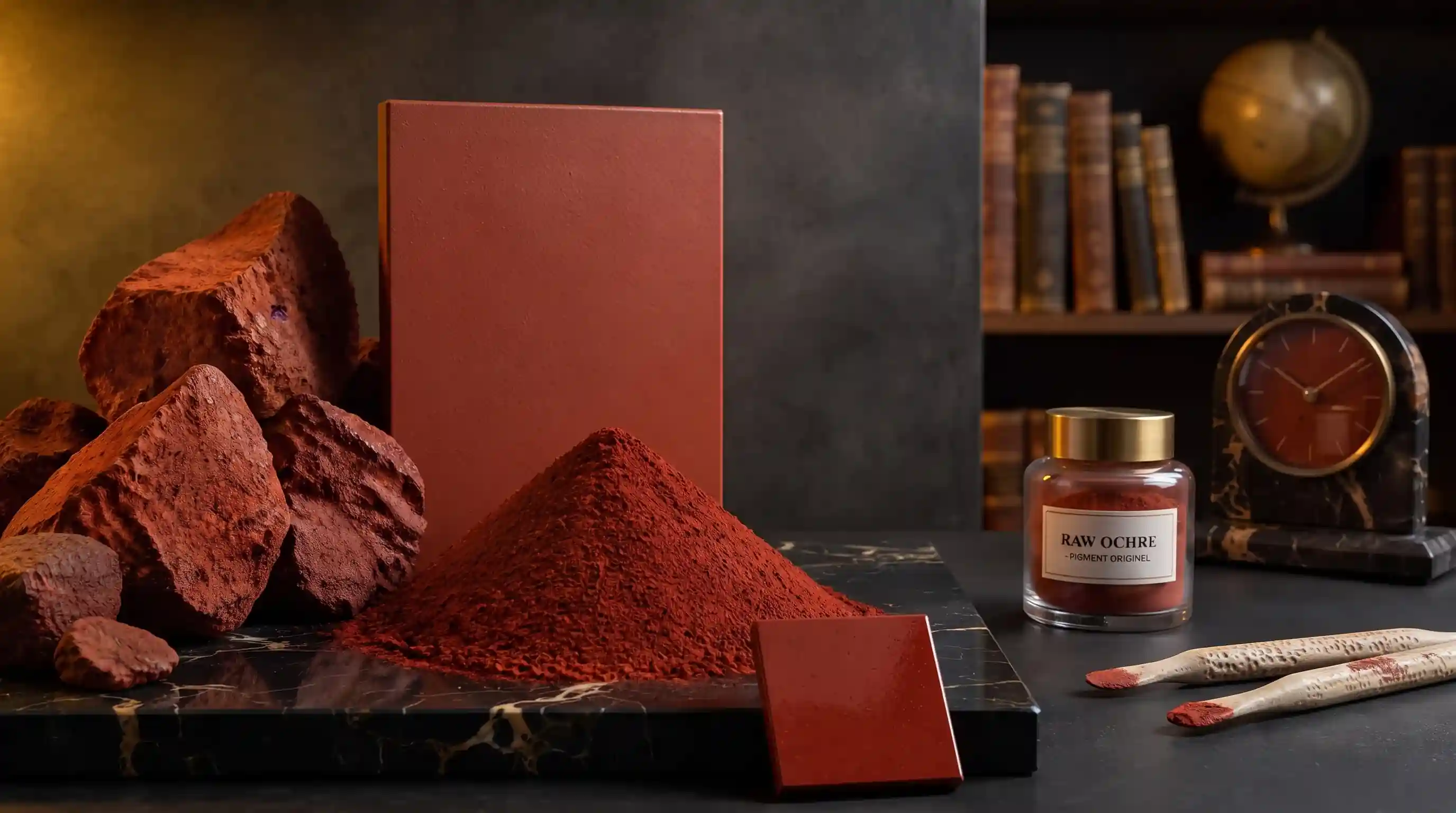
The Role of Mesh Range (450 to 1500 Mesh) in the Dispersion and De-agglomeration Process
The mesh range of 450 to 1500 mesh provides a spectrum of micronized particles to various industries. In the process of dispersing red iron oxide (ochre), particle size directly affects the system's viscosity, oil absorption rate, and the ultimate stability of the layer or product. Finer particles are ideal for achieving high gloss in coatings and ceramic glazes, but due to their high surface energy, they agglomerate rapidly.
To break these agglomerates and achieve complete uniformity, the use of high-shear mixers and ball or bead mills is recommended. Adjusting the grinding time and controlling the system temperature at this stage is crucial to prevent phase changes or thermal instability.
Additionally, the particle size distribution (PSD) within this mesh range helps fill the empty spaces between larger particles with finer particles, which also significantly helps improve the mechanical properties of cement and ceramic products.
Application of Red Iron Oxide (Ochre) in Pigments, Coatings, and Related Industries
The primary application of red iron oxide (ochre) in industry is as a color pigment and protective coating. In the formulation of paints and coatings, complete pigment dispersion guarantees opacity, shade stability, and the absence of premature settling. If dispersion is not done properly, pigment pelletization will occur, and the final surface will suffer from uneveess and color spots.
In addition to paints, this material has widespread application in other industries. For example, how to use this material in construction and engineering industries is very important; just as how red iron oxide (ochre) is used in brick manufacturing is a subject that plays a direct role in improving the appearance quality and durability of bricks.
Maintaining the proportion between the type of resin, solvent, and pigment in coating systems makes red iron oxide (ochre) exhibit the best performance against weathering agents and UV radiation.
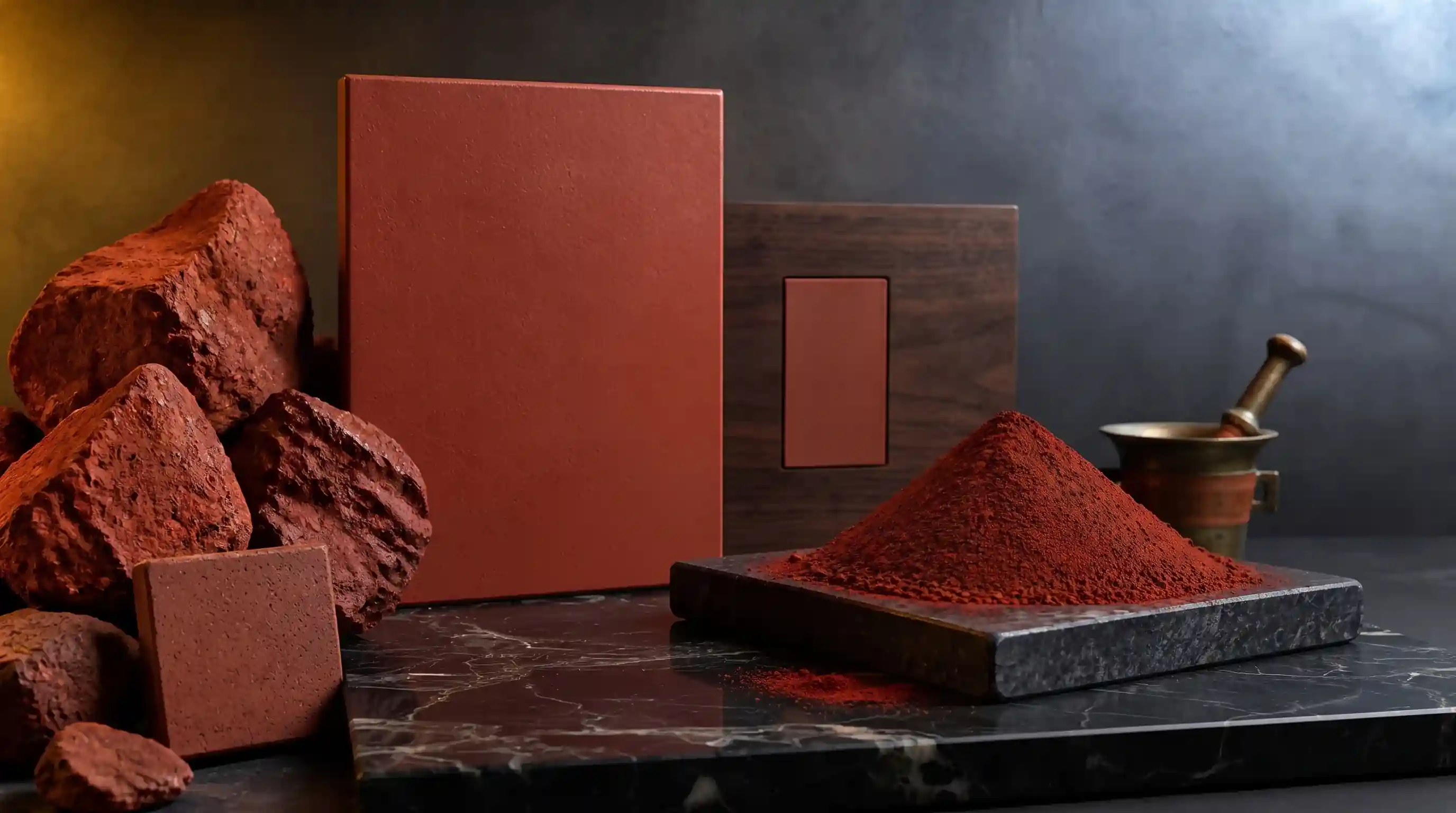
Application in Cement and Ceramic Products and the Challenges of Uniform Distribution
In the cement and ceramic products industry, red iron oxide (ochre) is used not only as a coloring agent (such as in the production of colored concrete and cement blocks) but also in improving certain ceramic properties. The main challenge in these applications is the completely homogenous distribution of the powder among a large volume of dry cement or ceramic slurry.
To overcome this challenge, dry blending the red iron oxide (ochre) powder with cement or ceramic raw materials before adding water is of great importance. This prevents the formation of localized color lumps and unwanted streaks in the final product. In tile and ceramic production, proper dispersion prevents pinholes or heterogeneity in the glaze color.
Manufacturers must ensure that particles in the 450 to 1500 mesh range are balanced throughout the cement or ceramic matrix structure to maintain the compressive strength and structural integrity of the product.
The Role of Red Iron Oxide (Ochre) in Glass and Paper Manufacturing Industries
Although the major applications of red iron oxide (ochre) are in the coating, cement, and ceramic sectors, this material is also used in other specialized industries such as glass and paper manufacturing as a coloring agent or property modifier. In these sensitive industries, the quality of dispersion has a direct impact on the transparency, surface quality, and uniformity of the final product.
To examine these specialized applications in more detail, related articles such as the role of red iron oxide (ochre) in glass manufacturing industries and also the role of red iron oxide (ochre) in paper manufacturing industries provide comprehensive information for specialists regarding engineering processes and dispersion requirements.
In these industries, precise control of the consumption dosage and the use of advanced dispersing equipment are of vital importance to prevent particle aggregation in the glass matrix or paper fibers.
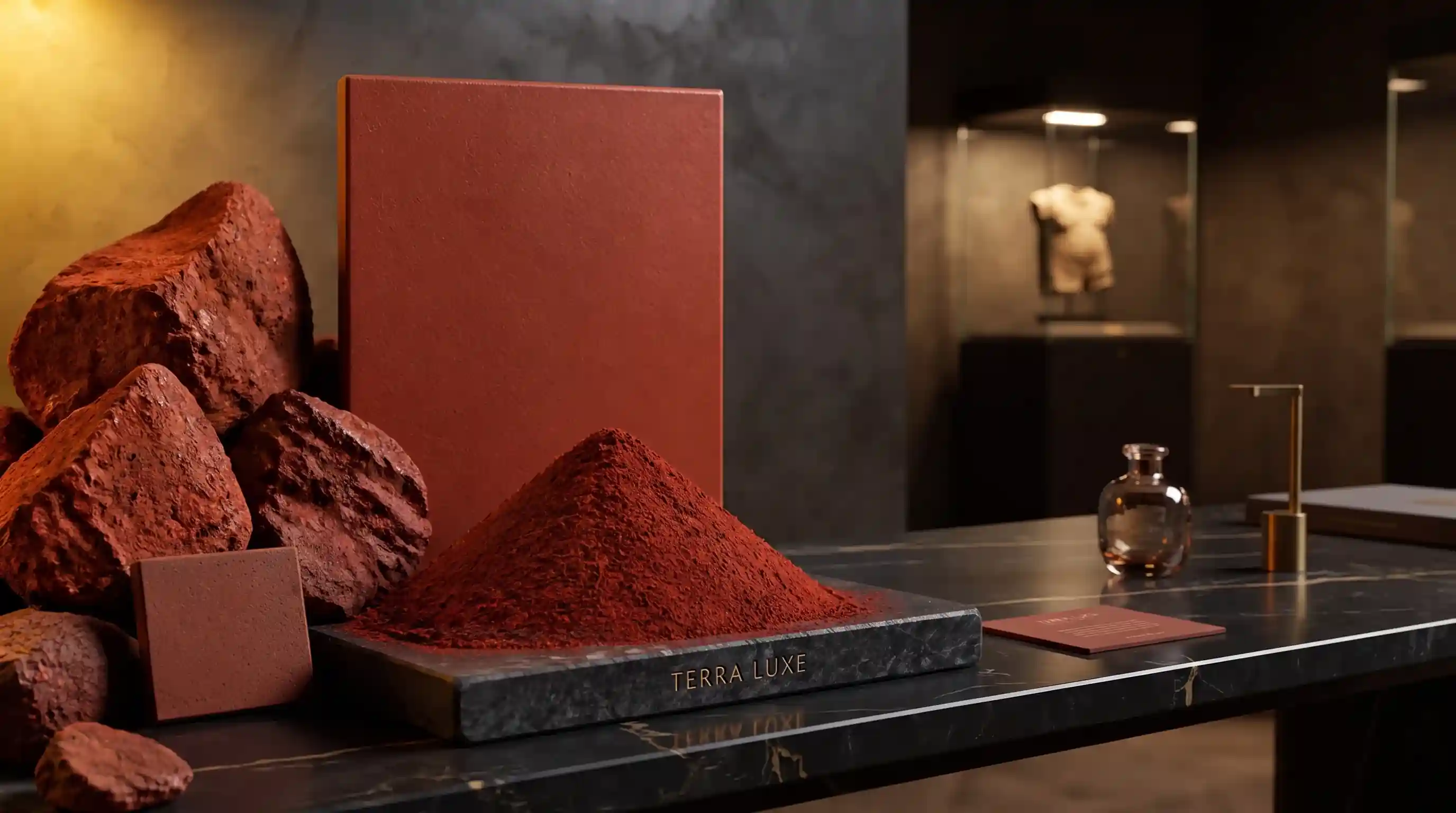
Effective Additives in Improving the Dispersion of Red Iron Oxide (Ochre)
Using mechanical equipment is not the only solution to achieve ideal dispersion; rather, using chemical additives plays a complementary and crucial role. Wetting agents, ionic and non-ionic dispersants, and anti-settling agents are among the compounds that can help stabilize the red iron oxide (ochre) suspension.
By reducing the surface tension between solid particles and the liquid phase, these materials prevent particles from re-adhering to each other. In solvent-based or water-based formulations, choosing a dispersant compatible with the 450 to 1500 mesh range reduces the system's viscosity at high solid percentages.
Observing the optimal dosage of these additives is very important; their excessive consumption can lead to a drop in mechanical properties, delayed drying, or problems with the adhesion of the final layer. Therefore, lab-scale trials before mass production are always recommended.
Optimal Industrial Equipment and Methods for Enhancing Dispersion Quality
Choosing the appropriate industrial equipment is the final link in the chain to achieve the best result in dispersing red iron oxide (ochre). Depending on the industry type (paint, coating, ceramic, or cement), equipment such as bead mills, disperser blades, and high-pressure homogenizers are employed.
Adjusting the peripheral speed of the blades, controlling the process time, and monitoring the temperature of the mixing tank are key factors in preventing system degradation or re-agglomeration of particles. Also, using appropriate filtration systems after the dispersion stage ensures that no agglomerated particles or coarse impurities remain in the final product.
The Amiran Stone Mining Project, by providing red iron oxide (ochre) in the standard mesh range of 450 to 1500, has provided a suitable platform for manufacturers to create the highest quality in their final products by relying on high-quality raw materials and applying correct dispersion techniques.
| Question | Answer |
|---|---|
| What are the applications of red iron oxide (ochre)? | This material is used for pigments, coatings, cement, and ceramic products. |
| What is the mesh range of red iron oxide (ochre)? | This product is supplied in the range of 450 to 1500 mesh. |
| Why is dispersing red iron oxide (ochre) important? | Proper dispersion prevents agglomeration, color change, and reduction of opacity in the final product. |
| How can red iron oxide agglomerates be broken? | Using high-shear mixers, bead mills, and effective wetting additives is helpful. |
| Is this material used in colored brick production? | Yes, it is used as a color pigment in brick and building materials. |
| What equipment is suitable for dispersing this powder? | Ball mills, bead mills, and industrial homogenizers are suitable options. |
| What is the role of additives in dispersion? | Additives reduce surface tension and prevent particles from re-adhering to each other. |
| Which entity is the manufacturer of this product? | Amiran Stone Mining Project — Mineral Producer. |
| Is this pigment also used in the glass and paper industries? | Yes, it is used as a coloring agent and property improver in these industries. |
| How can this product be procured? | It can be ordered through the dedicated product page on the Amiran Stone website. |
Amiran Stone Mining Project — Mineral and Industrial Producer (ksamiran.ir)
برچسب: Red Iron Oxide (Ochre),How to Improve the Dispersion of Red Iron Oxide (Ochre)?,
نویسنده: رساوب آفرین