
درباره سایت
آخرین مطالب
- چگونه مشخصات فنی تالک صنعتی را بررسی کنیم؟
- Introduction to the Largest Mines for Extraction and Processing of White Barite
- دليل الاستشارة المهنية لشراء كربونات الكالسيوم
- Golden Tips for Choosing the Right Silica for Your Production Line
- Investigating the Effect of Moisture on the Final Quality of Industrial Barite
- The Role of Silica in Improving the Rheological Properties of Industrial Materials
- The Impact of Micronized White Barite Granulation on Final Product Quality
- بررسی تاثیر رطوبت بر کیفیت نهایی باریت صنعتی
- Examination of Industrial Barite Prices and Factors Affecting Its Valuation
- Review of Kaolin Application in Cement and Concrete Production Industries
امکانات وب
Introduction to the Importance of Chemical and Physical Analysis of Dolomite
In today's mode industries, a precise understanding of minerals and awareness of their properties is the foundation for success in production processes. The mineral dolomite, as one of the most widely used double carbonates of calcium and magnesium, holds a special place in various industries. To make optimal use of this material, a careful review of its analysis specification sheet is vital. This sheet contains critical data regarding purity, chemical composition, and physical properties that directly affect the quality of the final product.
A correct understanding of this data helps engineers and purchasing managers select the appropriate raw materials and prevent financial losses and quality degradation. To lea more about why this material is important, it is recommended to read the article Why Kani Sang Amiran Dolomite is the Industry's Best Choice. In this section of the article, we begin the jouey of leaing how to read the analysis sheet of this valuable material.
The Kani Sang Amiran group has paved the way for industries by providing consulting and purchasing services. Reviewing the analysis sheet is not just a technical necessity, but a tool for cost optimization. As stated in other discussions such as economic mineral assessments, pre-purchase awareness plays a key role; much like the topic Why Online Dolomite Inquiry is More Cost-Effective, which has transformed the procurement process.
In the remainder of this article, we will scrutinize the various aspects of reading the analysis sheet for this product so that you can make the best engineering and purchasing decisions with complete confidence and maximize the productivity of your production lines.
The Key Role of Dolomite in the Glass, Ceramic, and Construction Materials Industries
Understanding the industrial applications of dolomite helps significantly in correctly interpreting the numbers and figures found in its analysis sheet. With its balanced composition of calcium and magnesium, this mineral plays an unparalleled role in the glassmaking industry. The presence of magnesium in its structure improves chemical stability and resistance to thermal shock in glass products. Therefore, the percentage of metallic oxides in the analysis sheet is of vital importance to glassmakers.
In the ceramic industry, this material acts as a flux or lubricant, adjusting the firing temperature of glazes and ceramic bodies. In this application, the level of impurities such as iron oxide must also be at the lowest possible level so that the final product color does not become discolored or dull. Furthermore, in construction materials, this mineral compound is widely used as a filler and reinforcing additive, where its physical properties guarantee the quality of the structure.
Attention to the mesh range is very important in these industries. For instance, proper grain sizing in construction materials and ceramics directly influences the mechanical and rheological properties of the product. By carefully reviewing these items alongside other minerals, engineers can create more optimal formulations. To better understand the effect of additives on material stability, reading the article How Coated Calcium Carbonate Helps Thermal Stability of Polymers? will also be beneficial.
Ultimately, matching the analysis specifications with the specific needs of each industry ensures the flawless performance of the mineral in the production line and prevents capital waste.
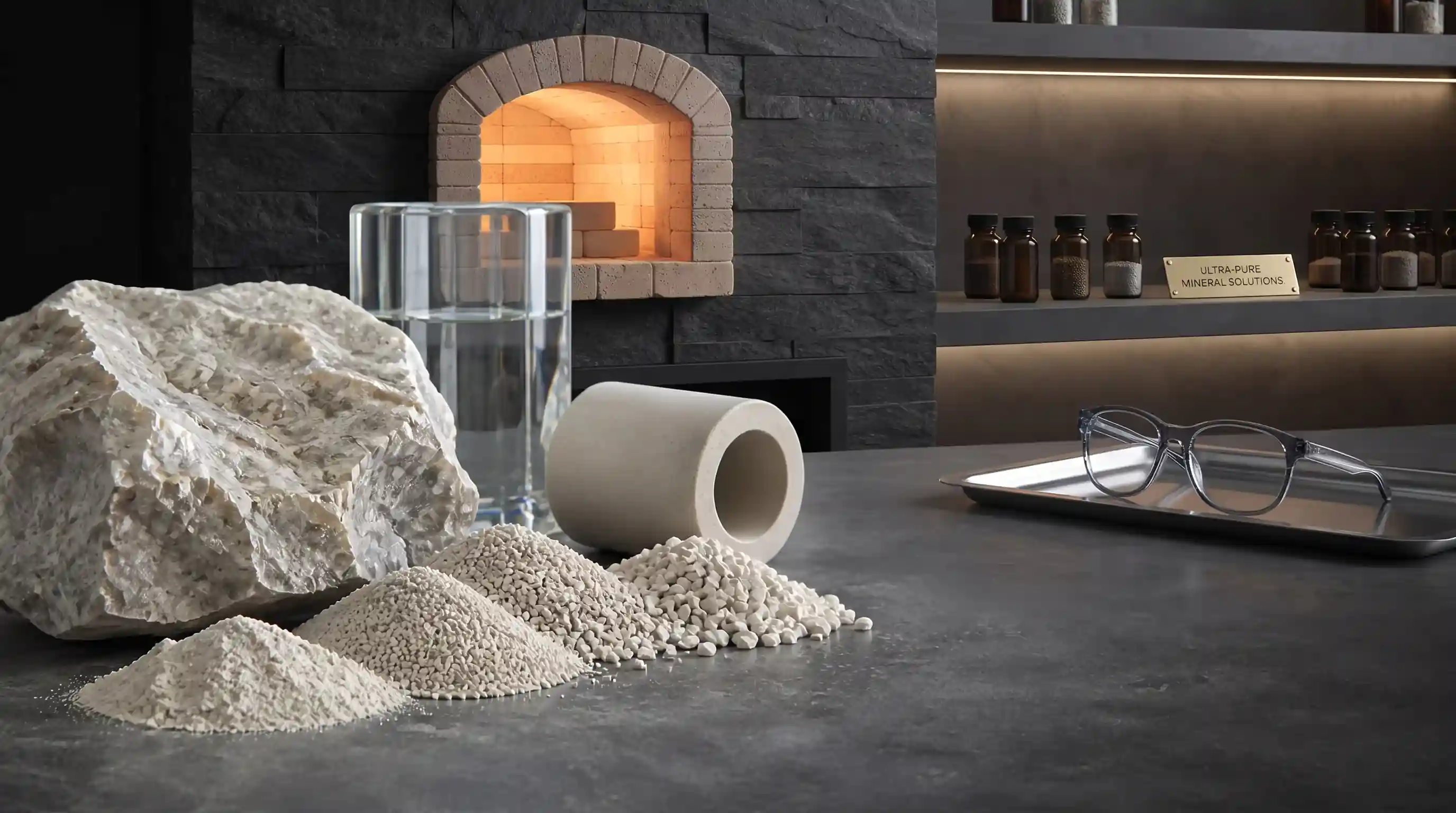
Reviewing Primary Chemical Parameters in the Dolomite Analysis Sheet
When you examine the chemical analysis sheet of this mineral, you encounter a set of primary oxides, each indicating the percentage of specific elements present in the rock structure. Calcium oxide (CaO) and magnesium oxide (MgO) are the primary components of this material. The ratio of these two oxides to each other determines the grade and purity of the material. In a standard, high-quality sample, the values of these two compounds must be within specific and stable ranges.
In addition to calcium and magnesium, the presence of certain unwanted elements or impurities is reported in the analysis sheet, the control of which is very important. Iron oxide (Fe2O3) is one of the most important of these impurities, high levels of which can cause unwanted color (especially yellowing or darkening) in glass and ceramics. Therefore, sensitive industries always seek very low levels of iron oxide in the chemical analysis.
Other oxides such as silica (SiO2), alumina (Al2O3), and titanium oxide may also be seen in the analysis sheet in small amounts. The sum of these impurities along with the Loss on Ignition (LOI) provides a complete picture of the material's purity. By comparing these numbers with industrial standards, the quality of the received shipment can be easily evaluated.
Mastery of reading these percentages allows buyers to ensure compliance with their production unit's inteal standards before unloading the shipment at the factory, preventing quality problems in the final product.
Understanding the Concept of Mesh Sizing and the Importance of the 10 to 40 Mesh Range
The physical specifications of this product are as important as its chemical specifications. Grain sizing or particle size determines the behavior of the material in industrial mixtures. The mesh range provided for this product is between 10 and 40 mesh. Understanding the mesh system helps us know how fine or coarse the material particles are and what volume of standard sieves they pass through.
The 10 to 40 mesh range indicates grains with medium to coarse dimensions, suitable for applications such as construction materials, preparation of certain industrial fuaces, and specific manufacturing industries. Particles in this range have minimal dust and have appropriate flowability in material handling equipment. This physical feature allows the weighing and mixing process to be performed with higher precision.
When reading the analysis sheet, the Particle Size Distribution (PSD) section shows what percentage of particles fall within the 10 to 40 mesh range. Uniformity of this grain size is vital for maintaining consistent quality in the final glass and ceramic product. Particles that are too fine or too coarse outside this range can disrupt the melting or firing process.
Therefore, quality control experts should always perform periodic grain size tests on received shipments to ensure the product matches the requested physical specifications exactly and that the production line does not face challenges.

Loss on Ignition (LOI) and Moisture Levels in the Analysis Sheet
One of the key yet lesser-known parameters in the analysis sheet of carbonate minerals is the Loss on Ignition parameter (abbreviated as LOI). This factor indicates the amount of weight loss in the sample after intense heating in laboratory fuaces. In this process, the carbon dioxide (CO2) present in the carbonate structure is released and escapes as gas.
The LOI level in this mineral is significant due to its chemical structure and shows how much of the raw material is converted into active oxides after firing in the fuace. Knowing this amount is very important for engineers designing glass and ceramic firing fuaces, as changes in material weight and volume due to heat must be included in thermodynamic calculations and industrial formulations.
In addition to loss on ignition, the surface moisture level in the product is also mentioned in the physical specifications sheet. High moisture can cause powder clumping, problems in pneumatic systems, and weighing errors in the production line. Precise control of these parameters ensures that the mineral reaches the consumer in ideal conditions.
By carefully reviewing these two indicators, LOI and moisture, production managers will be able to calculate the amount of actual effective material per toage and avoid paying extra costs for water or evaporable gases.
How Do We Ensure the Accuracy and Credibility of the Provided Analysis Sheet?
In the mineral market, access to an accurate and credible analysis sheet is one of the constant challenges for consumer industries. A standard analysis sheet must be prepared by reliable laboratories equipped with advanced equipment such as X-Ray Fluorescence (XRF) and X-Ray Diffraction (XRD). Checking losses, the laboratory name, sampling date, and production batch number are signs of an analysis sheet's credibility.
Professional buyers should not rely only on the general numbers on paper; they should perform random sampling of received shipments and compare the results with the initial analysis sheet. This helps create a stable quality control system and prevents losses caused by purchasing substandard materials. The Kani Sang Amiran project has made this path clear for industries by providing transparent information.
Furthermore, matching the declared mesh range with the physical sample received using standard laboratory sieves is a simple but very effective method for verifying the physical specifications of the product. In case of observing discrepancies between the analysis and the actual cargo, follow-up through the sales and technical units of the supplier company is mandatory.
Finally, choosing reputable suppliers who are fully committed to providing high-quality products that meet technical specifications is the best way to ensure the accuracy of analyses and the stability of industrial processes.

Guide to Matching Analysis Specifications with Industrial Procurement Standards
After carefully reviewing all chemical and physical parameters, the next step is to match this data with the organization's procurement standards. Each industry, depending on the type of its final product, defines specific tolerances for different elements. For example, flat glass manufacturing industries may require a specific percentage of magnesium that differs from ceramic or construction material production industries.
At this stage, the buyer must place their inteal technical specification table alongside the product's analysis sheet and compare all clauses. Items such as purity percentage, amount of harmful impurities like iron, and mesh distribution (10 to 40 mesh) must be completely within the allowed range. Any deviation outside the tolerance can jeopardize final production quality.
Communicating directly with the supplier's technical and support team can be very helpful in resolving potential ambiguities. Sales and technical experts can provide the necessary guidance regarding optimization of consumption and compatibility of the mineral with production line conditions. This two-way interaction will lead to more informed purchasing and higher productivity.
Therefore, reading the analysis sheet carefully is not just an administrative process, but a strategic step in the supply chain that guarantees a competitive advantage and final product quality.
Conclusion and Summary Regarding Smart Selection of Minerals
In this comprehensive article, we reviewed all aspects related to reading and interpreting the analysis specification sheet for this product. From understanding the chemical composition and primary oxides to understanding the importance of physical parameters such as mesh range (10 to 40 mesh) and loss on ignition, each plays a key role in the success of industrial processes in the fields of glass, ceramics, and construction materials.
Awareness of these technical details allows industries to select their raw materials with the highest precision and avoid quality problems and additional costs. Transparency in providing information from reputable manufacturers like the Kani Sang Amiran project brings peace of mind to engineers and purchasing managers to make the best decisions.
By observing the points mentioned in this guide, you can professionally analyze the analysis sheet for any shipment and evaluate its compliance with industrial standards. This scientific approach to raw material procurement will be a solid foundation for improving the quality of final products and improving the productivity of production lines.
We hope this article has been able to provide a clear perspective on the importance and how to read the analysis specifications of this valuable mineral and be a useful guide for your industrial activities.

| Question | Answer |
|---|---|
| What is dolomite and what are its applications? | It is a carbonate mineral of calcium and magnesium that is widely used in the glass, ceramic, and construction materials industries. |
| What is the product's mesh range? | This product is offered in a mesh range of 10 to 40 mesh. |
| Why is reviewing the chemical analysis sheet important? | To ensure purity, the amount of primary oxides, and control of impurities such as iron in the production line. |
| What is the importance of magnesium oxide in glassmaking? | It improves the glass's resistance to thermal shock and chemical stability. |
| What effect does iron oxide impurity have? | High levels can cause poor color and darkening in glass and ceramics. |
| What is the LOI parameter? | It indicates the loss on ignition and the amount of carbon dioxide gas released after heating the sample. |
| How can we ensure the accuracy of the analysis? | Through reliable XRF laboratories and random sampling of the delivered cargo. |
| What effect does moisture have on powder quality? | High moisture causes clumping and creates problems in weighing and material handling systems. |
| Does this material play a role in construction materials? | Yes, it is used as a filler and reinforcing additive in construction materials. |
| How can one inquire about the price of this product? | Through online inquiries and communication with reputable Kani Sang Amiran sales units. |
Specialized economic geology resources and industrial mineral analysis standards.

برچسب: Dolomite,How to Accurately Read Dolomite Analysis Specifications,
نویسنده: رساوب آفرین