
درباره سایت
آخرین مطالب
- آنالیز و ویژگیهای تالک صنعتی: عوامل تعیینکننده کیفیت
- معايير تدرج التلك الأبيض للاستخدامات المختلفة في الصناعات
- کاربرد تالک صنعتی در تولید سرامیک و کاشیسازی چیست؟
- Applications of White Calcium Carbonate Powder in Various Industries
- الفرق بين التلك الصناعي والبنتونيت: أيهما مناسب لتطبيقك؟
- White Talc vs. Dolomite: A Comparison of Applications and Prices in Industry
- كيف تختار السيليكا المناسبة لصناعتك؟ دليل شامل
- How to Choose the Right Silica for Your Industry? A Complete Guide
- ما هي السيليكا؟ الدليل الشامل لتطبيقات هذه المادة المعدنية في الصناعات المختلفة
- What is Silica? A Comprehensive Guide to the Applications of This Mineral in Various Industries
امکانات وب
Introduction to Silica and Its Position in the Construction Industry
Silica, with the chemical formula SiO2, is one of the most abundant mineral compounds in the Earth's crust; a compound that, after oxygen, accounts for the largest share of the Earth's crust's weight. This material is found naturally in the form of quartz, silica sand, tripoli, and diatomite, and due to its stable crystalline structure, high hardness, and exceptional chemical resistance, it has become one of the most important raw materials in mode industries. In recent years, silica has become a strategic material in the supply chain of the glassmaking, ceramics, foundry, and building materials industries.
In the construction industry, silica plays a role both as a primary raw material and as a mineral filler in the formulation of various products. From concrete sand and construction aggregates to architectural glass, tiles, sanitary ceramics, and foundry parts, all are produced with this mineral. The extent of silica's application is such that it can be called, without exaggeration, the backbone of industrial minerals.
Historically, the use of silica dates back thousands of years; silica sand was the first material humans used to make stone tools, pottery, and glass. Today, advances in mineral processing technology have enabled the production of silica with very precise purity and particle size distribution, opening new horizons in the construction industry. Kani Sang Amirani Project, a producer of mineral materials, offers high-quality silica in the 10 to 450 mesh range for various applications. This product is introduced for glassmaking, production of foundry products, ceramic products, and building materials.
In this article, we intend to comprehensively examine the technical and economic benefits of silica in the construction industry and introduce iovative solutions for utilizing this mineral. In the following, we will review the technical features, industrial applications, and the role of silica in improving the quality of final products:
- Glassmaking: production of various types of architectural glass, containers, and glass fibers
- Ceramics: tiles, sanitary ceramics, and technical ceramics
- Foundry: molding and production of metal and industrial parts
- Building materials: concrete, mortar, artificial stones, and mineral additives
Technical Characteristics of Silica and the Importance of Particle Size Distribution in Industrial Applications
In nature, silica is found in the form of quartz, tridymite, and cristobalite crystals, with quartz being the most stable and common form in industrial applications. From a technical perspective, silica has a hardness of 7 on the Mohs scale, a density of about 2.65 g/cm³, and a melting point of approximately 1710°C. These characteristics, combined with high resistance to abrasion, erosion, thermal shock, and chemical attack, make silica an ideal material for harsh industrial environments.
One of the most important factors determining the quality of silica in industrial applications is its particle size distribution or "mesh". The 10 to 450 mesh range offered by Kani Sang Amirani Project includes a wide range of coarse to micronized particles, and each industrial sector requires its own specific grading. For example, the glassmaking industry requires uniform grading with fine particles to increase reactivity and melting uniformity, while the foundry industry requires controlled grading for proper mold permeability.
In addition to particle size distribution, silica purity is also a vital factor. The SiO2 content and impurities such as iron oxide, alumina, and organic compounds have a direct impact on the color, transparency, and quality of the final product. For instance, in clear glass production, the presence of iron causes a green or blue tint in the glass, which is why glassmakers use silica with the lowest possible iron impurity. In ceramics and foundry, controlling impurities also contributes to the strength and quality of the product.
Particle shape also affects the final application of silica. Round and spherical particles have better flowability and perform better in foundry molding and polymer mixtures, while angular particles are more effective in adhesion to the cement and resin matrix. For this reason, silica producers control the particle characteristics of their products based on the needs of the target industry.
- High hardness and suitable abrasion resistance for floors and abrasive materials
- Chemical stability against most acids and bases
- Refractoriness and thermal resistance for foundry and glassmaking applications
- Whiteness and color brightness in high purity for ceramics and glass
- Availability and low cost compared to alteative materials
In summary, the combination of silica's inherent characteristics with precise control of particle size distribution and purity enables the optimal use of this mineral in various industrial processes. This is actually the starting point of the benefits that we will examine in detail in the following chapters.
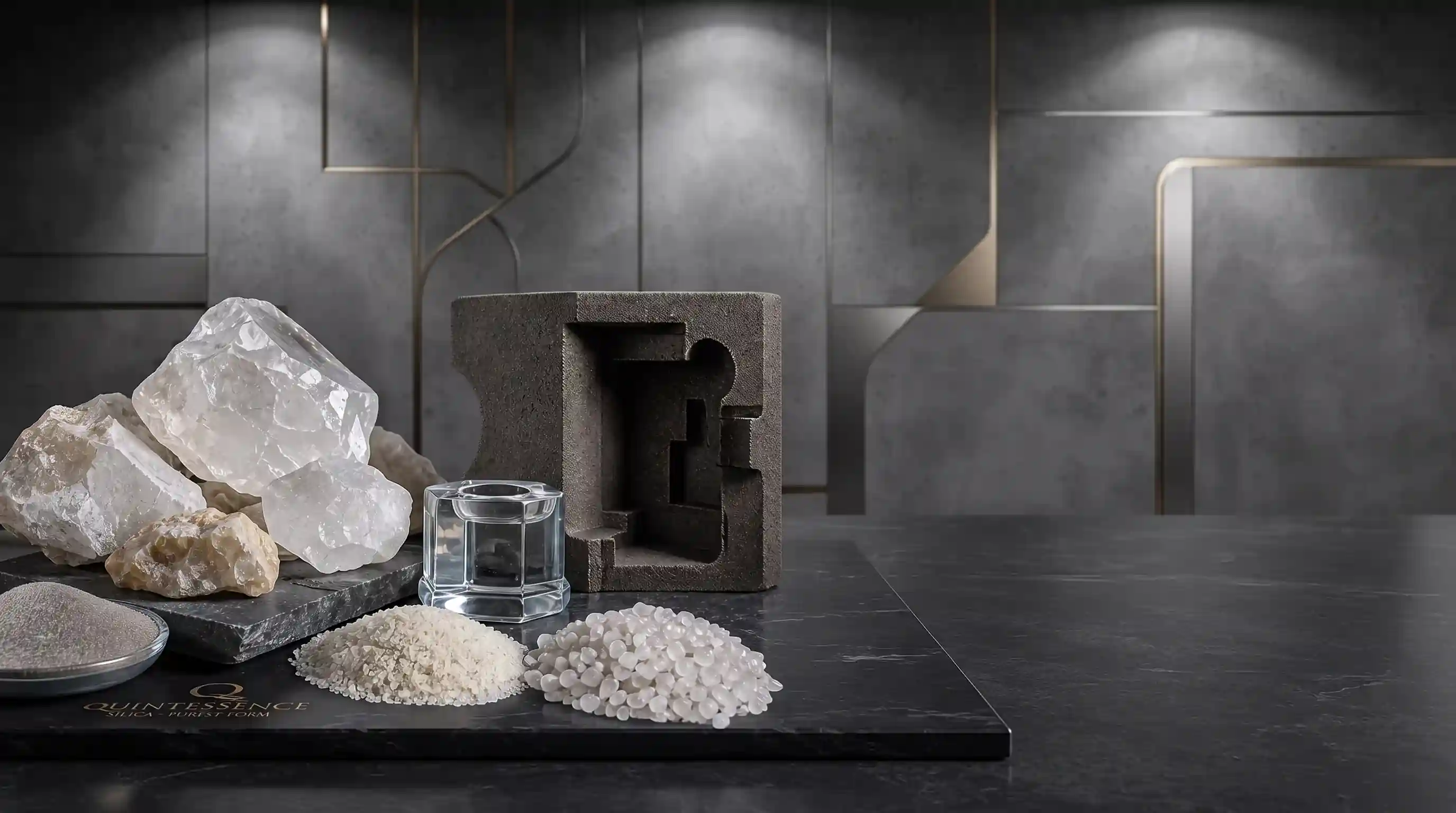
Application of Silica in the Glassmaking Industry and Architectural Glass Products
Glass is essentially a silica-based product; so much so that SiO2 makes up more than 70% of the composition of ordinary glass. The crystalline network of silica creates an amorphous (glassy) structure upon melting, which gives glass its transparency, hardness, and thermal stability. For this reason, the glassmaking industry is the largest consumer of silica in the world, and without this mineral, glass production would be virtually impossible.
In the construction industry, glass produced from silica has extensive applications: double-glazed windows for thermal and acoustic insulation, safety and shatterproof glass for building security, tinted and mirrored glass for facades and interior decoration, frosted and decorative glass for partitioning, and glass fibers for thermal insulation and polymer reinforcement. Each of these products requires a specific particle size distribution and purity of silica.
The quality of the silica used has a direct impact on the final glass quality. Fine and uniform particles melt faster and help reduce energy consumption in fuaces. Also, reducing iron impurities increases glass transparency and prevents unwanted colors. High-quality architectural glass made from premium silica has a longer lifespan against ultraviolet radiation, humidity, and temperature fluctuations.
On the other hand, glass recycling (cullet) is actually the retu of silica to the production cycle, and this doubles the environmental importance of silica. Recycled glass is crushed and enters the fuace as cullet, helping to reduce primary silica and energy consumption. For green buildings, recycled glass is more sustainable and environmentally friendly, and has a positive impact on green building ratings (LEED and similar).
- High transparency and the ability to produce thin and strong glass
- Suitable thermal and acoustic insulation for double-glazed windows
- Resistance to weathering, humidity, and UV radiation
- Full recyclability and retu to the production cycle
Given these benefits, high-quality, graded silica is the foundation of mode architectural glass production, and choosing the right supplier for this mineral plays an important role in the final quality of glass products.
The Role of Silica in the Foundry Industry and Production of Building Components
In the foundry industry, silica sand is the most widely used material for making molds and cores. The reason for this is a unique combination of refractoriness, hardness, grain shape, and affordable price that gives silica sand an advantage over other molding sands. Foundry molds must withstand molten metal at very high temperatures and yet be easily separated from the part after the metal solidifies; characteristics that silica provides well.
In the production of foundry products used in the construction industry, parts such as pipe fittings, valves, pump bodies, building hardware, machinery parts, and industrial equipment are produced using silica molds. The quality of the silica used has a direct impact on the surface finish of the final part, dimensional accuracy, and the reduction of casting defects such as gas, porosity, and thermal cracks.
Grain shape and particle size distribution are two key factors in the performance of silica sand. Round and spherical grains give the mold better permeability and prevent gases from being trapped in the molten metal. Also in the industry, silica sand is combined with binders such as clay, resin, or sodium silicate to increase mold strength. For a deeper understanding of this topic, reading the article The Importance of Silica Grading in Glass and Foundry Industries is recommended.
In addition to its direct application in molding, silica also plays a role in electric arc fuaces and ferroalloy production. In the cast iron and steel production process, silica is known as one of the main components of slag and a controlling agent for the chemical composition of molten metal. Also in the production of ferrosilicon, which is itself an important metallurgical additive, silica is the primary raw material. These applications show that silica has a strong presence not only in final building materials but also in the supply chain of industrial parts production.
- High refractoriness and resistance to molten metals
- Usability in various molding systems (clay, resin, sodium silicate)
- Reduction of casting defects and improved part surface quality
- Low cost and availability on an industrial scale
Therefore, silica with controlled particle size distribution is a key material for the foundry industry, and choosing it correctly can significantly improve the quality of cast parts needed by the construction and facilities industries.

Silica in the Ceramic Industry and Architectural Ceramic Products
Ceramics are mineral materials in the structure of which silica plays a foundational role. The combination of quartz (silica), kaolin (aluminum silicate), and feldspar forms the classic formulation of a ceramic body. In this combination, silica acts as the strengthening skeleton, kaolin provides adhesion and plasticity, and feldspar acts as a flux (glass former). The silica product offered by Kani Sang Amirani Project is a suitable raw material for this class of products.
In the construction industry, ceramic products include floor and wall tiles, sanitary ware (sinks, toilets, and bathtubs), decorative and architectural ceramics, electrical insulators, and technical ceramics used in building installations. In all these products, silica has a direct impact on mechanical strength, abrasion resistance, thermal and chemical resistance, and glaze quality.
Silica is also the main material in ceramic glazes. Glazes are actually thin glasses that are fired onto the ceramic surface, and silica gives them transparency, hardness, and resistance to humidity and chemicals. The quality of the silica used in the glaze determines the smoothness, gloss, and uniformity of the product's final surface. Also in ceramic tiles, the shrinkage and porosity after firing depend on the particle size distribution and purity of the silica.
Alongside silica, other minerals also play a role in ceramics and building coatings; for example, kaolin is another widely used material in this industry, which is specifically examined in the article Benefits of Using Kaolin in Architectural Paints. The smart combination of silica with other minerals enables achieving desired engineering properties in architectural ceramic products.
- High strength and resistance to abrasion and impact
- Thermal resistance and application in high-thermal-stress environments
- High glaze quality and visual beauty of the final product
- Compatibility with other minerals in body formulation
As a result, high-quality silica not only increases the strength and durability of architectural ceramic products but also plays an important role in the beauty and visual quality of interior and exterior building spaces.
Application of Silica in the Production of Building Materials and Mineral Additives
The largest consumer market for silica in the construction industries is the production of building materials. Silica sand is one of the three main components of concrete (alongside cement and coarse aggregates) and is used in mortars, plaster, bricks, artificial stones, and a wide range of other products. Silica's characteristics, such as hardness, grain shape, and lack of harmful reactivity with cement, make it a strengthening agent in concrete.
One of the advanced applications of silica in concrete is the use of microsilica or "silica fume"; very fine silica particles used as a pozzolanic additive in high-strength and high-performance concrete. The reaction of active silica with calcium hydroxide released from cement hydration leads to the formation of additional calcium silicate hydrate phase and a significant increase in compressive strength, durability, and resistance to sulfate and chloride attacks. These concretes are used in bridges, tuels, towers, and high-rise structures.
In the production of artificial stones and engineered quartz, silica is also the main material; the combination of silica particles with resins and colors creates a surface resistant to scratches, stains, and heat, which is used in cabinets, floors, and building facades. Also in the paint and building coatings industry, micronized silica is used as a reinforcing filler; an application that sits alongside other mineral fillers such as coated calcium carbonate (examined in the article Economic Benefits of Using Coated Calcium Carbonate in Manufacturing).
In the production of bricks, pottery, and dry building products, silica is the controlling agent for shrinkage, porosity, and strength. In restoration and historic mortars, silica sand also plays an important role in the renovation of historic monuments due to its compatibility with traditional materials. Given the variety of applications, choosing the right particle size distribution and silica purity has a direct impact on the performance of the final product.
- Concrete sand and high-quality aggregates for reinforced concrete structures
- Pozzolanic additives (microsilica) for high-strength and durable concrete
- Artificial stones and engineered quartz for building floors and facades
- Mineral filler in paints, adhesives, and building coatings
With this wide range of applications, silica has become one of the most important mineral materials in the construction industry, and access to high-quality silica with diverse particle size distributions provides a significant competitive advantage for producers.
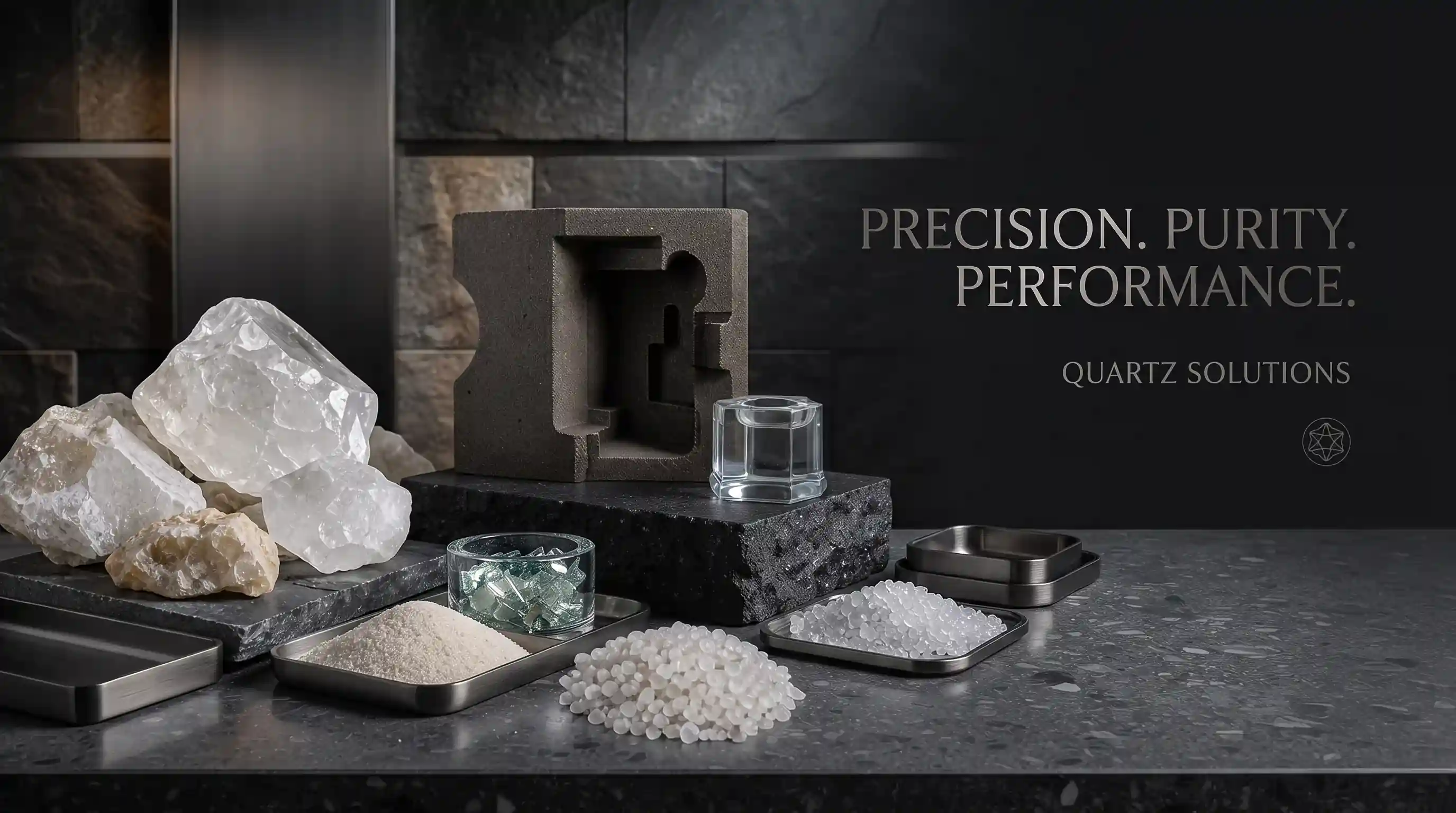
Economic and Environmental Benefits of Using Silica
One of the most important reasons for the widespread use of silica in the construction industries is the economic advantage of this mineral. Silica is found abundantly in many parts of the world, and its extraction and processing require less investment compared to other industrial minerals. This makes the cost of building products based on silica much more competitive compared to synthetic and imported alteatives.
From a technical-economic perspective, using high-quality silica increases the lifespan of products and reduces building maintenance and repair costs. For example, concrete containing microsilica has a much higher service life in corrosive environments and reduces the need for costly repairs. Similarly, glass and ceramics produced from high-quality silica show greater resistance to weathering, abrasion, and erosion, and their replacement cycle is longer.
From a sustainability perspective, silica is a fully mineral, non-toxic, and recyclable material. Recycling glass and reusing silica sand in production processes helps reduce natural resource consumption and greenhouse gas emissions. Also, silica combined with other local minerals can be a suitable alteative to expensive imported chemical additives, contributing to the development of domestic industries and value creation.
Also in the supply chain, using multi-purpose minerals reduces inventory, simplifies procurement, and lowers logistics costs for construction projects. Combining silica with other mineral fillers in product formulations can lead to reduced production costs and improved final product properties. Choosing a supplier that offers a wide range of particle size distributions enables manufacturers to meet the different needs of their production lines without changing their supply source.
- Low cost and wide availability
- Increased product lifespan and reduced maintenance costs
- Non-toxic, mineral, and fully recyclable
- Reduced dependence on imported chemical additives
Together, these benefits make silica a smart and sustainable choice for the construction industries; a material that supports both the financial health of projects and the environmental goals of mode construction.
Iovative Solutions for Using Silica and Conclusion
In recent years, advances in nanotechnology and advanced materials have opened new horizons for using silica in the construction industry. Nanosilica is one of the outstanding iovations in this field; silica particles at the nanometer scale used as an additive in concrete, mortar, and coatings. Research shows that nanosilica can significantly increase the compressive strength of concrete by filling microscopic pores and accelerating pozzolanic reactions, while reducing its porosity and permeability.
Another iovative solution is the development of high-performance concrete (HPC) and self-compacting concrete (SCC) using a combination of microsilica and chemical additives. These concretes are used in the construction of high-rise structures, bridges, and industrial facilities, and due to their high durability in harsh environments, they increase the structure's lifespan. Also, 3D building printing technology relies on silica and sand with controlled particle size distribution as its base material.
In the field of glass, new technologies such as smart glass, which controls light and heat transmission by changing temperature or voltage, and self-cleaning glass with nanostructured coatings, are being developed. All these products are silica-based and show that this simple mineral remains at the heart of the construction industry's iovations.
Conclusion: Silica, with its unique characteristics — hardness, chemical stability, refractoriness, and abundance — has become a key material in the glass, foundry, ceramics, and building materials industries. Choosing high-quality silica with appropriate particle size distribution has a direct impact on the quality, durability, and cost of final products. Silica in the 10 to 450 mesh range, produced by Kani Sang Amirani Project, is a reliable option for various industries.
- Use of nanosilica and microsilica in advanced concretes
- Development of smart glasses and nanostructured coatings
- 3D printing of silica-based building materials
- Combining silica with other minerals for optimal formulation
With a comprehensive understanding of the benefits and iovative solutions for using silica, manufacturers and builders can make more informed decisions regarding the supply of raw materials for their projects and improve the quality, durability, and value of their building products.
| Question | Answer |
|---|---|
| 1. What is silica? | Silica, with the chemical formula SiO2, is one of the most abundant mineral compounds in the Earth's crust, found naturally in the form of quartz and silica sand. |
| 2. What are the main applications of silica? | Silica is mainly used in glassmaking, foundry products, ceramic products, and building materials. |
| 3. What is the mesh range of silica offered by Kani Sang Amirani Project? | This product is offered in the 10 to 450 mesh range, which includes a wide spectrum from coarse to micronized particles. |
| 4. Why is silica particle size distribution important in industries? | Grading determines melting uniformity in glassmaking, mold permeability in foundry, and strength in ceramics and concrete. |
| 5. What is the role of silica in glass production? | SiO2 makes up more than 70% of glass composition, creating its transparency, hardness, and thermal stability. |
| 6. How is silica used in foundry? | Silica sand is the primary molding material, which due to its refractoriness and hardness, withstands molten metal and improves the surface quality of the part. |
| 7. What role does silica play in ceramic products? | Silica is the strengthening skeleton of the ceramic body and determines strength, abrasion resistance, and glaze quality. |
| 8. What effect does microsilica have on concrete? | Through its pozzolanic reaction, microsilica increases the compressive strength of concrete and reduces its porosity and permeability, which is essential for high-strength concrete. |
| 9. Does silica have high chemical resistance? | Yes, silica is stable against most acids and bases and performs well in corrosive industrial environments. |
| 10. Why is silica economically important in the construction industry? | Abundance, low price, increased product lifespan, and recyclability make silica an affordable and sustainable material. |
The technical specifications and applications of silica in this article are based on the silica product information from Kani Sang Amirani Project (mineral materials producer).
برچسب: Silica,Benefits of Using Silica in the Construction Industry and Iovative Solutions,
نویسنده: رساوب آفرین