
درباره سایت
آخرین مطالب
- آنالیز و ویژگیهای تالک صنعتی: عوامل تعیینکننده کیفیت
- معايير تدرج التلك الأبيض للاستخدامات المختلفة في الصناعات
- کاربرد تالک صنعتی در تولید سرامیک و کاشیسازی چیست؟
- Applications of White Calcium Carbonate Powder in Various Industries
- الفرق بين التلك الصناعي والبنتونيت: أيهما مناسب لتطبيقك؟
- White Talc vs. Dolomite: A Comparison of Applications and Prices in Industry
- كيف تختار السيليكا المناسبة لصناعتك؟ دليل شامل
- How to Choose the Right Silica for Your Industry? A Complete Guide
- ما هي السيليكا؟ الدليل الشامل لتطبيقات هذه المادة المعدنية في الصناعات المختلفة
- What is Silica? A Comprehensive Guide to the Applications of This Mineral in Various Industries
امکانات وب
Introduction to Silica and Its Position in the Construction and Manufacturing Industries
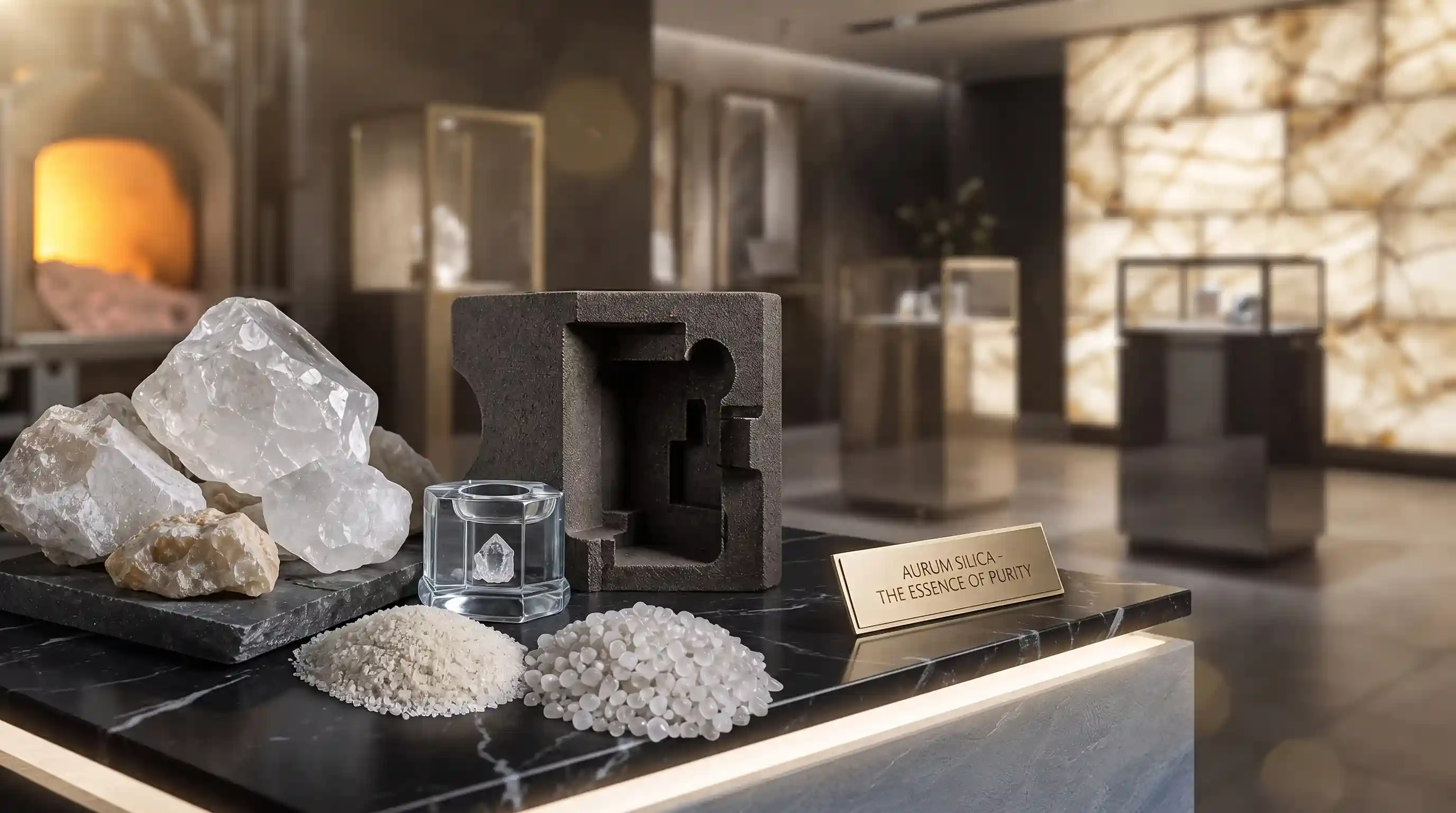
Silica or silicon dioxide (SiO2) is the most abundant oxide compound after oxygen in the Earth's crust, and it is found in nature mainly as quartz, silica sand, and silica-bearing rocks. After extraction from mines, this mineral goes through crushing, washing, drying, and classification into different sizes, becoming a primary and strategic material for dozens of industries. In fact, one caot find a mode industrial production line in whose supply chain silica is not present in some way.
The Kani Sang Amiran Project introduces silica in the 10 to 450 mesh range, with main applications in the glass, casting products, ceramic products, and building materials industries. This wide range — from coarse particles to very fine powder — enables a single mineral material to be used in industries with completely different needs. That is why silica can be called the all-purpose material of industries.
The reason for silica's importance in the construction and manufacturing industries is the combination of the following properties:
- High hardness and appropriate abrasion resistance
- Thermal stability up to very high temperatures
- Chemical resistance against most acids and bases
- Melting capability at defined temperatures and appropriate formability in glassmaking
- Availability and diversity of reserves in Iran
The mesh unit is a criterion for measuring particle size: the larger the mesh number, the finer the particle. For example, 10-mesh silica has coarse, nearly sand-like particles suitable for building materials, while 450-mesh silica is a very fine powder for more delicate applications. This diversity is what distinguishes silica from many other minerals: one material, dozens of applications.
In the remainder of this article, we examine in detail 10 important applications of silica in the construction industries and industrial production lines, so that employers, factory managers, and technical experts gain a better view for choosing the appropriate size and quality: glassmaking, glass containers and utensils, casting, molding sand, ceramics, tiles and chinaware, concrete and building mortar, facade building materials, water filtration, and finally paints, coatings, and industrial fillers.
It should be noted that the purpose of this article is to introduce the industrial applications of silica based on the aounced product specifications, and for the final decision, the technical experts of the Kani Sang Amiran Project can provide the necessary guidance.
Applications One and Two: The Glassmaking Industry and the Production of Glass Containers and Utensils
The glassmaking industry is the largest consumer of silica in the world. The reason for this is silica's role as the network former in the glass structure; that is, silica creates a continuous three-dimensional network which, after melting and cooling, becomes transparent, hard, and durable glass. Without high-purity silica, producing architectural glass, bottles, kitchenware, and technical glasses is practically impossible.
In glass production, silica must usually have high purity, because impurities such as iron oxide cause undesirable coloring of the glass. Silica sand with an appropriate particle size creates more uniform melting in the fuace and optimizes energy consumption. Particles that are much finer or coarser than the standard can affect the final quality of the glass and the fuace's lifespan.
Silica's applications in the glass industry can be examined in two main categories:
- Architectural glassmaking: production of window glass, double-glazed windows, glass facades, and safety glass used in the construction industry.
- Glass containers and utensils: production of bottles, drinking glasses, kitchenware, household items, and technical glassware needed in the pharmaceutical and cosmetics industries.
In addition, special glasses such as heat-resistant glasses and technical glasses also require high-quality silica. Given the growth of the construction industry and the increasing demand for architectural glass in Iran, the importance of supplying silica with standard purity and particle size for glassmaking factories is increasing day by day. For this reason, quality control of silica before it enters the glass production line is one of the most sensitive steps in this industry.
From an economic perspective as well, using silica with an appropriate mesh range reduces waste, lowers fuace energy consumption, and increases the lifespan of melting equipment; therefore, choosing the right silica directly affects the final cost of glass products. This shows why glassmaking factories evaluate silica suppliers against precise standards.
It should also be noted that in glass production lines, the constant chemical composition of silica is more important than any other factor; a sudden change in the composition of raw materials can disrupt the melting process and produce non-conforming products. For this reason, stable supply of silica from a single source is of great value to this industry.
Applications Three and Four: The Casting Industry and the Production of Casting Products
The casting industry is one of the main consumers of silica. In the casting process, metal parts are made in sand molds, and silica — due to its high heat tolerance, appropriate price, and moldability — constitutes the main material of these molds. Silica sand is widely used in molding automotive parts, heavy machinery, valves, and industrial components.
Silica is used in casting in two general forms: fresh molding sand and reclaimed sand. Molding sand must have an appropriate particle size distribution, desirable grain shape, and sufficient purity so that the surface of the final part is smooth and free of defects. Silica particles with a round shape provide better moldability while simultaneously creating proper adhesion with mineral and organic binders.
The most important applications of silica in casting:
- Production of sand molds for iron, steel, and aluminum casting
- Production of sand cores for creating inteal cavities in parts
- Precision casting of sensitive parts with tight dimensional tolerances
- Inteal engine parts, pump bodies, and agricultural machinery parts
In casting products, the quality of silica sand has a direct effect on the final quality of the part; for example, the presence of clay or excessive fine material reduces mold strength and causes surface defects. On the other hand, low-purity sand may react upon contact with molten metal and cause casting defects. Therefore, controlling the gradation and composition of silica in this industry is vital.
Since the casting industry requires high volumes of sand, access to high-quality silica reserves close to the production center is a major economic advantage. The Kani Sang Amiran Project introduces silica in the 10 to 450 mesh range for these types of applications; the middle sizes of this range are usually the most suitable option for casting molds.
Also, recycling molding sand has now become an environmental standard in casting, and high-durability silica enables the reuse of sand over several production cycles, which reduces production costs and limits natural resource consumption.
Applications Five and Six: The Ceramic Industry and Ceramic Products
Ceramics are among the oldest human products, in which silica forms the main base of the body. In the traditional and industrial ceramic industry, silica is combined with feldspar, clay, and other raw materials so that the ceramic body takes shape after firing in the kiln. Silica's role in ceramics is to create structure and thermal strength, and its amount directly affects the strength, durability, and longevity of the final product.
In the production of tiles, building ceramics, sanitary chinaware, and industrial ceramics, silica with an appropriate particle size creates a uniform distribution in the body and reduces shrinkage during firing, increases mechanical resistance, and improves the product's surface. Fine silica powder in high meshes is used in this industry especially for producing technical and refractory ceramics.
Silica's applications in the ceramic industry include the following:
- Floor and wall tiles and ceramics, sanitary chinaware, and sanitary ware
- Technical ceramics, electrical insulators, and wear-resistant parts
- Pottery, decorative ceramics, and dishware
- Ceramic powders for the defense, medical, and electronics industries
In ceramics, controlling silica particles is very important, because the combination of coarse and fine particles must be such that the packing density of the particles is maximized. This reduces porosity, increases strength, and lowers the waste rate in production. In addition, silica in ceramic glaze is used as the main glass-forming material and increases the gloss and hardness of the tile surface.
Iran's tile and ceramic industry is one of the country's largest manufacturing industries, and silica consumption in this sector has always been high. Choosing silica with uniform particles and a stable chemical composition allows tile factories to save on kiln energy consumption and produce products with consistent and long-lasting quality.
Also, in advanced ceramics such as oxide ceramics and semi-refractory ceramics, silica is one of the main components, and its high purity is a necessary condition for achieving special mechanical and thermal properties. For this reason, the 10 to 450 mesh range enables the production of various types of ceramics, from tiles to technical parts.
Applications Seven and Eight: Building Materials, Concrete, and Mortar
The construction and building materials industry is one of the largest consumers of silica. In this sector, silica is mainly used as coarse and medium silica sand with lower meshes. In concrete, mortar, plaster, and artificial stone, silica sand plays the role of a strong and available mineral filler, giving the final product strength, dimensional stability, and durability.
In the production of ready-mix concrete and cement blocks, silica is included as a main component in combination with cement and water. The hardness of silica particles increases the compressive strength of concrete, and their grain shape improves the workability of the mortar. In addition, silica is widely used in the production of artificial stone, mosaics, and cement floorings.
The most important applications of silica in building materials:
- Ready-mix concrete, precast concrete, and cement blocks
- Building mortars, plaster, and wall coatings
- Artificial stone, mosaics, and floorings
- Surface preparation, sandblasting, and cleaning of concrete surfaces
Alongside silica, other minerals also play roles in these industries; for example, in the building materials and plaster sector, minerals such as dolomite and talc also have special applications. If you wish to become familiar with the applications of other minerals in this field, read the article Important Applications of Dolomite in the Construction and Manufacturing Industries and the guide The Role of Industrial Talc in the Plaster and Building Materials Industries.
In large construction projects, the quality of silica sand has a direct impact on the lifespan of the structure. The presence of excessive fine particles or clay impurities can reduce strength and cause cracking in concrete; therefore, observing standard gradation is a technical requirement in the production of building materials. Silica in the 10 to 450 mesh range offers diverse options for this industry.
Also, in the production of various plasters and interior coatings, silica acts as a hard and chemically inert filler, and while maintaining strength, it provides a flat, paintable surface for walls. These characteristics have made silica an unavoidable material in building materials factories, for which no suitable substitute can be found.
Applications Nine and Ten: Water Filtration and the Paint, Coating, and Fillers Industries
One of the well-known applications of silica, which is closely related to health and industry, is water filtration. Silica sand with a defined particle size and shape is one of the most important filtration media in water treatment plants, swimming pools, the food industry, and industrial wastewater treatment. Silica particles, by creating appropriate void space between them, allow water to pass through while trapping suspended particles, silt, and impurities.
Silica's advantages in filtration are its high hardness, chemical resistance, and backwashability. These properties give silica a longer lifespan than many filtration media and reduce the operating costs of water treatment. High-purity silica creates no undesirable reaction with water and is also suitable for drinking purposes.
The tenth application of silica is in the paint, coatings, and industrial fillers industries. In this application, silica acts as a mineral filler and gives the final product strength, hardness, and abrasion resistance. Crushed and micronized silica is used in building paints, industrial coatings, floor coverings, and adhesives.
The most important applications in this sector:
- Drinking water treatment, pool water, and industrial wastewater treatment
- Filler for paints, adhesives, and industrial coatings
- Chemical and petrochemical industries, and the production of chemical ceramics
- Abrasives and surface cleaning in the steel and oil industries
In the paint industry, micronized silica improves light dispersion, increases the hardness of the painted surface, and reduces the final cost. Also, in asphalt production, silica as a hard filler increases the roads' resistance to abrasion and temperature changes. These applications show that silica is present not only in heavy industries but also in everyday consumer products.
Finally, in the oil and gas industries, silica is used in hydraulic fracturing processes and as a well proppant, and it also plays an important role in the production of thermal and chemical insulators. This breadth of applications has tued silica into one of the strategic minerals of industry.
Silica Quality Standards and the Importance of the 10 to 450 Mesh Range
The quality of silica is not limited to chemical purity alone; factors such as particle size distribution, particle shape, color, moisture content, and the composition of impurities all play a role in determining silica's suitability for a particular industry. For this reason, advanced factories have precise standards for evaluating silica and inspect the product in their in-house laboratories before final approval.
One of the most important indicators is particle size, which is measured based on the mesh unit. The higher the mesh number, the finer the particle. For example:
- 10 to 50 mesh silica: suitable for building materials, concrete, and casting applications
- 50 to 150 mesh silica: suitable for ceramics, tiles, and medium applications
- 150 to 450 mesh silica: suitable for glass, paint making, fillers, and precision applications
This classification is general and can differ depending on each factory's process. For this reason, consulting with technical experts before choosing a size is essential. To become more familiar with this topic, you can read the article Silica Quality Standards in Mode Manufacturing Industries.
In addition to particle size, silica's chemical composition is also vital. The purity of SiO2 and the amount of impurities such as iron oxide, aluminum oxide, and calcium determine which industry the silica is suitable for. For example, in transparent glassmaking, the iron content must be very low, while in casting, alumina is acceptable within limited percentages. This diversity of criteria shows that one type of silica caot meet the needs of all industries.
Common quality control methods include chemical analysis, particle size distribution determination, moisture measurement, and visual inspection. A professional supplier provides the results of these tests periodically so that the buyer can be assured the product matches the needs of their production line. This matter is especially important for factories producing export products.
Finally, it should be noted that silica is a natural material and its composition differs from one mine to another. For this reason, stable supply from a known mining project such as the Kani Sang Amiran Project — which offers silica in the 10 to 450 mesh range for the glass, casting, ceramic, and building materials industries — is of great importance in maintaining the quality of final products.
Conclusion and Guide to Choosing the Right Silica
In this article, we examined 10 important applications of silica in the construction industries and industrial production lines: glassmaking, glass containers and utensils, casting, molding sand, ceramics, tiles and chinaware, concrete and building mortar, building materials, water filtration, and finally paints, coatings, and industrial fillers. This list shows that silica is one of the most widely used minerals in everyday life and industry.
To choose the right silica, you should consider three key factors:
- Your industry and production line (glass, casting, ceramics, or building materials)
- The required particle size in the 10 to 450 mesh range
- Chemical purity and the level of permissible impurities for your process
After determining these three factors, you can choose the suitable product with greater confidence. If you need high-quality silica for your production line, you can review the specifications of the silica product at the Kani Sang Amiran Project; this product is introduced for the glass, casting, ceramic, and building materials industries and is offered in the 10 to 450 mesh range.
It is reminded that the choice of silica size and type should be based on the actual needs of the production line, not just the price. Using silica with inappropriate gradation can increase waste, raise energy consumption, and reduce the quality of the final product; whereas a correct choice will bring considerable savings over the years.
It is also recommended to test a sample in your production line before purchasing high toage. This minimizes the risk of quality fluctuations and ensures that the product is fully compatible with your equipment and process. The technical experts of the Kani Sang Amiran Project stand by your side for choosing the appropriate size based on the needs of different industries.
Given the growth of the construction, glass, and ceramic industries in the country, high-quality silica consumption is expected to increase in the coming years, and access to a reliable supply source will be a competitive advantage for manufacturing factories. We hope this guide has helped you gain a better understanding of silica's applications and make the right choice.
| Question | Answer |
|---|---|
| 1. What is silica? | Silica or silicon dioxide (SiO2) is one of the Earth's most abundant mineral compounds, used in the glass, casting, ceramic, and building materials industries. |
| 2. What does the 10 to 450 mesh range mean? | The higher the mesh number, the finer the silica particle. This range shows that the product includes particles from coarse ones suitable for building materials to fine powder suitable for delicate industries. |
| 3. What role does silica play in the glass industry? | Silica is the network former of glass and, after melting with other materials, creates the transparent and durable structure of glass. |
| 4. How is silica used in casting? | Silica sand is used to build casting molds and cores; a mold with high thermal resistance against molten metal. |
| 5. What is silica's role in ceramics and tiles? | Silica is the main base of the ceramic body and provides strength, thermal stability, and reduced shrinkage during firing. |
| 6. How is silica used in concrete and building mortar? | Silica, as a hard mineral filler, increases the compressive strength of concrete and mortar and improves their workability. |
| 7. Is silica suitable for water filtration? | Yes; silica sand is one of the most common water treatment media due to its hardness, chemical resistance, and backwashability. |
| 8. What is the difference between coarse-mesh and fine-mesh silica? | Coarse-mesh silica is mostly used for building materials and casting, while fine-mesh silica is more suitable for glass, ceramics, paint, and fillers. |
| 9. Which factors are important in silica quality? | Chemical purity, particle size distribution, particle shape, moisture, and impurity levels are the most important factors determining silica quality. |
| 10. Where can we obtain silica suitable for different industries? | The silica product of the Kani Sang Amiran Project is introduced in the 10 to 450 mesh range for the glass, casting, ceramic, and building materials industries. |
The information in this article is prepared based on the technical specifications of the silica product of the Kani Sang Amiran Project (mineral materials production).
برچسب: Silica,10 Important Applications of Silica in Construction Industries and Industrial Production Lines,
نویسنده: رساوب آفرین