
درباره سایت
آخرین مطالب
- چگونه مشخصات فنی تالک صنعتی را بررسی کنیم؟
- Introduction to the Largest Mines for Extraction and Processing of White Barite
- دليل الاستشارة المهنية لشراء كربونات الكالسيوم
- Golden Tips for Choosing the Right Silica for Your Production Line
- Investigating the Effect of Moisture on the Final Quality of Industrial Barite
- The Role of Silica in Improving the Rheological Properties of Industrial Materials
- The Impact of Micronized White Barite Granulation on Final Product Quality
- بررسی تاثیر رطوبت بر کیفیت نهایی باریت صنعتی
- Examination of Industrial Barite Prices and Factors Affecting Its Valuation
- Review of Kaolin Application in Cement and Concrete Production Industries
امکانات وب
Introduction to Mode Technologies in Coated Calcium Carbonate Production
Recent advancements in the mining and chemical industries have brought about a profound transformation in mineral processing operations. One of the most significant achievements in this field is the evolution of production and coating methods for micronized powders. Coated calcium carbonate, as one of the most advanced mineral raw materials, has secured a special position in polymer industries. In this article, we intend to examine mode technologies in the production of this valuable product and investigate its role in improving the quality of industrial parts.
Kani Sang Amiran Project, as one of the pioneers in mineral production, utilizes advanced equipment to supply this product with the highest quality. Below, you will become more familiar with the manufacturing technology and technical characteristics of this material.
Mode technologies have not only increased production efficiency but have also improved the surface properties of particles in such a way that the final physical and chemical stability of compounds and polymer products has been remarkably enhanced.
The Coating Process and Mineral Particle Surface Modification
The coating process, or surface treatment of particles, is a vital step in the production of coated calcium carbonate. In this process, micronized powders are coated using chemical agents compatible with polymers (such as fatty acids or stearates). The primary goal of this operation is to reduce the hydrophilicity of the particles while increasing their hydrophobicity and compatibility with polymer matrices.
The use of advanced mixer equipment and continuous coating reactors makes it possible to form a very thin and uniform layer on every single particle. This coating prevents particle agglomeration during storage and the melting process, creating a uniform dispersion within polymer compounds.
Understanding this technology is extremely important for polymer engineers, as the quality of particle distribution has a direct relationship with the impact resistance and mechanical properties of manufactured parts.

The Importance of Granulometry and Mesh Range in Final Quality
Choosing the appropriate mesh is one of the core pillars in designing industrial formulations. Coated calcium carbonate is produced and supplied in a mesh range from 450 to 3500, each having its own specific application in various industries. Lower mesh particles are typically used in profiles and pipes, whereas higher meshes (micronized and nano) are applied in thin films and sensitive parts.
To read more about the diverse applications of this material, you can check out the article Introduction to the Application of Coated Calcium Carbonate in the Plastics Industry, which explores this topic in detail.
Precision in particle size control in mode production lines is carried out using Raymond mills and advanced cyclones to achieve a completely narrow and standardized size distribution.
The Role of Coated Calcium Carbonate in the Polymer Pipe and Profile Industry
The manufacturing industry of polymer pipes and profiles always requires fillers that, in addition to reducing the final cost, maintain or enhance the mechanical properties of the product. Coated calcium carbonate, owing to its specific surface properties, disperses exceptionally well in PVC matrices and other polymers.
In this context, precise evaluation of material performance in piping structures is crucial. We suggest reviewing the specialized article The Role of Calcium Carbonate in Plastic Pipe Manufacturing to become familiar with its engineering details.
Using this product leads to improved impact resistance, increased rigidity, and enhanced surface quality of door and window profiles, elevating quality standards.
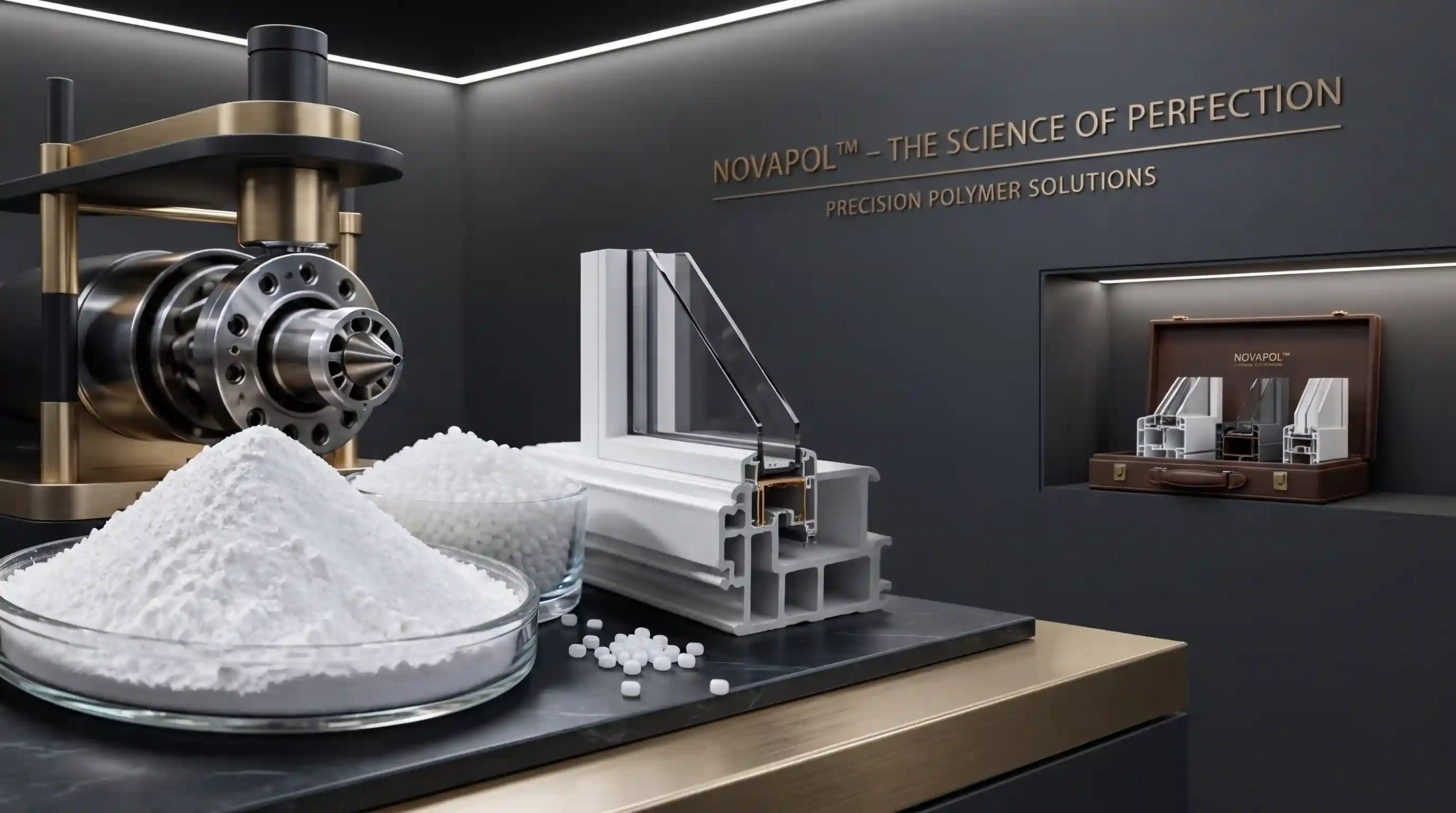
Mode Technologies in Polymer Compound and Granule Production
Compounding and the production of engineering granules represent fields that require the most precise raw materials. Coated calcium carbonate, due to its modified surface, easily blends with base polymers such as polyethylene, polypropylene, and PVC. This feature prevents the formation of agglomerates and inhomogeneities in the extruder.
The use of mode twin-screw machinery along with precise weight-loss feeders enables the homogeneous injection of this coated powder into the polymer melt. Consequently, the produced granules exhibit excellent melt flow index (MFI) properties.
This advanced technology allows manufacturers to utilize higher percentages of fillers without sacrificing final mechanical properties, thereby saving on costs.
Specialized Comparison of Coated Calcium Carbonate Types in the Market
The mineral market witnesses the presence of various types of coated powders, each processed using different technologies. The type of fatty acid used, coating percentage, and milling technology are determining factors that differentiate these products.
For an informed choice among available options, reading the article Specialized Guide to Comparing Coated Calcium Carbonate Types Available in the Market will be highly useful and practical.
Awareness of these differences helps formulating engineers select the best mesh (from 450 to 3500) based on the type of extrusion machinery and final product standards.
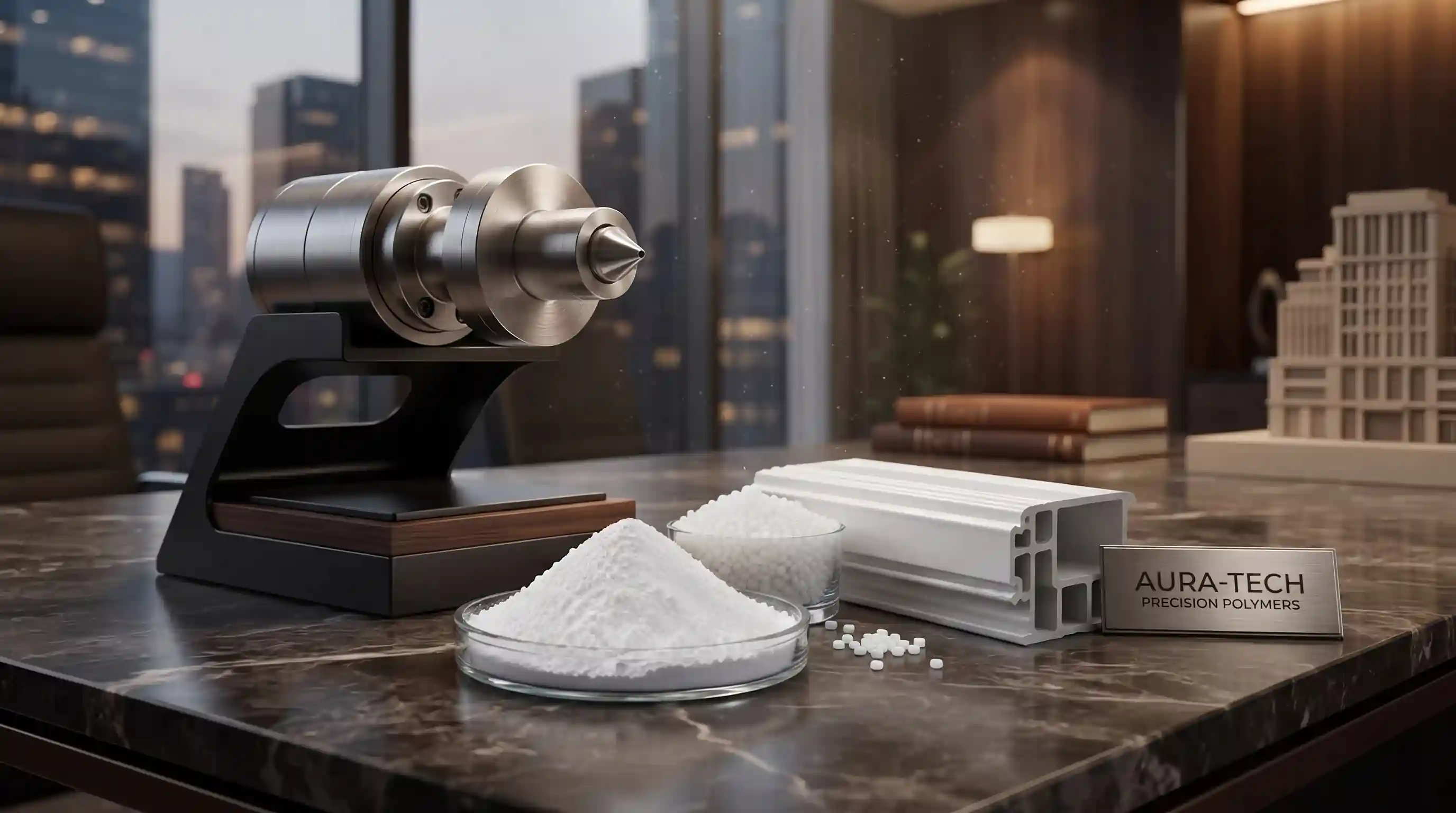
Specialized Applications in Cables, Flooring, and PVC Parts
The manufacturing industries for electrical cables, building flooring, and complex PVC parts heavily rely on the quality of additives. Coated calcium carbonate plays a significant role in improving the electrical insulation of cables and increasing the abrasion durability of flooring.
In PVC part production, the presence of this material acts as an auxiliary stabilizer and process aid. The mesh range of 450 3500 is selected according to the part type; for instance, in multilayer flooring, finer meshes are used for the top layer to create a smooth and polished surface.
This technology reduces melt viscosity during injection molding and extrusion processes, significantly increasing production line efficiency.
Future Outlook and Iovations in Mineral Processing
With the continuous growth of nano and micro technologies, the production technologies for coated calcium carbonate are also evolving in tandem with the needs of polymer industries. Researchers today focus on improving coating efficiency, reducing energy consumption in micronization lines, and producing ultra-fine meshes with a very narrow particle size distribution.
Kani Sang Amiran Project, by monitoring these technological developments, consistently strives to supply the best mineral products for domestic industries in alignment with global standards. The use of automatic control equipment in quality control laboratories guarantees the purity and stability of the physical properties of these products.
Ultimately, the development of these industries will play a substantial role in elevating the quality of Iranian-made polymer products in both domestic and inteational markets.

| Question | Answer |
|---|---|
| What is coated calcium carbonate? | It is a type of micronized calcium carbonate powder whose particle surfaces are coated with fatty acids or coupling agents to achieve better compatibility with polymers. |
| What is the mesh range of Amiran coated calcium carbonate? | This product is produced and supplied in a matching mesh range of 450 to 3500 mesh. |
| What are the main applications of this product? | Compounds, polymer granules, profiles, cables, flooring, and PVC parts are among its primary applications. |
| Why is coated calcium carbonate used in compounds? | Due to its water-repellent property and excellent dispersion, it prevents agglomeration and improves the mechanical properties of the compound. |
| What is the difference between coated and regular calcium carbonate? | The coated type features a surface coating that drastically increases adhesion between mineral particles and the polymer matrix. |
| Is this product used in pipe and profile manufacturing? | Yes, it is highly practical for increasing rigidity, dimensional stability, and improving profile surface quality. |
| How can the appropriate mesh be selected? | Mesh selection depends on the application type; lower meshes are used for profiles, while higher meshes are used for films and sensitive parts. |
| What is the role of coating in the extrusion process? | Coating reduces the inteal friction of particles and provides better melt flow in the extruder. |
| How can this product be purchased? | You can proceed through the dedicated product page on the Kani Sang Amiran website. |
| Does Kani Sang Amiran comply with quality standards? | Yes, products are manufactured under rigorous laboratory control and standard mesh ranges. |
Kani Sang Amiran Project — Reference for mineral material production and processing and coated calcium carbonate.

برچسب: Coated Calcium Carbonate,Introduction to Modern Technologies in Coated Calcium Carbonate Production,
نویسنده: رساوب آفرین